

Eurasian Collared Dove: A Global Success Story of Adaptation and Expansion
The Eurasian collared dove is a pretty, pale gray bird that has spread quietly across Europe, parts of Asia, and North America. Recognizable by the distinct black half-collar wrapping around the back of its neck and its comforting cooing call, this species has become a familiar and welcome sight in towns, farmland, and suburban gardens. Originally native to parts of Asia and Europe, this dove has found a flattering new backyard worldwide, spreading rapidly and sometimes outcompeting native dove species.
In this comprehensive article, we examine the features, behavior, distribution, diet, breeding habits, and ecological impact of the Eurasian collared dove—and answer many of the most frequently asked questions about this increasingly widespread, yet often underappreciated, bird.
Meet the Eurasian Collared Dove
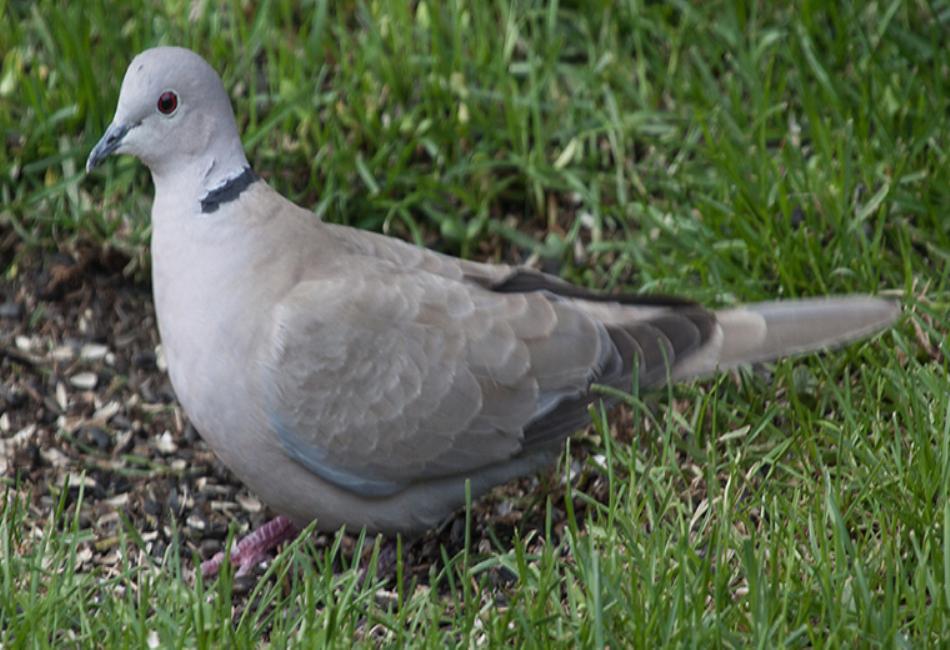
The Eurasian collared dove (Streptopelia decaocto) belongs to the bird family Columbidae, which includes both pigeons and doves. Slightly smaller than a rock pigeon but larger than a mourning dove, it is a medium-sized bird with distinctive features. Its feathers are mainly light grey to buff, with pinkish hues on the breast, and the black collar on the back of the neck edged in white. The eyes are large and brown, and the broad tail is adorned with white outer edges visible in flight.
What makes this species particularly extraordinary is its sudden spread across continents during the last century, enabled by its adaptability, reproductive success, and tolerance of human-altered habitats.
History and Worldwide Dispersal of the Eurasian Collared Dove
Originally endemic to the region stretching from Turkey to India and Sri Lanka, the Eurasian collared dove began its westward expansion into Europe in the early 20th century. In the 1970s, it was first spotted in the Bahamas, and from there, it made its way to Florida. By the 2000s, the dove had expanded across most of the United States, southern Canada, and parts of Mexico.
Unlike many invasive species, the Eurasian collared dove’s spread has been relatively benign. It typically does not cause direct damage to humans, crops, or infrastructure, although its impact on native species is still under scientific observation.
Eurasian Collared Dove Call
The Eurasian collared dove call is one of its most distinguishing traits. It features a soft, husky, rhythmic three-tone call: “coo-COO-coo,” often going on for 10–15 minutes non-stop. This plain but hypnotic sound blends into suburban and rural life, most often heard in the early morning and late afternoon. During flight, the dove also produces a loud, high-pitched cooing. Birdwatchers can often identify the species by sound alone, especially during breeding season when it becomes most vocal.
Read Also: Animals That Start With X
Ring-Necked Dove vs. Eurasian Collared Dove
Though they appear similar, the ring-necked dove vs. Eurasian collared dove comparison highlights distinct differences. The ring-necked dove (Streptopelia capicola) is native to East and Southern Africa and is often kept as a pet. It has a pinker hue and a more varied vocalization. Meanwhile, the Eurasian collared dove is a wild species with a specific three-note call and is not commonly domesticated. Their ecological roles differ due to their respective habitats and behaviors.
Eurasian Collared Dove vs. Mourning Dove
The Eurasian collared dove vs. mourning dove comparison is a challenge for North American bird enthusiasts. The Eurasian collared dove is larger, with pale gray plumage and a distinct black neck band. In contrast, the mourning dove is more lightly framed, with brown coloration, black wing spots, and a long, pointed tail. Their calls differ significantly—mourning doves produce a soft “hoo-OO-oo,” while collared doves stick to their rhythmic three-syllable coo.
Habitat Preferences
The Eurasian collared dove thrives in a wide range of environments, thanks to its adaptability. Common habitats include:
- Agricultural landscapes with open fields and trees
- Suburban gardens and backyards with bird feeders
- City parks and green zones
- Farmsteads and utility buildings
- Dry, open woodlands and scrublands
It is notably absent from dense forests, as it requires perches such as trees, telephone poles, or buildings.
Behavior and Vocalization
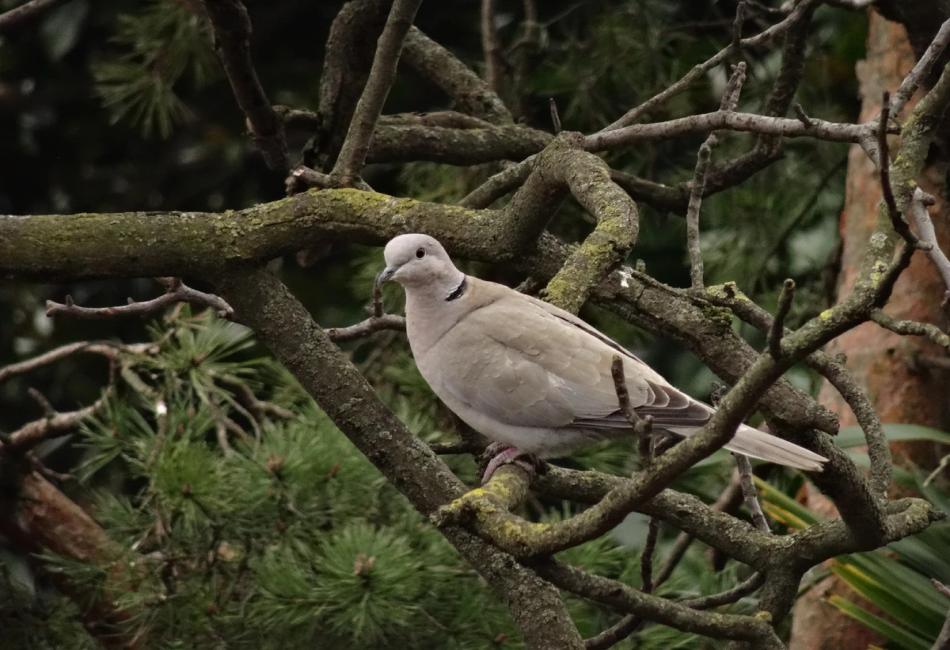
Although widespread, Eurasian collared doves are not particularly bold. They prefer to perch quietly and sing their cooing song from rooftops or utility lines. Their vocalization—a repetitive “coo-COO-coo”—serves as a form of communication, especially during mating season.
Doves typically forage in pairs or small groups and will defend feeding and nesting sites from competitors. Their flight is quick and direct, with fluttering takeoffs and visible white tail feathers.
Read Also: Black Crowned Night Heron
Diet and Feeding Habits
The Eurasian collared dove is primarily granivorous, feeding on:
- Millet
- Sunflower seeds
- Corn, wheat, and barley
- Berries and small fruits (occasionally)
They often feed on the ground or at hanging feeders, commonly sharing space with mourning doves, sparrows, or even squirrels. Water is essential, and they are frequently seen at birdbaths.
Breeding and Nesting
Eurasian collared doves are known for their prolific breeding, a key factor in their population explosion.
- Males perform aerial displays and bowing coos
- Nests are cup-shaped and built with twigs
- They lay two white eggs per clutch
- Both parents incubate the eggs for 14–18 days
- Fledgling occurs about 2 weeks after hatching
In warm regions, pairs may nest multiple times per year.
Environmental Impact of the Collared Dove
Though considered invasive in North America, the Eurasian collared dove has not shown significant harm to ecosystems so far. However, it may:
- Compete with native birds like mourning doves for food
- Spread diseases such as trichomoniasis or avian pox
- Overcrowd feeders, pushing out smaller species
Despite these concerns, it has generally been seen as a benign invader in most of its new territories.
Identification Tips for Birdwatchers
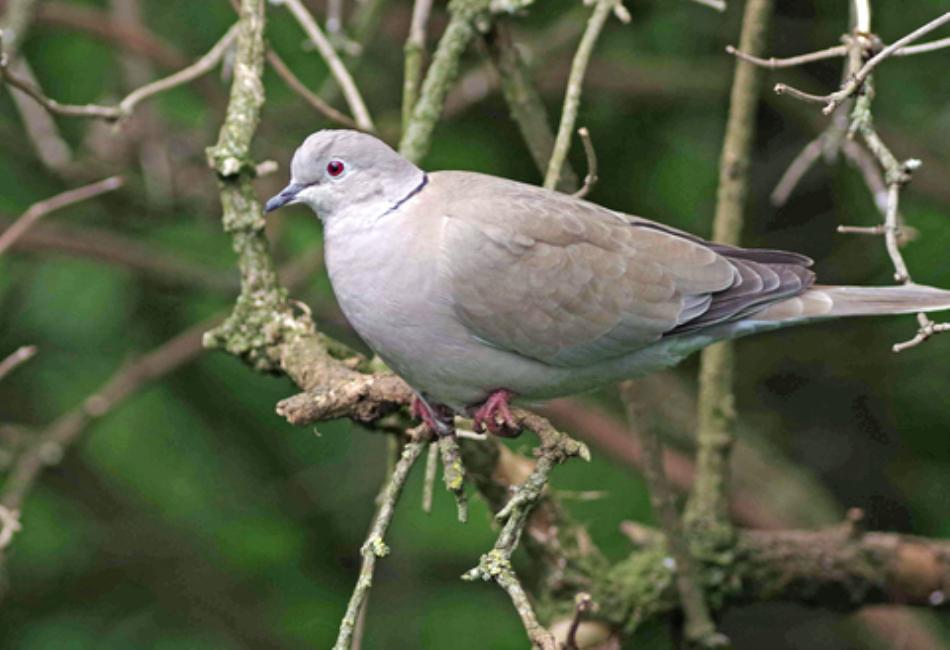
To identify a Eurasian collared dove, look for:
- Pale gray plumage with a black collar on the neck
- Broad tail with white outer feathers
- Three-part cooing call
- Steady, direct flight with visible white tail patches
They are often confused with mourning doves but differ in color, size, and vocalization.
Fun Facts About the Eurasian Collared Dove
- The species name “decaocto” is inspired by Greek mythology
- One pair can produce 6+ broods per year
- It has colonized regions in North America, the Caribbean, and Africa
- They often nest in unusual places like satellite dishes and garages
- They are monogamous, often staying with the same mate for life
Read also: Great Tits
Eurasian Collared Dove FAQs
Q1: How did the Eurasian collared dove get to North America?
They were accidentally released or escaped in the Bahamas in the 1970s. From there, they spread to Florida and throughout North America.
Q2: Where did the Eurasian collared dove come from?
It is native to Asia and the Middle East but expanded into Europe and then the Americas during the 20th century.
Q3: Why is the Eurasian collared dove considered bad?
As an invasive species, it competes with native birds and may spread disease, although its impact has been relatively minor so far.
Q4: How to get rid of Eurasian collared doves?
Use humane deterrents like removing feeders, placing reflective tape, trimming trees, and avoiding open perching spaces.
Q5: What does the Eurasian collared dove eat?
Seeds like millet and sunflower, grains, and occasionally fruits or small invertebrates.
Q6: Are Eurasian collared doves migratory?
No, they are generally non-migratory but may move short distances seasonally.
Q7: Are Eurasian collared doves monogamous?
Yes, they form long-term bonds and often mate for multiple seasons.
Q8: Why do Eurasian collared doves coo so much?
Cooing is used for attracting mates and establishing territory, especially during the breeding season.
Conclusion: A Dove of Many Worlds
The Eurasian collared dove is a testament to adaptability and quiet perseverance. From modest beginnings in Asia to global colonization, this species has managed to thrive in both natural and human-altered environments. While it raises concerns about ecological disruption, it also adds charm to our neighborhoods with its calming call and elegant appearance.
Whether you encounter it on a fence post, a rooftop, or your backyard feeder, the Eurasian collared dove is a symbol of nature’s quiet resilience.


![Discovering The Indian cormorant[Phalacrocorax fuscicollis]](https://birdzpedia.com/wp-content/uploads/2024/01/Indian-cormorant-768x402.jpg)
