
Sewer Line Warning Signs Ruston, LA Homeowners Should Act On
Small drainage changes can become a disruptive sewer problem when ignored. For Ruston homeowners, recurring clogs, gurgling fixtures, or water where it should not be may be reasons to consider sewer line repair in Ruston LA, before wastewater backs up into the home.
A single slow sink does not always mean the main sewer line is failing. However, symptoms affecting several fixtures at once often point to a problem farther down the shared drain path. Paying attention early can help homeowners make a more informed repair decision and reduce the chance of a messy indoor backup.
Common Sewer Line Warning Signs
Sewer trouble often begins as an inconvenience rather than an emergency. A homeowner may plunge a toilet one week, clear a slow shower the next, and assume each issue is separate. When those problems keep returning, the pattern matters more than any one fixture.
- Several sinks, tubs, or showers drain slowly at about the same time.
- Toilets bubble, gurgle, flush weakly, or change water level unexpectedly.
- Running a washing machine or flushing a toilet causes water to rise in a tub, shower, or floor drain.
- Persistent sewage odors appear indoors, near the cleanout, or in part of the yard.
- Drain issues return shortly after routine plunging or drain cleaning.
Why Multiple Slow Drains Matter
A slow bathroom sink can result from hair, soap residue, or a local blockage near that fixture. By contrast, a slow sink, toilet, and shower in the same period may indicate restricted flow in a larger branch line or sewer lateral. The sewer lateral is the private pipe that carries wastewater from the building toward the public sewer connection.
Make a quick note of which fixtures are affected and what triggers the issue. For example, does the downstairs shower back up only after laundry runs? Does a toilet gurgle when the kitchen sink drains? Those details can help identify whether the trouble is isolated or shared.
Yard Changes That Need Attention
In Ruston, a wet area in the lawn is not automatically a sewer issue. Rainfall, irrigation leaks, poor grading, and damaged water lines can all cause damp soil. Still, soft ground, standing water during dry weather, a sunken area, or unusually vigorous grass near the route of a buried line deserves investigation.
Do not dig simply to find the source. Underground utilities may be present, and exposure to sewage can pose sanitation concerns. Keep children and pets away from suspicious wet areas, especially if there is an odor or visible wastewater.
Common Causes of Sewer Line Trouble
Different pipe materials, property ages, and site conditions can produce similar symptoms. A proper diagnosis should identify the cause rather than treating every recurring clog as ordinary buildup.
- Tree roots: Roots can enter openings at joints or cracks where moisture is available.
- Aging or damaged pipe: Cracks, corrosion, separated joints, and weakened sections can restrict flow or allow soil into the line.
- Ground movement: Shifting soil can stress pipe joints or alter the slope needed for drainage.
- Grease and debris: Fats, oils, wipes, and other unsuitable materials can collect and narrow the passage inside a pipe.
- Collapsed or offset sections: A damaged section can trap waste and lead to repeat backups.
How a Sewer Camera Inspection Helps
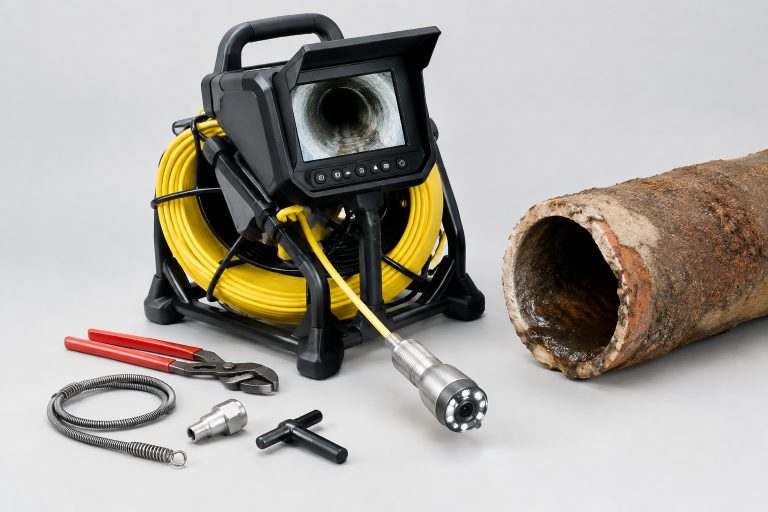
A sewer camera inspection allows a plumbing professional to view the inside of the line rather than relying solely on surface symptoms. It may show roots, buildup, cracks, standing water, misaligned joints, or a collapsed section. Knowing the location and condition of the issue helps determine whether cleaning, repair, or replacement makes sense.
Homeowners can also review how a private sewer lateral connects a building to the public sewer system to better understand why a problem on private property may not be handled by the local utility. Ask for a clear explanation of the inspection findings and the rationale for the proposed solution.
Repair and Replacement Options
The appropriate option depends on the pipe’s material, accessibility, overall condition, and the extent of the damage. The lowest initial price is not always the best long-term choice when a line has repeated failures.
- Drain cleaning: Can restore flow when removable buildup or a blockage is the primary problem.
- Root treatment: May temporarily control root-related restrictions, but it does not repair damaged pipe.
- Spot repair: May address one localized broken or failed area.
- Trenchless repair methods: May reduce excavation when site and pipe conditions permit.
- Full replacement: May be appropriate for widespread deterioration, major collapse, or persistent problems throughout the line.
What To Do During a Sewer Backup
If wastewater appears in a tub, shower, floor drain, or other low fixture, act promptly and limit additional water entering the system.
- Stop using toilets, sinks, showers, dishwashers, and washing machines.
- Keep people and pets away from contaminated water.
- Avoid pouring chemical drain cleaners into the system when a main-line issue is possible.
- Move belongings away from the affected area if it is safe to do so.
- Photograph visible damage for records and possible insurance discussions.
- Arrange an inspection if multiple fixtures are involved or the problem returns.
Prevention and Ownership Questions
Routine habits can reduce avoidable drain restrictions. Flush only toilet paper and human waste, use drain screens where practical, and keep grease, oil, paint, and wipes out of household drains. It is also wise to locate the sewer cleanout before an emergency happens.
Warning signs such as slow drains, sewage odors, wet ground, and wastewater near floor drains are also recognized in this overview of lateral-line backup symptoms. If symptoms recur, do not assume every clog is unrelated.
Responsibility can vary by property boundary, utility policy, easements, and local requirements. A line near the street is not necessarily the city’s responsibility. Before approving major work, review local utility guidance, property documents, and applicable insurance coverage.
Sewer Line Questions Homeowners Ask
Can one slow drain mean a sewer line problem?
It can, but one slow fixture more often suggests a local clog. Repeated trouble or several affected fixtures are stronger reasons to investigate the larger drainage system.
Does a sewer line always need to be replaced?
No. Cleaning, root control, a localized repair, or a trenchless option may be suitable when inspection findings support those approaches.
When should a homeowner request a camera inspection?
Consider one when backups recur, several drains slow down together, symptoms return after clearing, or an older property has unexplained drainage issues.
Final Takeaway
Sewer line issues rarely improve when the same warning signs keep returning. Ruston homeowners who track symptoms, stop using water during a backup, and seek a proper inspection can address the real cause before a small drainage concern becomes a major household disruption.