
Wildlife in the Heights: Exploring the Fascinating World of Mountain Animals
Mountains are some of the most majestic and rugged terrains on Earth. Towering high above sea level, these environments offer breathtaking views, extreme weather conditions, and unique ecosystems that are home to a wide variety of wildlife. From the icy peaks of the Himalayas to the rocky ranges of the Rockies, mountain animals have evolved remarkable adaptations to survive in such harsh and unpredictable habitats. In this article, we’ll explore more than a dozen incredible animals that call mountains home, how they adapt to the conditions, and the threats they face in a changing world.
Understanding Mountain Ecosystems
Mountain ecosystems vary greatly depending on altitude, climate, and geographic location. As elevation increases, temperatures drop, oxygen levels decrease, and vegetation becomes sparse. Despite these challenges, many species not only survive but thrive in these conditions. These animals often develop:
-
Thick fur or feathers for insulation
-
Specialized hooves or claws for climbing
-
Strong lungs or larger hearts for low oxygen
-
Camouflage to blend into rocky or snowy environments
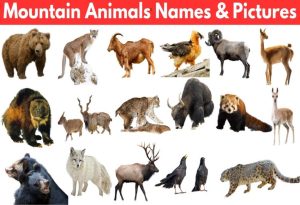
Iconic Mountain Animals Around the World
Let’s take a closer look at some of the most fascinating animals that inhabit mountain ranges across different continents.
1. Snow Leopard (Panthera uncia) – Himalayas & Central Asia
Known as the “ghost of the mountains,” the snow leopard is one of the most elusive big cats in the world. It lives in high-altitude regions of Central Asia and is incredibly well adapted to cold, rugged terrains.
-
Adaptations: Thick, camouflaged fur, wide paws to walk on snow, and a long tail for balance.
-
Conservation Status: Vulnerable due to poaching and habitat loss.
2. Mountain Goat (Oreamnos americanus) – North America
Despite their name, mountain goats are more closely related to antelopes. These nimble animals are often seen scaling near-vertical cliffs in the Rocky Mountains.
-
Adaptations: Cloven hooves with rough pads for grip, dense wool undercoats for warmth.
-
Fun Fact: Mountain goats can jump nearly 12 feet in a single bound.
3. Alpine Ibex (Capra ibex) – European Alps
This wild goat species is famous for climbing steep rock faces in the Alps. Males have long, curved horns that are used for dominance battles during mating season.
-
Adaptations: Incredible agility and balance, horns used for defense and mating rituals.
4. Andean Condor (Vultur gryphus) – South America
Soaring high above the Andes, the Andean condor is one of the world’s largest flying birds, with a wingspan of over 10 feet.
-
Adaptations: Strong wings for gliding, excellent eyesight to spot carrion from great heights.
-
Symbolism: Considered sacred in Andean cultures.
5. Red Panda (Ailurus fulgens) – Eastern Himalayas
Often mistaken for a raccoon, the red panda is a tree-dwelling animal that lives in the forests at the foothills of the Himalayas.
-
Adaptations: Semi-retractable claws, bushy tail for balance, thick fur.
-
Diet: Primarily bamboo, but they also eat fruits and eggs.
6. Takin (Budorcas taxicolor) – Eastern Himalayas
Sometimes described as a cross between a goat and a cow, the takin is Bhutan’s national animal and thrives in high-altitude forests and grasslands.
-
Adaptations: Large nasal cavities to warm cold air, oily skin to repel fog and rain.
7. Lynx (Lynx lynx) – Europe & North America
This medium-sized wild cat lives in mountainous forests and is known for its tufted ears and short tail.
-
Adaptations: Thick fur, excellent hearing and vision for nocturnal hunting.
8. Chamois (Rupicapra rupicapra) – Europe
Similar to the ibex, the chamois is a goat-antelope found in the mountains of Europe. It’s known for being incredibly agile on rocky terrain.
-
Adaptations: Light, powerful legs for quick movements and steep climbs.
9. Himalayan Tahr (Hemitragus jemlahicus) – Himalayas
A relative of the wild goat, the Himalayan tahr is found in the forests and rocky cliffs of the Himalayan range.
-
Adaptations: Dense woolly coats, short legs for stability on slopes.
10. Gelada Monkey (Theropithecus gelada) – Ethiopian Highlands
These primates are unique to the Ethiopian highlands and are the only grass-eating monkeys in the world.
-
Adaptations: Tough hands for scrambling over rocky cliffs, social behavior in large troops.
How Mountain Animals Adapt to Their Environment
Living in the mountains requires more than just thick fur and good balance. Here are some of the key strategies mountain animals use to survive:
-
Altitude Acclimatization: Animals like yaks and snow leopards have more red blood cells, enabling them to absorb more oxygen in thin air.
-
Seasonal Migration: Some species, like elk and ibex, move to lower elevations in winter to avoid extreme cold.
-
Camouflage: Colors like grey, white, and brown help animals like the snow leopard and mountain hare blend into rocky or snowy environments.
Threats to Mountain Wildlife
Mountain animals, despite their resilience, face growing threats:
-
Climate Change: Rising temperatures disrupt natural habitats and seasonal patterns. Snow lines retreat, and vegetation changes.
-
Habitat Loss: Human development, mining, and tourism have intruded on previously remote mountain areas.
-
Poaching and Hunting: Many species, like the snow leopard and red panda, are hunted for their fur or captured for illegal pet trades.
-
Isolation: Many mountain species live in fragmented habitats, which limits genetic diversity and increases extinction risks.
Conservation Efforts
Numerous conservation organizations and governments are working to protect mountain ecosystems:
-
Protected Reserves: Areas like Sagarmatha National Park (Nepal) and Banff National Park (Canada) help protect native wildlife.
-
Community Programs: Involving local communities in conservation leads to sustainable practices and shared responsibility.
-
Research and Monitoring: Satellite tracking, camera traps, and ecological surveys help monitor population health and migration.
Conclusion
Mountain animals are extraordinary survivors, perfectly adapted to some of the planet’s most challenging environments. From the elusive snow leopard to the towering Andean condor, each species plays a crucial role in the delicate ecosystems of the world’s highlands. As climate and human activities reshape their habitats, it’s more important than ever to appreciate their resilience—and protect their future.
These creatures remind us of the beauty of adaptation, the power of perseverance, and the wild wonders that thrive where the earth touches the sky.
FAQs on Wildlife in the Heights: Exploring the Fascinating World of Mountain Animals
Q1: What types of animals live in mountain environments?
A: Mountain regions are home to a variety of animals including snow leopards, mountain goats, red pandas, Andean condors, Himalayan tahrs, and lynxes—each uniquely adapted to high-altitude living.
Q2: How do animals survive in the harsh conditions of mountains?
A: They adapt through thick fur or feathers, specialized lungs for low oxygen, strong limbs or hooves for climbing, and seasonal behaviors like migration or hibernation.
Q3: Which is the most iconic mountain animal?
A: The snow leopard is often considered the most iconic due to its elusive nature and its role as a keystone species in many Asian mountain ranges.
Q4: Are mountain animals endangered?
A: Many mountain species are threatened by climate change, habitat loss, poaching, and isolation. Species like the snow leopard and red panda are classified as vulnerable or endangered.
Q5: What is the highest altitude animal species known?
A: The bar-headed goose and Himalayan jumping spider are among the highest altitude dwellers—found at altitudes exceeding 6,000 meters (over 19,000 feet).
Q6: How are humans impacting mountain wildlife?
A: Human activities such as deforestation, mining, tourism, and climate change are altering habitats, reducing food availability, and increasing human-wildlife conflict.
Q7: What conservation efforts exist for mountain animals?
A: Conservation includes national parks, wildlife corridors, anti-poaching laws, community-led initiatives, and global efforts from organizations like WWF and IUCN.
Q8: Can mountain animals be seen in zoos?
A: Yes, some mountain species like red pandas and snow leopards are part of zoo conservation and breeding programs, helping raise awareness and protect populations.