
Chukar: A Fascinating Game Bird and Its Role in Wildlife Conservation
The chukar, scientifically known as Alectoris chukar, is a captivating bird species native to the rugged terrains of Eurasia. Recognizable by its striking plumage, distinctive red bill, and legs, the chukar has gained attention as a prized game bird, a subject of avian enthusiasts, and an important figure in wildlife conservation. This article explores the history, habitat, behavior, and significance of the chukar in modern ecosystems.
Origins and Distribution
The chukar partridge originates from the rocky hills and semi-arid regions of Eurasia, spanning from Greece and Turkey to parts of the Middle East, Central Asia, and the Indian subcontinent. Over time, this bird has been introduced to other parts of the world, including North America, New Zealand, and parts of Europe, where it thrives in suitable environments.
The introduction of the chukar to North America began in the early 20th century, primarily as a game bird. Its adaptability to dry, rugged landscapes allowed it to establish wild populations in areas like the Great Basin, the Rocky Mountains, and parts of Canada.
Physical Characteristics
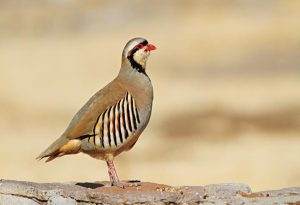
Chukars are medium-sized partridges, typically measuring 13–15 inches in length and weighing 16–21 ounces. They are easily recognizable by their:
- Grayish-brown plumage with buff underparts.
- Black and white barring on the flanks.
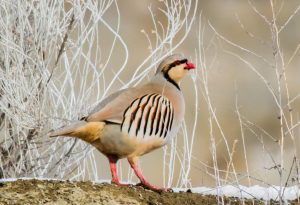
- Bold black facial stripe that runs from the forehead through the eyes, circling the neck to form a “necklace.”
- Bright red bill and legs, adding to their distinctive appearance.
These physical traits make the chukar one of the most visually striking game birds, often admired by hunters and birdwatchers alike.
Habitat and Range
The chukar thrives in arid and semi-arid regions, favoring rocky slopes, grasslands, and shrublands at elevations between 1,200 and 14,000 feet. They are often found in areas with sparse vegetation, where they can forage on seeds, grasses, and insects while remaining camouflaged from predators.
In their introduced habitats, such as the American West, chukars have adapted to harsh conditions, often occupying desert-like terrains and relying on seasonal water sources. Their ability to endure extreme weather and limited water availability has contributed to their success as a species.
Behavior and Social Structure
Chukars are ground-dwelling birds that exhibit fascinating behaviors, especially during the breeding season:
- Feeding Habits: Chukars are primarily herbivorous, consuming seeds, grains, and tender shoots. Insects supplement their diet, especially during the breeding season when protein is crucial for their young.
- Social Dynamics: Outside of the breeding season, chukars form small coveys (groups) of 10–30 birds. These groups help them stay vigilant against predators and optimize foraging opportunities.
- Flight and Movement: While capable of short bursts of flight, chukars prefer to run when threatened, often relying on their agility to navigate rocky terrain.
During the spring, male chukars engage in elaborate courtship displays to attract females. These displays include puffing up their plumage, vocalizing distinctive calls, and showcasing their strength. Once paired, the birds remain monogamous throughout the breeding season.
Reproduction and Life Cycle
Chukars are ground-nesting birds, with females laying 10–20 eggs per clutch in shallow scrapes lined with grass and feathers. The incubation period lasts approximately 22–24 days, during which the female diligently guards the nest.
After hatching, the precocial chicks are capable of walking and foraging within hours. They grow rapidly, reaching near-adult size within 10–12 weeks. This rapid development is essential for survival in harsh environments, where food and water can be scarce.
Significance as a Game Bird
The chukar is a favorite among hunters due to its challenging terrain and elusive nature. Known as one of the most difficult upland game birds to hunt, pursuing chukars often involves navigating steep slopes and rugged landscapes. This demanding hunt has earned the bird the nickname “the devil bird” among hunters.
In addition to providing recreational opportunities, chukar hunting supports local economies and conservation programs through hunting license fees and habitat preservation efforts.
Conservation and Ecological Importance
While chukar populations remain stable in many regions, habitat loss, overgrazing, and climate change pose threats to their natural habitats. Conservation efforts often focus on maintaining the delicate balance of ecosystems where these birds reside.
In North America, chukars are considered an introduced species. However, their presence has not significantly disrupted native ecosystems. Wildlife agencies carefully manage populations to ensure they do not outcompete indigenous species or damage habitats.
Chukars also play a role in ecosystem dynamics as seed dispersers and prey for predators such as foxes, raptors, and snakes. Their contribution to the food web underscores their ecological importance.
Chukar in Culture and Folklore
In their native range, chukars have appeared in folklore, art, and literature. They are often seen as symbols of resilience and adaptability, traits admired by humans. The bird’s melodic calls and striking appearance make it a favorite among birdwatchers and artists.
In hunting culture, the chukar’s challenging pursuit has created a sense of camaraderie and respect among enthusiasts. Many hunters recount stories of their grueling yet rewarding experiences chasing these birds in rugged terrains.
Challenges and Future Prospects
While the chukar is not currently endangered, its habitats face threats from urbanization, agriculture, and climate change. Conservation efforts, such as habitat restoration and sustainable hunting practices, are essential to ensure the species’ continued survival.
Education about the ecological importance of the chukar and its role in conservation programs can help foster a greater appreciation for this remarkable bird.
Conclusion
The chukar is more than just a game bird; it is a symbol of resilience, adaptability, and beauty in the natural world. Its striking appearance, fascinating behaviors, and significance in ecosystems make it a subject of admiration for hunters, birdwatchers, and conservationists alike.
As efforts to preserve natural habitats and maintain ecological balance continue, the chukar stands as a testament to nature’s ability to thrive in even the harshest conditions. Whether admired in the wild, pursued as game, or studied for its ecological role, the chukar remains a captivating and enduring presence in the avian world.