
Hummingbird Eggs: A Tiny Miracle of Nature
Introduction
Hummingbirds are among the most fascinating creatures in the avian world, known for their rapid wing movements, iridescent feathers, and incredible agility. However, one of the most intriguing aspects of their life cycle is the process of egg-laying and hatching. Hummingbird eggs are some of the smallest in the bird kingdom, yet they contain all the genetic potential to produce one of nature’s most remarkable fliers. This article explores the size, nesting habits, incubation period, and unique features of hummingbird eggs.
The Size and Appearance of Hummingbird Eggs
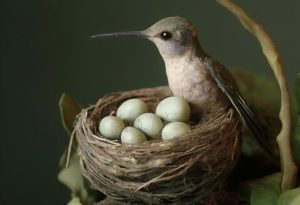
Hummingbird eggs are incredibly tiny, typically measuring about 0.5 inches (1.3 cm) in length and weighing less than a gram—comparable to the size of a small jellybean or a pea. Despite their small size, these eggs contain all the nutrients and genetic material needed to develop into a fully functioning hummingbird.
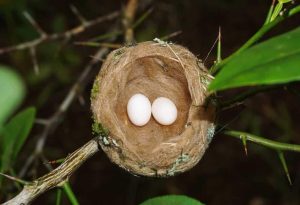
The eggs are usually white and oval-shaped, with a smooth and slightly glossy surface. Unlike some bird species, hummingbird eggs do not have speckled or patterned shells, likely because they are well-hidden in nests rather than exposed.
The Nesting Process
Finding the Perfect Nesting Spot
Female hummingbirds are solely responsible for building nests, laying eggs, and raising the young. They seek out well-hidden locations, often selecting sites that offer shelter and protection from predators. Common nesting locations include:
- Tree branches or shrubs
- Vines and hanging plants
- Human-made structures like porch lights, wind chimes, or outdoor lamps
Hummingbirds prefer nesting spots that are high enough to avoid ground predators yet sheltered from strong winds and heavy rain.
Building the Nest
A hummingbird nest is an architectural marvel, made from soft and flexible materials that allow it to expand as the chicks grow. The female bird gathers materials such as:
- Plant fibers from leaves and bark
- Spider silk, which acts as a natural adhesive and gives the nest elasticity
- Feathers and down for insulation
- Lichen and moss for camouflage
The nest is usually about the size of a golf ball and is lined with soft materials to provide a warm, safe environment for the eggs.
Laying and Incubating the Eggs
Hummingbirds typically lay two eggs per clutch, though occasionally they may lay only one. Unlike some bird species that lay larger clutches, hummingbirds focus on raising a small number of offspring to ensure better survival rates.
Once the eggs are laid, the mother incubates them for about 14-18 days. She sits on the eggs almost continuously, only leaving for short periods to feed. During this period, she keeps the eggs warm, rotating them slightly to ensure even heat distribution.
Unlike mammals, hummingbirds do not produce body heat from fat stores; instead, they generate heat through rapid muscle movements. This means that maintaining a stable body temperature during incubation is essential for the survival of the embryos.
Hatching and Early Development
The Hatching Process
After the incubation period, the tiny chicks start breaking through their eggshells using a special “egg tooth” on their beaks. This process, known as pipping, can take several hours as the chick gradually cracks open the shell.
Once they hatch, baby hummingbirds are:
- Extremely small (less than an inch in size)
- Featherless and blind
- Completely dependent on their mother
Growth and Parental Care
For the first few days, the mother feeds the chicks a mixture of regurgitated nectar and partially digested insects to provide essential nutrients. The chicks grow rapidly, developing feathers within two weeks.
By three weeks of age, the young hummingbirds begin testing their wings, flapping vigorously while still in the nest. Soon after, they take their first flights—an essential survival skill, as they must learn to find food and avoid predators.
Predators and Threats to Hummingbird Eggs
Due to their small size, hummingbird eggs face many threats from predators, including:
- Squirrels and chipmunks, which raid nests for eggs
- Larger birds, such as crows and jays
- Snakes, which climb trees in search of food
- Insects like ants and wasps, which may invade nests
In addition to predators, hummingbird nests are vulnerable to strong winds, heavy rain, and human disturbances. Cutting down trees, trimming branches, or moving potted plants during nesting season can destroy nests or cause the mother to abandon them.
Conservation and Protection of Hummingbirds
With habitat destruction being a major concern, people can take steps to protect hummingbird eggs and nests:
- Avoid trimming trees and bushes during nesting season (spring and summer).
- Provide safe nesting areas by planting shrubs, vines, and trees in your garden.
- Refrain from touching or disturbing nests if you find one.
- Reduce the use of pesticides, as insects are an essential food source for hummingbirds.
Additionally, putting out a hummingbird feeder can provide nourishment for the mother bird while she incubates her eggs.
Interesting Facts About Hummingbird Eggs
- The smallest hummingbird species, the bee hummingbird, lays eggs that are only 0.25 inches (6 mm) long—the smallest eggs of any bird species.
- Some species, like the ruby-throated hummingbird, reuse their nests or build new ones on top of old ones.
- The incubation temperature inside a hummingbird nest is around 96-98°F (35-37°C).
- A mother hummingbird can double her weight before laying eggs to store enough energy for the incubation period.
Conclusion
Hummingbird eggs are among the smallest and most delicate in the avian world, yet they represent the incredible resilience and adaptability of these tiny birds. From nest-building to hatching, the process of bringing new hummingbirds into the world is nothing short of a marvel. By understanding and protecting these remarkable creatures, we can help ensure that hummingbirds continue to grace our gardens and natural landscapes for generations to come.

![Verreaux’s Eagle [Aquila verreauxii] Overview, Habitat, Sounds](https://birdzpedia.com/wp-content/uploads/2023/12/Black-Oystercatcher-768x402.png)

![AFRICAN OPENBILL[Anastomus lamelligerus]: Stork Species, Habitat, and Behaviors](https://birdzpedia.com/wp-content/uploads/2023/12/AFRICAN-OPENBILL-Anastomus-lamelligerus-Facts-Habitat-1-1-768x402.png)
![Great Hornbill [Buceros bicornis]: Discovering its World](https://birdzpedia.com/wp-content/uploads/2023/12/Great-Hornbill-768x402.png)