
Red Hawk: A Majestic Bird of Prey
The red hawk, also commonly referred to as the red-tailed hawk (Buteo jamaicensis), is one of the most iconic and widespread birds of prey in North America. Known for its striking appearance, impressive hunting skills, and adaptability, the red hawk is a symbol of strength and keen vision. This bird’s significance extends beyond its ecological role, as it holds cultural and spiritual importance in various societies.
Physical Characteristics
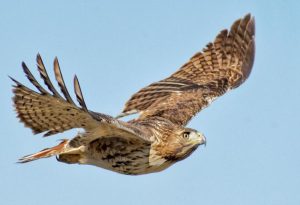
The red hawk is a large bird of prey with a wingspan ranging between 3.5 to 4.8 feet and a body length of about 18 to 26 inches. Adults typically weigh between 1.5 to 3.5 pounds, with females being slightly larger than males, as is common among raptors.
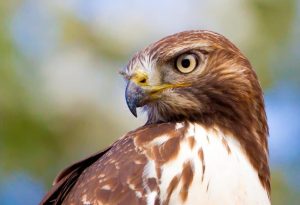
One of the most distinguishing features of the red hawk is its reddish-brown tail, which gives the bird its name. The plumage of the red hawk varies across its range but generally includes a combination of brown, white, and rufous tones. The bird’s underparts are lighter, often with streaks or spots, while its back and wings are darker brown. Juvenile red hawks lack the characteristic red tail, instead sporting brownish-gray tail feathers that develop the red coloration after their first molt.
Habitat and Distribution
Red hawks are highly adaptable and can thrive in a variety of habitats, including forests, grasslands, deserts, and even urban areas. They are most commonly found in open spaces with scattered trees or elevated perches, which they use to survey their surroundings for prey.
The bird’s range extends across North America, from Alaska and Canada in the north to Central America in the south. Some populations are migratory, particularly those in northern regions, while others remain in their territories year-round.
Diet and Hunting Behavior
As a carnivorous raptor, the red hawk primarily feeds on small to medium-sized mammals such as rodents, rabbits, and squirrels. It also preys on birds, reptiles, and occasionally fish or insects, depending on availability. Red hawks are opportunistic hunters and will scavenge carrion if necessary.
Red hawks employ various hunting techniques. They often soar at great heights, scanning the ground for movement, or perch on trees and poles to wait for potential prey. Once they identify a target, they dive swiftly, capturing it with their sharp talons. Their keen eyesight, which is estimated to be eight times sharper than that of humans, is critical for detecting prey from a distance.
Mating and Reproduction
Red hawks are monogamous and often form long-term pair bonds, sometimes lasting for life. Their breeding season typically begins in early spring, although this can vary depending on their geographical location. Courtship involves aerial displays, where the pair performs spiraling flights and dives together, showcasing their agility and strength.
Once bonded, the pair selects a nesting site, usually in tall trees, cliffs, or even man-made structures. They construct a large nest made of sticks, lined with softer materials like leaves and grass. The female lays 1 to 5 eggs, which she incubates for about 28 to 35 days. Both parents share responsibilities, with the male often providing food while the female guards the nest.
After hatching, the chicks, known as eyasses, are fed regurgitated food by both parents. They grow quickly, fledging the nest at about 6 to 7 weeks old. Despite leaving the nest, young hawks often remain near their parents for several weeks, learning essential survival skills.
Behavioral Traits
Red hawks are known for their adaptability and resilience. They are solitary hunters but may be observed in pairs during the breeding season. Their vocalization, a high-pitched scream often described as “kee-eee-ar,” is a defining characteristic and is frequently used in movies and television to represent raptors in general.
In urban environments, red hawks have shown remarkable adaptability by nesting on tall buildings and hunting in parks. This ability to coexist with human development has contributed to their stable population, even as other bird species face decline.
Ecological Importance
As apex predators, red hawks play a vital role in maintaining ecological balance. By controlling populations of rodents and other small animals, they prevent overgrazing and the spread of disease. Their presence is an indicator of a healthy ecosystem, as they require abundant prey and suitable nesting sites to thrive.
Cultural Significance
The red hawk holds cultural and spiritual significance in many Native American traditions, where it is often associated with vision, leadership, and protection. Its feathers are considered sacred and are used in rituals and ceremonies. In modern symbolism, the red hawk represents freedom, strength, and the ability to overcome challenges.
Conservation Status
The red hawk is currently classified as a species of “Least Concern” by the International Union for Conservation of Nature (IUCN). This is largely due to its widespread distribution, stable population, and adaptability to various habitats. However, like all wildlife, red hawks face threats from habitat loss, pollution, and human activities such as illegal hunting and poisoning.
Efforts to conserve red hawks include habitat protection and public education about the importance of raptors in ecosystems. Organizations such as the Audubon Society and local wildlife rehabilitation centers work to protect these birds and their habitats.
Conclusion
The red hawk is a remarkable bird of prey, admired for its beauty, intelligence, and vital ecological role. Its adaptability and resilience have allowed it to thrive in diverse environments, making it a symbol of survival and strength. Whether soaring high in the sky or perched in a tree, the red hawk continues to inspire awe and reverence among those who encounter it. As we strive to protect our natural world, the red hawk serves as a reminder of the intricate connections that sustain life on Earth.