
How to Plan a Relaxed Florida Beach Wedding Weekend in Nokomis, Florida
Key Takeaways
- Choose a beach venue that fits your guest list and needs.
- Plan for Florida heat, wind, rain, and changing conditions.
- Confirm permits and marriage license requirements early.
- Build a clear indoor weather backup plan.
- Keep guests comfortable with shade, water, seating, and accessibility.
- Use simple, secure décor suited for sand and wind.
- Budget for lodging, food, transportation, vendors, permits, and contingencies.
- Leave enough free time for guests to relax and connect.
A Florida beach wedding weekend can feel wonderfully unhurried when the plan gives guests time to settle in, connect, and enjoy the coast beyond the ceremony itself. In the Nokomis and Sarasota area, couples can make the shoreline part of the experience while still building in practical comforts for heat, sand, travel, and changing weather. For couples comparing places where everyone can stay close to the celebration, beach hotel options such as Casey Key Resort provide a useful local example. This Nokomis, Florida, property serves Casey Key, Sarasota, and Venice with bungalow accommodations, private beach access, waterfront gathering areas, and spaces designed for wedding-weekend events. Its focus on beachfront celebrations and destination weddings makes it relevant for couples who want lodging, welcome events, and farewell time near one another rather than scattered across the coast.
Why a Wedding Weekend Can Feel Better Than a Single-Day Event
A weekend format creates more room for meaningful conversation. Instead of trying to greet every guest during a busy reception, couples can welcome people on Friday, celebrate on Saturday, and share a low-key goodbye on Sunday. That rhythm also takes pressure off the ceremony itself. The wedding remains the centerpiece, but it does not have to carry every conversation, meal, and memory. Beach celebrations are often easiest to manage with an intentionally sized guest list. Fewer people can mean simpler transportation, less equipment on the sand, more flexible dining plans, and a more personal atmosphere.
Choose a Florida Setting That Fits the Guest List
Begin with the setting, not the décor. A public beach may offer a beautiful backdrop, but it can involve permits, shared access, parking limits, and restrictions on amplified sound or equipment. Private properties, resorts, parks, and waterfront event spaces may offer more built-in support, but every location has its own rules.
- Ask about guest capacity, parking, restrooms, and accessible routes.
- Confirm whether the ceremony area is private, shared, or open to the public.
- Find out whether the venue handles permits or expects the couple to apply.
- Consider how far guests must travel between lodging, ceremony, dinner, and brunch.
A venue with nearby rooms and gathering spaces can reduce the need for shuttles and help guests feel comfortable exploring Nokomis, Casey Key, Sarasota, or Venice on their own schedule.
Pick a Date With Weather and Guest Comfort in Mind
Florida beach conditions can include strong sun, humidity, wind, passing rain, and changing temperatures after sunset. Morning ceremonies may feel cooler but require an early start. Late-afternoon ceremonies can offer softer light, while sunset ceremonies may create a memorable visual moment but leave less daylight for setup and family photos. Reviewing Florida wedding planning considerations can help couples think through venue amenities, seasonal comfort, and backup spaces. Historical weather patterns are useful for setting expectations, but they should never replace a rain plan. Build shade, cold water, sunscreen, handheld fans, and comfortable seating into the original design.
Build a Weather Backup Before Booking Vendors
A rain plan works best when it is part of the wedding vision from the beginning. A covered pavilion, screened porch, covered terrace, indoor reception room, or shortened outdoor ceremony followed by an indoor celebration can all work well. If the schedule is flexible, establish a clear time for the final weather decision. Choose one person, such as the planner, venue coordinator, or a trusted family member, who has the authority to activate the backup plan. Ask every vendor how weather changes affect setup, delivery, staffing, photography, rentals, and refunds.
Handle Florida Marriage License Details Early
A beach permit and a marriage license are separate requirements. Couples should confirm identification, fees, office procedures, waiting periods, and expiration timing well before traveling. For a wedding near Nokomis, the Sarasota Clerk’s marriage license guidance explains local application steps and current requirements. Verify details directly with the appropriate clerk’s office before making final arrangements, especially if either partner lives in Florida or has been married before.
Use a Simple Weekend Timeline
- Friday afternoon: Guest arrivals, check-in, and time to unwind.
- Friday evening: A casual welcome gathering or local dinner with brief remarks.
- Saturday morning: Free time for beach walks, coffee, sightseeing, or rest.
- Saturday afternoon: Hair, makeup, photography, and final vendor checks.
- Saturday evening: Ceremony, dinner, dancing, and sunset portraits if conditions allow.
- Sunday morning: Farewell brunch, coffee, or a simple beachside goodbye.
Make the Beach Comfortable for Every Guest
Guest comfort matters more than elaborate décor. Share an arrival guide with parking instructions, walking distances, recommended footwear, and weather notes. Provide water before the ceremony, offer shade where possible, and keep the seating layout compact enough that guests do not have to walk long distances through soft sand. Ask about accessible paths for older relatives and guests using mobility equipment. Light wraps can help after sunset, while insect repellent and fans may be useful depending on the setting. Sand-friendly shoes, flats, sandals, or bare feet are generally easier to manage than narrow heels.
Choose Décor That Works With Wind, Sand, and Sun
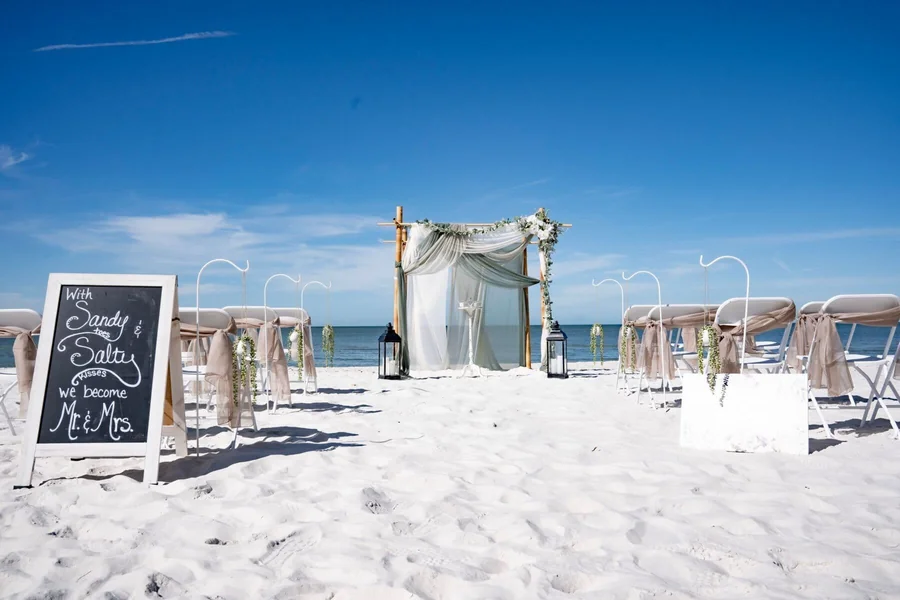
Coastal décor should be attractive and secure. Use weighted signs, stable floral vessels, low centerpieces, and firmly fastened linens. Choose breathable fabrics and flowers that can tolerate warmth. Avoid fragile paper goods, tall unstable arrangements, and anything likely to blow into dunes or natural areas. A few thoughtful elements, such as a simple ceremony arch, a welcome sign, coordinated chairs, and soft lighting for the reception, can create a finished look without overwhelming the shoreline.
Keep the Budget Focused on the Guest Experience
Separate essential costs from optional upgrades. Account for lodging, transportation, permits, rentals, food, drinks, vendor travel, insurance, taxes, service charges, delivery, setup, breakdown, and weather contingencies. A smaller guest count may leave more room for comfortable chairs, better photography, a relaxed meal, or an extra gathering that lets everyone spend more time together.
Questions to Ask Before You Book
- What happens if the ceremony must move indoors?
- Who handles permits and local approvals?
- How close are restrooms, parking, and accommodations?
- What restrictions apply to music, candles, tents, flowers, and décor?
- Can vendors arrive early for setup and remain through breakdown?
- What is the cancellation or postponement policy?
- How will guests with mobility concerns reach the ceremony area?
A Final Checklist for the Month Before
- Confirm the marriage license plan and officiant details.
- Review the weather backup and decision deadline.
- Send the guest arrival guide and weekend schedule.
- Confirm vendor arrival times, layout, and seating.
- Prepare welcome bags or room notes.
- Assign one trusted person to answer wedding-day questions.
- Protect open time for meals, rest, and unexpected changes.
Plan for Presence, Not Perfection
A relaxed Florida beach wedding weekend stems from practical choices made early on. Choose a realistic guest list, prioritize comfort, confirm legal details, prepare for the weather, and allow enough time for people to enjoy each other’s company. The most memorable celebration is not necessarily the largest or most decorated. It is the one that lets the couple stay present from the first welcome to the final goodbye.
Conclusion
A Florida beach wedding weekend can be both enjoyable and manageable when couples plan around guest comfort, weather, logistics, and legal requirements. Choosing a venue near accommodations and gathering spaces can make travel easier while giving guests more time to relax and enjoy the Nokomis, Casey Key, Sarasota, and Venice area. Couples should confirm permits, marriage license requirements, vendor policies, accessibility, and weather backup arrangements before finalizing their plans. Practical details such as shade, water, comfortable seating, secure décor, transportation, and sufficient downtime can also make the weekend easier for everyone. Rather than filling every hour with scheduled activities, a balanced itinerary can give guests opportunities to connect, explore the area, and rest between events. With thoughtful preparation and realistic expectations, the wedding can remain focused on the couple and their guests while allowing the coastal setting to be part of the overall experience.