
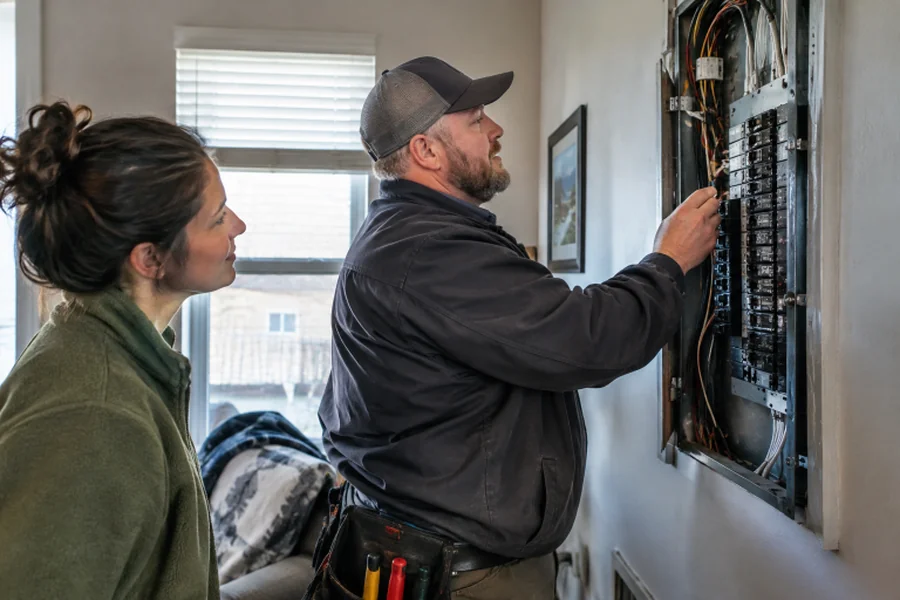
How BTS Home Inspections Helps Utah Buyers Make Safer, Better-Informed Decisions
Key Takeaways
- BTS Home Inspections evaluates many of the home’s major accessible systems and components, from the foundation and roof to electrical, plumbing, heating, cooling, and built-in appliances.
- Each general home inspection includes a whole-home infrared thermal scan, which can help identify unusual temperature patterns that deserve closer review.
- Buyers can add services such as sewer camera inspections, mold testing, meth testing, radon testing, and termite inspections when appropriate.
- An inspection report can help buyers identify repair priorities, seek qualified contractor estimates, and ask more focused questions before closing.
- No inspection can guarantee that every defect will be found or predict every future repair, especially in inaccessible areas or systems that fail after the inspection.
A home can appear well-maintained during a showing while still having concerns behind walls, under the flooring, in the attic, or within major systems. BTS Home Inspections helps buyers investigate those less-visible conditions through detailed home inspections, whole-home infrared scanning, and optional specialty testing services.
For buyers working within an inspection deadline, the goal is not to find a “perfect” property. It is to gain a clearer understanding of the home’s accessible, observable condition, recognize where specialist input may be needed, and make decisions with fewer surprises after closing.
Table of Contents
- Why a Professional Inspection Matters
- What BTS Home Inspections Evaluates
- How Infrared Scanning Adds Information
- Additional Testing Services
- Inspection Bundle Options
- What Happens After a Request
- Utah Service Areas
- Frequently Asked Questions
Why a Professional Inspection Matters
Cosmetic updates can make it difficult to judge a property’s underlying condition. A professional inspection provides buyers with a structured review of accessible components that may affect safety, functionality, maintenance planning, or repair costs. It can also help a buyer distinguish between ordinary wear and conditions that warrant prompt attention.
Inspection findings are informational, not a substitute for a contractor bid, engineering assessment, code inspection, or specialized evaluation. When an inspector identifies a significant concern, buyers should use that information to decide whether to obtain estimates or consult the appropriate qualified professional.
What Does BTS Home Inspections Evaluate?
BTS Home Inspections approaches the property as a connected set of systems rather than a collection of cosmetic surfaces. The company states that its inspectors review accessible areas and components throughout the home, including the following:
- Structure and foundation:Foundation elements, floor and wall structures, columns, piers, roof structure, attics, and crawlspaces.
- Exterior and drainage:Siding, doors, windows, decks, patios, walkways, driveways, grading, drainage features, retaining walls, fences, and gates.
- Roofing and gutters:Roof coverings, penetrations, flashing, chimneys, skylights, gutters, and downspouts.
- Electrical systems:Service equipment, breaker panels, lights, switches, outlets, GFCI devices, and visible smoke or carbon monoxide alarm components.
- Plumbing systems:Accessible pipes, drains, fixtures, toilets, valves, water heaters, vents, gas distribution components, and sump pumps.
- Heating and cooling:Furnaces, boilers, radiators, air-conditioning units, evaporative coolers, thermostats, ductwork, filters, flues, and safety controls.
- Interior, fireplaces, and appliances:Walls, ceilings, floors, stairs, railings, doors, windows, fireplaces, chimneys, and listed built-in kitchen appliances.
The company lists inspections for single-family homes, townhomes, condos, multifamily properties, cabins, log homes, manufactured homes, mobile homes, duplexes, and twin homes.
How Infrared Scanning Adds Information
BTS Home Inspections includes a whole-home infrared thermal scan with its general inspections. Infrared equipment detects surface temperature differences that may not be visible during a standard visual review. Depending on the conditions, those differences can indicate moisture intrusion, insulation gaps, air leakage, or electrical hotspots.
An infrared image is not proof of a specific defect by itself. Temperature variations can have multiple causes, so findings should be evaluated alongside visible conditions, moisture readings when appropriate, and other inspection evidence. Used this way, thermal scanning adds another layer of information to a broader property assessment.
Which Additional Testing Services Can Buyers Request?
Some concerns require tools or testing beyond a general visual inspection. BTS Home Inspections offers ancillary services that may be ordered independently or added to an Essential Home Inspection.
- Sewer line video inspection:A camera scope can help identify visible blockages, breaks, root intrusion, or other conditions within accessible portions of a sewer line.
- Mold testing:Air or surface testing may be useful when moisture history, staining, odors, or other conditions raise questions about possible mold.
- Meth testing:Testing can help identify residue associated with methamphetamine use or manufacturing.
- Radon testing:Radon is an invisible gas, and testing is the only way to know whether levels are high. The CDC notes that testing is particularly relevant when preparing to buy or sell a home.
- Termite inspection:This option can include an NPMA-33 form, which may be needed for certain lending requirements.
Inspection Bundle Options for Different Buyer Concerns
BTS Home Inspections offers service levels that allow buyers to select a broader scope when the property or transaction calls for it:
- Essential Home Inspection:A general home inspection with a whole-home infrared scan. This option suits buyers who need a broad review of major accessible systems.
- Healthy Home Inspection Bundle:Includes the Essential inspection and infrared scan, plus a sewer line video inspection, whole-home mold air testing, and meth testing.
- Ultimate Behind-the-Scenes Inspection Bundle:Includes Healthy Home services, plus a 48-hour radon test and a whole-home termite inspection with an NPMA-33 form.
These services provide more information, not a guarantee that the property is free of defects. Buyers should choose services based on the home’s age, condition, location, known history, lender requirements, and personal concerns.
What Happens After a Home Inspection Request?
Submitting a request is most useful when buyers provide the property address, preferred appointment timing, transaction deadline, property type, and any known concerns. From there, the process generally follows a practical sequence:
- Choose a general inspection and any desired add-on services.
- Confirm scheduling, access arrangements, payment details, and inspection expectations.
- Allow the inspector to evaluate accessible systems and document observed conditions.
- Attend a walkthrough when available to discuss significant findings and ask questions.
- Review the completed report, prioritize important concerns, and arrange specialist evaluations or contractor estimates where needed.
Utah Service Areas
BTS Home Inspections serves communities across Davis, Juab, Millard, Morgan, Salt Lake, Sanpete, Sevier, Summit, Tooele, Utah, Wasatch, and Weber counties. Its listed service area includes communities such as Salt Lake City, Ogden, Layton, Bountiful, Sandy, Draper, West Jordan, South Jordan, Lehi, Orem, Provo, Park City, Heber City, and Tooele. Buyers should confirm availability for their specific property when scheduling.
Frequently Asked Questions
Does BTS Home Inspections inspect new construction?
Yes. BTS Home Inspections lists new construction final inspections among its available services. A final inspection can help buyers identify visible incomplete work or concerns before accepting the property.
Can sellers request an inspection before listing?
Yes. A pre-listing inspection can help a seller understand the home’s visible condition, prioritize repairs, and prepare for questions that may arise during a buyer’s inspection period.
What should buyers do after receiving inspection findings?
Buyers should review major concerns carefully, ask follow-up questions, and obtain estimates from qualified contractors when repair costs or specialized work may affect their decision. A thorough inspection provides a practical starting point for that conversation.
Final Thoughts
A professional home inspection helps buyers understand a property’s condition before making a major financial commitment. BTS Home Inspections combines a review of major accessible systems with whole-home infrared scanning and optional specialty testing to provide a more complete picture. Buyers should use the findings to identify repair priorities, ask informed questions, and seek expert evaluations when needed, making it easier to move toward closing with realistic expectations.


