
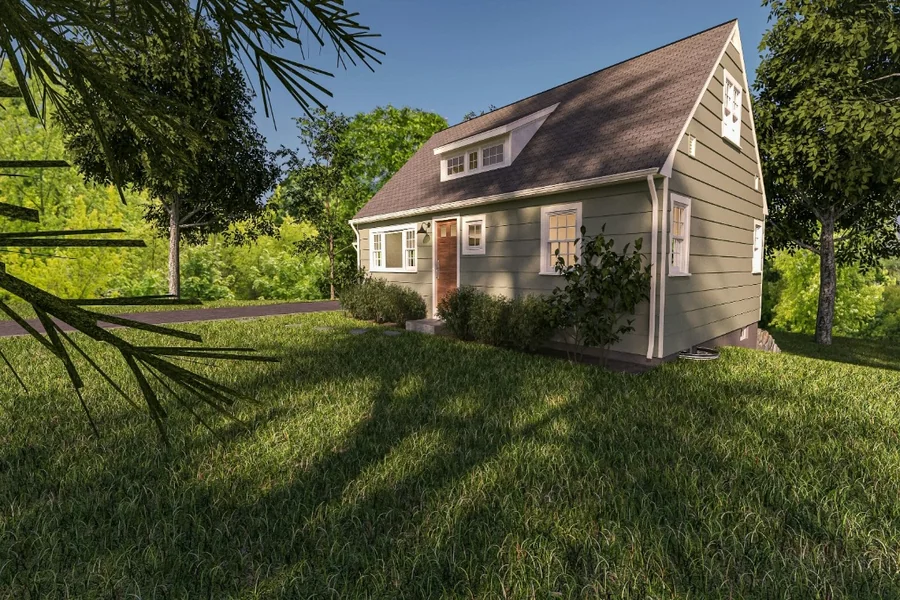
Granny Flats Are Having a Moment and the Reasons Go Beyond Extra Income
The phrase granny flat has always carried a slightly apologetic quality, as if describing something functional but unremarkable, a small structure in the backyard that does a job without demanding particular attention. That quality is disappearing from the conversation around secondary dwellings, and what’s replacing it is a more considered discussion about land use, housing flexibility, and the multiple roles a well-built secondary structure can play across the life of a property and the family that owns it.
The granny flat’s current moment isn’t driven by a single factor. It’s the convergence of several pressures that have made a secondary dwelling on an existing residential block a genuinely attractive proposition for a much broader range of homeowners than it was a decade ago. Understanding what those pressures are, and what the full range of reasons people are building granny flats looks like, explains why the trend has more momentum behind it than a simple rental income calculation would suggest.
The Housing Context That Made Granny Flats Relevant Again
The housing market’s trajectory in major cities across the developed world has created conditions that make granny flats relevant to conversations they weren’t previously part of.
The rental shortage in major urban centres has made the income potential of a secondary dwelling more significant than it was when vacancy rates were higher. A well-positioned granny flat generates rental income from a market where demand consistently exceeds supply, and the yield relative to the construction cost is meaningfully more attractive than it was when rental markets were less constrained. For homeowners who have land and the capacity to build, the economic case for a secondary dwelling has strengthened considerably alongside the market conditions that determine its rental potential.
Housing affordability has created a specific family dynamic that granny flats address particularly well. Adult children who in previous generations would have left home in their early twenties and established independent households are now frequently returning to the family home, or never fully leaving it, because the cost of renting independently in major cities has grown faster than entry-level incomes. A granny flat that provides genuine independent living for an adult child, with its own entrance, its own kitchen, and its own living space, addresses this situation in a way that a bedroom in the family home doesn’t.
The ageing of the population in many countries has made the proximity-with-independence model that a granny flat enables increasingly relevant for families managing the needs of older parents. The alternative of an aged care facility is expensive, often distressing, and frequently premature for people who are physically and cognitively capable of independent living but who benefit from having family nearby. A granny flat on the family property provides that proximity without requiring the compromise of shared living that most intergenerational households involve.
The Reasons People Are Actually Building Them
The motivations that actually drive granny flat construction across the homeowners currently building them are more varied than the rental income framing of most property media coverage suggests.
Multigenerational living is the motivation that has grown most significantly in recent years and that aligns most directly with the demographic trends reshaping households across many countries. The family that builds a granny flat for a parent, an adult child, or a relative requiring some additional support is creating a living arrangement that provides genuine care infrastructure without the costs of professional care, and that maintains the independence and dignity of all parties in a way that shared households frequently don’t.
Investment return remains a genuine and often primary motivation, and it warrants honest assessment rather than either dismissal or uncritical enthusiasm. A granny flat built on land already owned, generating consistent rental income in a tight market, produces a return on investment that compares favourably to most other investment options available at a similar capital level. The combination of rental yield and the capital value uplift the secondary dwelling adds to the overall property makes the financial case compelling for homeowners whose site is eligible and whose circumstances allow the build.
Short-term rental is a variation on the investment return motivation that some homeowners are exploring, using the granny flat as a platform for higher-yield short-stay accommodation rather than a fixed tenancy. The return potential is higher and the flexibility is greater, but the management requirement is also significantly more demanding, and the regulatory environment around short-term rental varies between jurisdictions in ways that are worth understanding before a build is committed to a short-term model.
For homeowners in Australia ready to explore whether their property is eligible and what a build would involve, granny flat builders Sydney who offer a complete service from initial site assessment through to construction and handover represent one end of the specialist builder spectrum, where the approval process, certifiers, and trades are all managed under a single contract rather than coordinated separately by the homeowner.
Home office and studio uses are motivations that don’t feature prominently in the property investment conversation but that represent a genuine proportion of granny flat builds. The professional who needs a workspace genuinely separate from the family home, the artist who needs a dedicated studio, the musician who needs acoustic separation: all of these uses produce a building that is both functionally valuable and a legitimate addition to the property’s value, without requiring a tenant or a rental arrangement.
What the Build Process Involves and What to Expect
The granny flat build process follows a sequence that becomes straightforward once the key stages are understood, and the timeline that results is more predictable than most homeowners expect before they engage with it.
The eligibility assessment is the starting point. A site needs to meet the relevant planning requirements for a secondary dwelling, including minimum lot size, setback distances from boundaries, and site coverage limits, all of which vary between local planning jurisdictions. Understanding which approval pathway is available, whether the application goes to a private certifier for a faster assessment or through the local council for a more involved process, determines how long the pre-construction phase will take and how much certainty the homeowner has over the outcome before committing to design and construction costs.
Design selection follows the eligibility confirmation. Most specialist granny flat builders offer a range of named floor plan templates that have been designed to meet all relevant planning standards and refined across multiple completed builds. These templates give homeowners a clear starting point that is both compliant and proven, with customisation options for finishes, fixtures, and layout variations that reflect the specific requirements of the site and the intended use.
Construction, once approvals are in place, typically takes twelve to sixteen weeks for a standard granny flat. The total project timeline from initial inquiry to handover is therefore more accurately measured in months than weeks, with the approval phase often the longest and least predictable component. Homeowners who plan their timeline realistically from the outset, accounting for the approval process rather than only the construction period, are in a better position to manage expectations around when the dwelling will be ready for use or occupancy.
Why This Moment Has More Behind It Than a Trend
The granny flat’s current prominence in property conversations reflects genuine shifts in how households are structured, how housing markets are performing, and how homeowners are thinking about the value and versatility of the land they own. These aren’t conditions that resolve quickly, which is why the momentum behind secondary dwelling construction looks more like a structural shift than a cyclical trend.
The homeowner who builds a granny flat is adding a permanent, versatile asset to their property that can serve different purposes across different phases of ownership. What begins as a rental income generator can become accommodation for an ageing parent, then an adult child’s first independent home, then a home office or studio, and eventually a rental again. That versatility, the ability to serve multiple purposes across the years, is what makes the decision compound in value in a way that most other property improvements don’t.
The land is already there. The planning frameworks that allow secondary dwellings have been progressively liberalised in many jurisdictions to encourage them. The builder ecosystem has matured to offer fixed-price turnkey packages that make the cost predictable before commitment. The conditions that make a granny flat a good decision for an eligible homeowner are about as favourable as they’re likely to get, and that combination is what’s behind the moment the secondary dwelling is currently having.


