
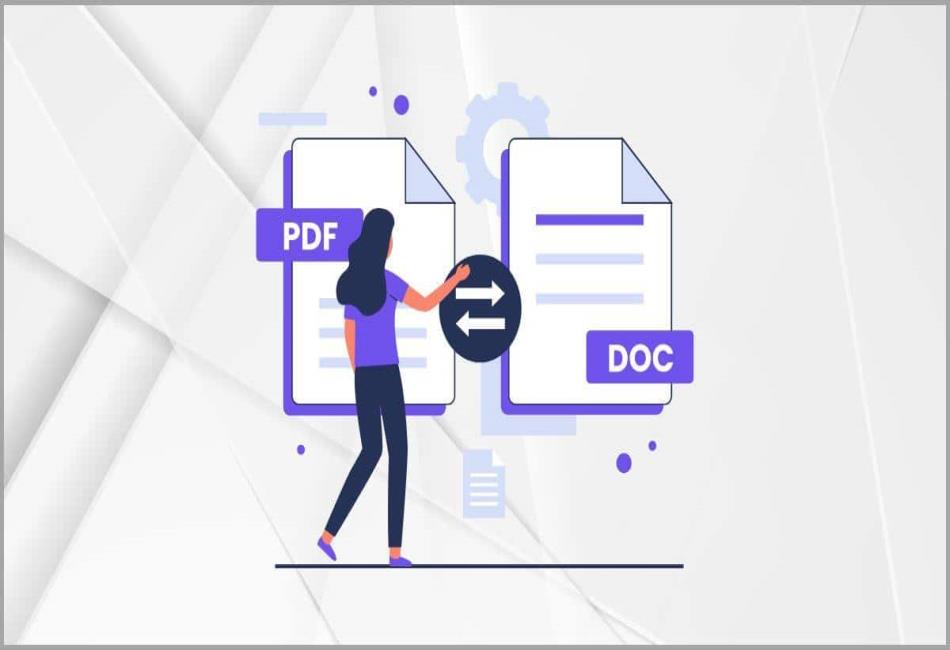
Want to Convert PDFs into Usable Data? Here’s the Technology That Can Help
PDF files remain a standard format for sharing business documents due to their consistent appearance across devices. However, while visually reliable, PDFs are not optimized for data extraction or integration. Teams often resort to time-consuming manual work just to retrieve information, which slows down operations and increases error rates. Fortunately, automated document processing offers a practical solution.
Let’s talk about document processing technology that enables organizations to convert data from PDF to JSON, making previously static files usable across systems and workflows!
The Problem with PDF Files in Business Workflows
Many business processes still depend heavily on PDFs for storing important information such as invoices, contracts, receipts, and reports. However, PDFs are not inherently structured for data manipulation. They were created for viewing, not for extracting or integrating information.
When organizations need to pull data from a PDF, employees often resort to manual copy-pasting or writing custom scripts. These methods are not scalable and are vulnerable to inconsistencies, especially when document layouts vary from one file to another.
For example, a finance team processing 1,000 invoices monthly may spend hours just extracting totals, due dates, and vendor names. Without automation, this repetitive work consumes time and increases the potential for human error.
Understanding Intelligent Document Processing (IDP)
To address this challenge, many companies are turning to Intelligent Document Processing (IDP). IDP is a combination of technologies, including Optical Character Recognition (OCR), machine learning (ML), and natural language processing (NLP), that can automatically extract and interpret data from various document types.
Unlike traditional OCR, which only detects characters, IDP systems can understand document structure and context. This enables them to identify key information such as names, dates, and amounts, regardless of how the data is presented on the page.
A typical IDP pipeline consists of:
- Document Ingestion
Uploading PDFs or capturing them from email or scanner
- Pre-processing
Enhancing quality, rotating pages, and removing noise
- Document Classification
Identifying the type of document (e.g., invoice, receipt)
- Data Extraction
Pulling specific data fields.
- Data Validation
Checking extracted values against rules or patterns
- Data Export
Outputting structured data formats such as JSON or CSV
This end-to-end automation drastically reduces the need for manual input.
How to Convert Data from PDF to JSON
One of the most practical applications of IDP is the ability to convert data from PDF to JSON. JSON, or JavaScript Object Notation, is a lightweight format used for structuring data that is easy for both humans and machines to read.
Let’s take a basic invoice as an example. A PDF version of an invoice may include the following:
- Invoice Number: INV-2025-0081
- Date: July 14, 2025
- Vendor: Global Supplies Co.
- Total Amount: $3,800.00
- Tax: $285.00
Once processed, this information can be converted into structured data like JSON, where each item is clearly labeled with its corresponding value. For example:
{
“invoice_number”: “INV-2025-0081”,
“date”: “2025-07-14”,
“vendor”: “Global Supplies Co.”,
“total_amount”: 3800.00,
“tax”: 285.00
}
This structured result, once represented in JSON format, allows systems to read, store, and process the data seamlessly. This format is widely used in APIs and web applications, enabling direct integration with enterprise systems such as ERP platforms, accounting software, and databases.
Real-World Use Cases Across Industries
The ability to convert data from PDF to JSON offers substantial value across various industries.
- Finance
Accounts payable teams can automate data entry from hundreds of invoices, reducing processing time and ensuring consistency across records.
- Healthcare
Hospitals and clinics can digitize patient forms and lab results, integrating them into electronic health records (EHR) systems.
- Logistics
Companies can extract delivery information from shipping documents and receipts, streamlining tracking and inventory updates.
- Legal
Law firms can process legal contracts and case documents by extracting key information such as client names, dates, and case IDs.
These examples show how document automation can significantly reduce administrative burden and improve operational accuracy.
Benefits of Automated PDF-to-JSON Conversion
Automating the extraction of data from PDFs into JSON offers several advantages:
- Time Savings
Reduces manual processing time from hours to minutes. For instance, if each document takes 3 minutes to process manually, automating 500 documents a week can save over 25 hours.
- Improved Accuracy
Minimizes the risk of human error in data entry.
- Scalability
Handles large volumes of documents without additional headcount.
- Data Readiness
JSON outputs are ready to be used in modern software systems and analytics tools.
- Compliance Support
Provides traceable logs of all processed data for audit or regulatory purposes.
These benefits allow businesses to focus resources on higher-value tasks while ensuring faster turnaround times and more reliable outcomes.
Choosing the Right Solution
Not all document processing tools deliver the same results. When selecting a solution to convert data from PDF to JSON, organizations should look for:
- Support for both digital and scanned PDFs
- Accuracy with semi-structured or variable layouts
- Customizable validation rules
- Integration capabilities (e.g., API access)
- Data security and compliance features
Solutions such as Fintelite offer enterprise-ready tools that combine OCR, AI, and machine learning to extract and convert complex data structures into clean, structured JSON output.
Manual data entry from PDFs is no longer necessary in today’s digital environment. With the help of Intelligent Document Processing, businesses can now convert data from PDF to JSON automatically, reducing labor costs, minimizing errors, and unlocking the full value of their documents.
By adopting these technologies, companies position themselves for greater efficiency, better data utilization, and stronger digital transformation. The shift from manual document handling to intelligent automation is not just a technical upgrade, it’s a strategic advantage.