

Female Peacock: The Unsung Beauty of the Peafowl World
When we think of a peacock, we usually imagine those beautiful, iridescent blue and green tail feathers. But what is often forgotten is that these iconic images are of the male peacock, not the female. The intricate sidekick to the peacock (which is more correctly called a peahen), the feathery female peacock, called a peahen, is subject to plays an equally vital role in the peafowl world, but in a far more delicate fashion. As the male peacock shows off its colors, the female peacock exudes grace, intelligence, and maternal endurance for this exceptional bird. So, are there peahens? Here is everything you need to know about the female peacock — characteristics, purpose, behavior, and much more.
What Is a Female Peacock?
Although women generally refer to a female peacock, the correct name for a female peacock is peahen. Peacocks and peahens are members of the pheasant family and the species peafowl. Indian Peafowl (Pavo cristatus), Green Peafowl (Pavo muticus), and Congo Peafowl (Afropavo congensis) are the most well-known species.
The peahen is a stark contrast to its mate in terms of both appearance as well as behavior, and just as interesting. Though she may lack the showy tail fans, those drab browns, creams, and grays come in handy when brooding and rearing young.
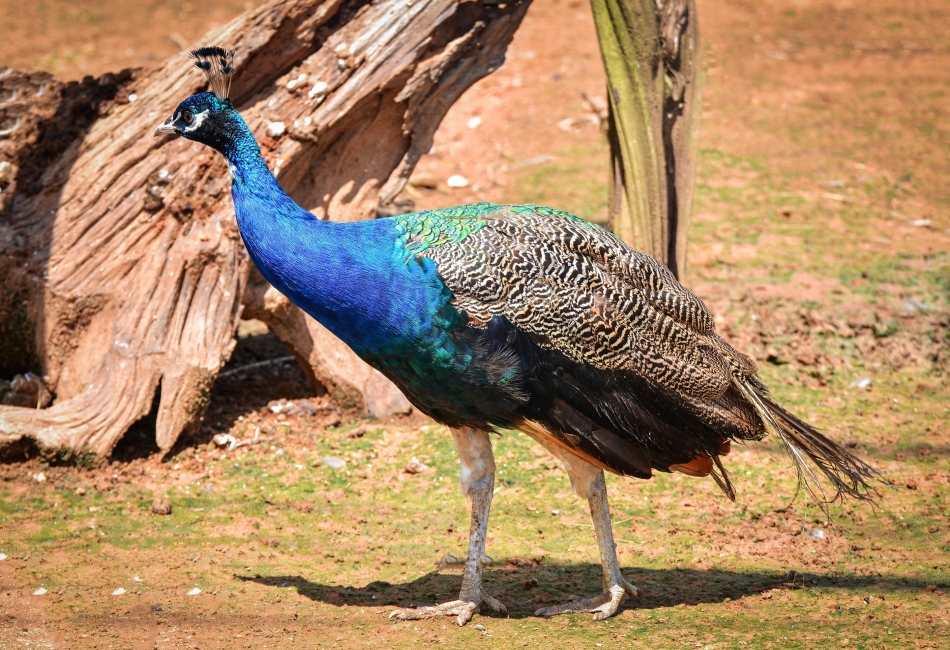
The Body of the Female Peacock
The female peacock is even prouder, more modest than the male, at least aesthetically speaking. This difference is crucial to her survival, enabling her to protect eggs and chicks from predators.
Key physical traits include:
- Size: The female peafowl is generally 3 to 3.5 feet long.
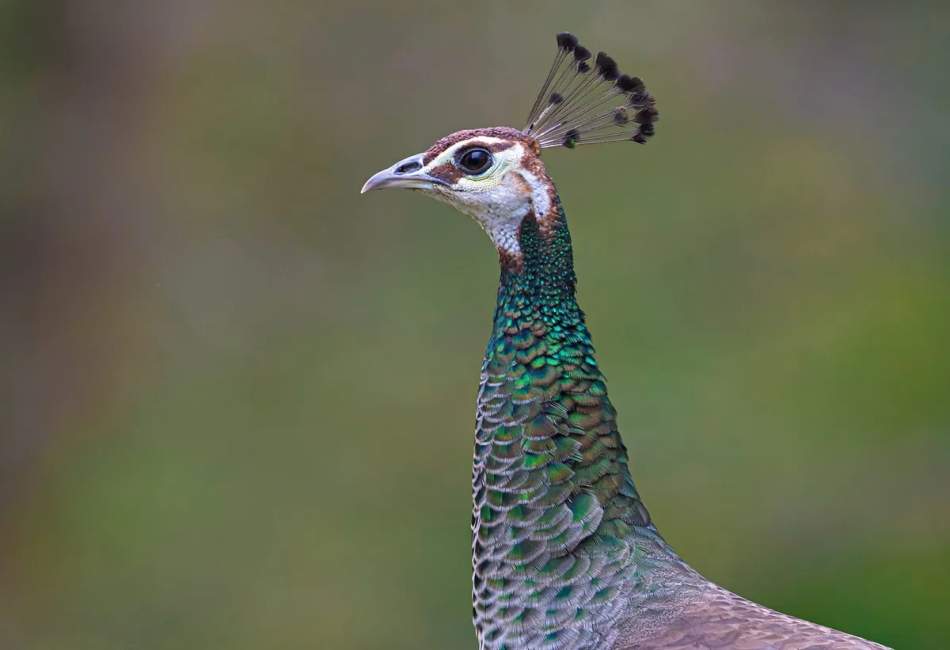
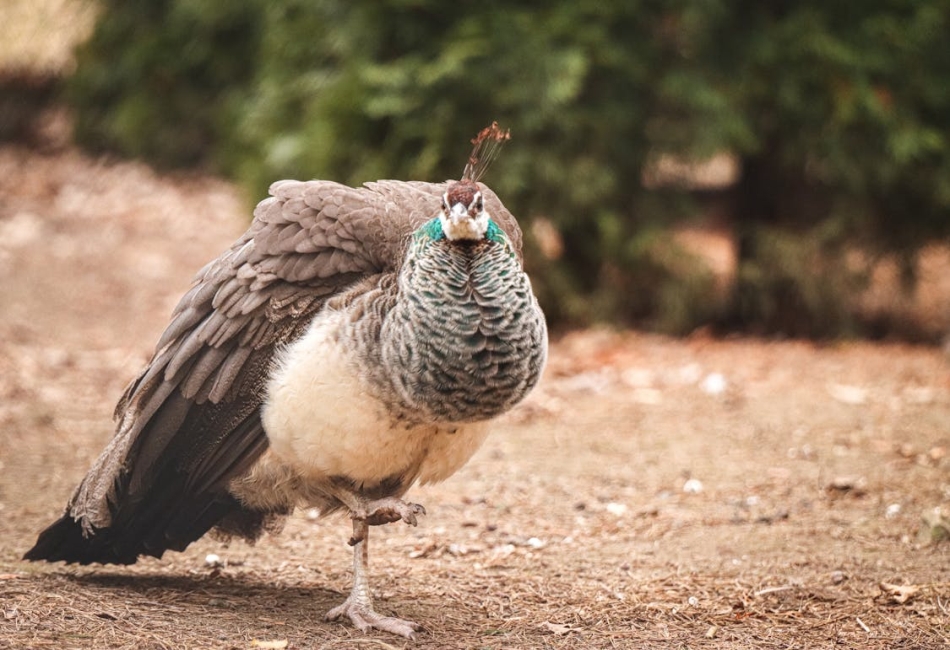
- Color: Most female peacocks do not boast the vividness of their male counterparts but have a combination of brown, green, and grey feathers with iridescent coloration on their neck.
- Crest: She does have a crest of feathers on her head like the male, however, it is smaller and less dramatic.
- Tail: The female does not have the long elaborate tail of the male peacock.
Though her plumage is plain, up close, Grousebeak is a lovely creature—especially her greenish-blue neck and chest.
Read Also: Albino Peacock
Female Peacock Name: What Do You Call Them?
Though the word English was the peacock’s call, the official name for the female peacock is peahen. In the broader context:
- Male: Peacock
- Female: Peahen
- Young: Peachick
- Group Name: A group of peafowl is called a muster or an ostentation.
Not only is using the right term more precise, but it also conveys a deeper understanding of the species. “Female peacock” is common, but “peahen” accurately reflects the word for its specific role, identity.
Behavior and Role of Peacock Female
The peahen is important to the peafowl species in terms of population and reproduction. She sees herself as a nurturer, protector, and mate selector. Let’s explore these behaviors:
Mate Selection
In breeding season, the males perform complex dances with their tail feathers to attract a peahen. Only, the peahen can’t be fooled—she assesses the size, symmetry, and color of the display. This weeding process means that only the strongest males pass on their genes.
Nesting and Incubation
After copulation, the peahen lays 3–6 eggs in a camouflaged nest. Only she incubates them for around 28–30 days, seldom leaving the nest for more than short feeding forays.
Chick Rearing
The female peacock raises the chicks on her own, showing the chicks how to forage for food and be on the lookout for predators. Her brown brocade is a super-effective impersonation as she sheds her feathers.
Male vs Female Peacock: Key Differences
A frequently asked question is, how to tell a male peacock vs female one. Here’s a quick comparison:
| Feature | Male Peacock | Female Peacock (Peahen) |
| Size | Larger (up to 9 ft w/ tail) | Smaller (3–3.5 ft) |
| Color | Bright blue, green, gold | Muted brown, green, cream |
| Tail (Train) | Long, fan-shaped, ornate | Short, functional tail |
| Role in Display | Performs courtship dance | Chooses mate |
| Parenting Role | None | Nesting and chick-rearing |
| Crest | Prominent | Subtle but present |
This juxtaposition shows that both pairs are helping to perpetuate the species in different and equally vital ways.
Read Also: Australian Birds
The Myth of the Pink Peahen
There is one in particular that makes an appearance every so often—the pink female peacock. Though that may sound like a scene from a fantasy, the truth is more complicated.
There are no wild female pink peacocks. However:
- Leucistic Peafowl: These birds suffer from a genetic anomaly that makes them white or pale in colour. You could also get away with a slight pink-ish hue in some light (if there’s any pigment left).
- Albino Peafowl: For a real albino, there is no color to the skin of the albino bird, and they are bright white. Some may appear pinkish if they are around pink stone or other articles that cast a pink hue.
- Artificial Coloring: Some breeders and pet bird owners artificially color the birds for show, but not naturally.
The female pink peacock is simply a biological impossibility, but color variations created through genetics or special artificial methods—as in dogs—can result in this look.
Read Also: The Red Headed Woodpecker
Diet of the Female Peacock
The peahen is omnivorous and feeds on the same as the peacock:
- Plants: Grains, seeds, flowers, berries
- Insects: Ants, termites, grasshoppers
- Tiny critters: Little lizards, frogs, baby snakes
When you’re raising chicks, the peahen is on the prowl, scouting for protein sources like insects, and she guides them on which plants are safe to eat.
Habitat and Range
Peahen, like peacock, prefers habitats that offer both open sites for feeding and covert sites for nesting.
They are commonly found in:
- Deciduous forests
- Farmlands and agricultural fields
- Parks and temple grounds (specifically, in India)
- Aviaries and private estates
Most female peacocks are Indian Peafowl, which is native to the Indian subcontinent but has been introduced to other parts of the world, including the United States, Australia, and parts of Europe.
Breeding and Reproduction
Copulation occurs in the spring and early summer months. The following are the significant courtship behaviours of a female peacock:
- Mate Choice: Selects the most attractive displaying male.
- Nest Building: A shallow depression in the ground, often concealed in vegetation.
- Egg Incubation: The incubation period for 3–6 eggs is an average of 28–30 days.
- Subsequent Care of Young: Leads and defends chicks for many weeks post-hatching.
During this period, the peahen becomes highly guarded and secretive, trusting in her feathers and sharp eye to keep her out of danger.
Peahens in Art and Religion
While the male peacock is the subject of the symbolism in most cultures for their showy feathery coat, the female peacock is also a symbol found here:
- In Hinduism: The peacock is associated with the goddess Saraswati, and so this variety of bird is also associated with knowledge, wisdom, and motherhood.
- In Greek Mythology: The peafowl is associated with Hera and, as such, is considered to be a symbol of the goddess’s faithfulness and the mother to her many eye,s which represent all-seeing knowledge. The beautiful-eyed feathers are then considered to be an all-seeing form of protection.
- In Art and Decor: A less common image to adorn your wall. Unlike her male counterpart, the peahen is sought after for her milder, earthly appeal.
Read Also: Albino Crows
FAQs About Female Peacock
Q1: What is a female peacock called?
A: The female is a peahen, while the male is a peacock. They are both members of the peafowl family.
Q2: Are there colorful feathers in female peacocks, too?
A: No, peahens have a more subdued pattern—typically brown, gray, or cream feathers. Their neck and chest, however, may have a green or blue iridescent sheen to them.
Q3: Can peahens fan their tails like peacocks do?
A: No, only the male peacock has the long, ornamental tail feature used for display. The peahen has a short, functional tail.
Q4: Do pink female peacocks exist?
A: There are no such things as natural pink peahens. However, some white morphs or artificially dyed birds may appear pinkish under certain conditions.
Q5: What is the primary job of a female peacock in the wild?
A: They hatch their young, lay eggs, and bring up baby birds. The peahen protects and mentors the next generation.
Q6: How to distinguish between a male and a female peacock?
A: Males are bigger, with bright plumage and long tail trains. The females are smaller, brownish in colour, and do not have the ornamental train.
Q7: What do you call a female peacock?
A: A peahen is the correct name for a female peacock. (Both males and females belong to a species known as peafowl; peacock refers specifically to a male.)
Q8: What does a peahen look like?
A: A peahen has less dramatic coloring than a male. She typically has brown, gray, or cream-colored feathers, a skimpy tail (no ornamental train), iridescent feathers greenish or bluish on her neck, and a smaller crest on her head. Her coloration helps her blend while nesting and caring for chicks.
Q9: How can you tell if a peacock is male or female?
- Male: Showy with a long, ornamental tail (train) and brightly coloured (blue, green, gold).
- Female: Less glamorous, mostly brown/cream, no long tail train, and smaller in size.
Q10: How can you tell if a baby peacock is male or female?
A: It’s very difficult (impossible) to tell the sex of a baby peacock (peahen) just by looking.
- Physical traits begin developing at 3–6 months.
- Males will develop colorful neck feathers and grow their tails by around age 2.
- A DNA test is the most accurate method for early gender identification.
Q11: What is a peahen?
A: The peahen is the female counterpart of the peafowl species. She is instrumental in nesting, incubation, and chick-rearing. Though she lacks the flamboyant train, she is well-camouflaged and vital for the survival and continuation of the species.
Conclusion
As much as a peacock is known for its shimmering display, its female also deserves equal praise in nature. She might not be the campest, but she’s certainly not without intelligence, maternal instincts, and significance in the life cycle. Whether you are intrigued by the relationship dynamics between male vs female peacock behavior, wondering about the presence of a pink female peacock, or just want to expand your knowledge on these majestic birds, getting to know the female peacock leads to a greater sense of the harmony and beauty that exists in the world of avians.




![Yellow-Throated Toucan [Ramphastos ambiguus]: Habitat, Diet, Sounds, Overview](https://birdzpedia.com/wp-content/uploads/2023/12/Add-a-heading-768x402.png)