Stripping and Waxing Floors: What Most People Get Wrong
Shiny floors don’t happen by accident. They’re the result of a few simple steps done the right way, in the right order, with a little patience. Yet most dull, streaky, or scuffed floors share the same handful of mistakes. If your last strip-and-wax didn’t hold up—or never looked great to begin with—this guide will help you spot what went wrong and how to fix it next time.
What Stripping and Waxing Actually Do
- Stripping removes old finish, dirt, and embedded grime so you have a clean, bare surface.
- Waxing/Finishing lays down thin, even coats that cure into a protective, glossy layer.
When the strip is incomplete or the finish is applied poorly, problems show up fast: haze, swirl marks, dirt trapped under the finish, or a shine that fades in weeks instead of months.
Mistake #1: Rushing the Strip
If the old finish isn’t fully removed, you’re building new coats on a dirty foundation. Common rush signs:
- You skipped the dwell time listed on the stripper label.
- You didn’t agitate enough with a pad or brush.
- Corners and edges look darker or gummy.
Fix it: Follow the product’s dwell time, keep the surface wet, and work in sections you can manage. Scrub edges and corners by hand. Vac up slurry immediately and rinse well.
Mistake #2: Forgetting to Neutralize
Strippers are alkaline. If you don’t bring the floor back to neutral pH, your finish can haze, powder, or fail to bond.
How to check: Use pH test strips after rinsing. Keep rinsing (often with a neutralizer or diluted neutral cleaner) until you’re close to neutral.
Why it matters: Finish laid over a high-pH floor is like paint over greasy walls—it won’t last.
Mistake #3: Dirty Tools, Dirty Results
Mops, buckets, and pads pick up a lot of gunk during stripping. Reusing them for finish is a fast way to trap lint and grit under every coat.
Fix it:
- Keep a clearly labeled, finish-only mop and clean bucket.
- Strain finish with a paint strainer if you see floaties.
- Swap out pads and mop heads more often than you think you need to.
Mistake #4: Heavy Coats and Not Enough Dry Time
More isn’t better. Thick coats dry on top while staying soft underneath. That leads to scuffs, swirl marks, and premature wear.
Rule of thumb:
- Aim for 4–6 thin coats in commercial spaces; 3–4 in lighter-traffic areas.
- Allow 20–40 minutes between coats (or as the label says) and test in a corner with a gentle touch—if it feels cool or tacky, it’s not ready.
Mistake #5: Ignoring the Room
Temperature, airflow, and humidity all change how finish behaves.
- Cold rooms slow dry times and can cause clouding.
- No airflow leaves solvent lingering, which softens the finish.
- High humidity can cause blushing (that milky look).
Fix it: Work within the manufacturer’s temperature and humidity range. Use fans for gentle air movement, but don’t point them right at the wet floor—think “circulate,” not “blast.”
Mistake #6: Skipping Detail Work
Edges, corners, baseboards, and under fixtures are where grime hides. If you miss these during the strip, the new finish will telegraph the dirt.
Tip: Keep a small hand pad and scraper on your cart. After each section, do a quick “edge walk” before rinsing.
Mistake #7: Opening to Traffic Too Soon
Fresh finish might be dry to the touch in under an hour, but it needs time to cure and harden.
- Light foot traffic: after full dry time of the last coat.
- Furniture and mats: wait 24–48 hours if possible.
- Aggressive cleaning or burnishing: give it 48–72 hours.
If you must reopen sooner, post signs, control entry points, and avoid dragging anything across the floor.
Mistake #8: No Plan for Aftercare
Even a perfect strip-and-wax won’t survive long without daily care. Sand, salt, and grit act like sandpaper under shoes.
Daily: Dust mop (or vacuum hard floors) to pull up grit.
2–3× per week: Damp mop with a neutral cleaner.
As needed: Auto-scrub high-traffic paths.
Periodically: Burnish if the finish allows—it improves shine and helps extend the life of the coats.
Picking the Right Finish (and Why It Matters)
Not all finishes are the same. Some are built for durability and frequent burnishing (great for schools, retail, and hallways). Others are low-maintenance, better for offices or spots without a burnisher.
Questions to ask before you start:
- How much foot traffic does this area see?
- Will we burnish weekly, monthly, or never?
- Do we need slip resistance above standard levels (healthcare, senior living, gyms)?
- Is this a gym, cafeteria, or entryway with frequent spills?
Match the product to the job, and you’ll get longer life per coat—and fewer redos.
A Simple, Repeatable Process (So You Don’t Have to Guess)
- Prep: Post signs, clear the space, dust mop or vacuum thoroughly.
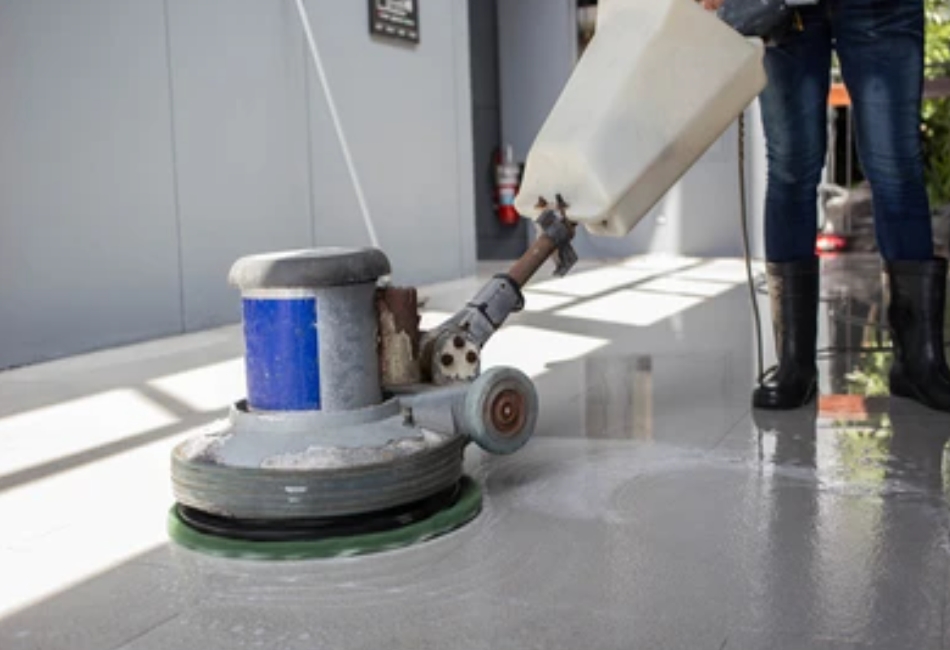
- Strip: Apply stripper evenly, allow proper dwell, scrub with the right pad, detail edges, and keep it wet.
- Recover: Wet-vac the slurry; rinse with clean water.
- Neutralize: Bring pH back to neutral; confirm with test strips.
- Dry: Let the floor dry completely (fans help).
- Finish: Apply thin, even coats; respect dry times; work in a consistent pattern.
- Cure: Keep traffic light as the finish hardens; delay mats and heavy items if you can.
- Maintain: Dust mop daily, neutral clean regularly, burnish as needed.
Print this, tape it inside the closet door, and you’ll avoid 90% of headaches.
When to Call in Pros
Some spaces—big box stores, schools, healthcare facilities—need more hands, equipment, or off-hours work than an in-house team can manage. If your results are inconsistent, if build-up keeps returning, or if the shine never looks even, bring in Commercial Cleaning Services that specialize in floor care. They’ll correct the base issues (like poor neutralization or uneven coats) and set you up with a maintenance plan that fits your traffic patterns.
The Bottom Line
Stripping and waxing isn’t complicated—but it is particular. Most failures come from the same few shortcuts: incomplete stripping, skipping neutralization, dirty tools, heavy coats, and rushing traffic back onto the floor. Slow down a little, follow the steps, and protect your work with steady maintenance. Do that, and your floors won’t just look good on day one—they’ll keep that clean, glassy look for months.
For a practical aftercare routine you can hand to your team, check out this guide on how to take care of floors after stripping and waxing. It covers daily habits, weekly cleaning, and what to avoid so your shine lasts.