Premade Pouch Packaging for Powders, Liquids, and Granules: What Changes?
Understanding Premade Pouch Packaging
Premade pouch packaging has become a popular solution for manufacturers looking for convenient, flexible, and efficient ways to package different products. Unlike traditional packaging methods that create bags from rolls of film during the filling process, premade pouch systems use bags that have already been manufactured and supplied in a ready-to-fill format. This approach can support consistent packaging quality while offering flexibility in pouch designs, materials, and sizes.
However, packaging powders, liquids, and granules requires different handling techniques. Each product category has unique physical properties that influence filling accuracy, machine configuration, sealing requirements, and production speed. Understanding these differences helps manufacturers select suitable equipment and maintain reliable packaging operations.
Why Product Characteristics Matter
The physical characteristics of a product determine how it moves through a filling system. Powders consist of fine particles that can become airborne during handling. Liquids flow continuously and require controlled dispensing to prevent spills. Granules contain larger particles that generally move through feeding systems using gravity or mechanical assistance.
These differences affect almost every stage of the packaging process. Manufacturers must consider product density, particle size, moisture sensitivity, viscosity, and flow behavior before selecting a packaging solution.
A packaging system designed for one product category may not deliver the same results with another. Therefore, machine configuration should match the material being packaged rather than relying on a single standard setup.
Packaging Powders in Premade Pouches
Powder products are widely used in food processing, pharmaceuticals, cosmetics, agriculture, and chemical manufacturing. Examples include flour, coffee powder, milk powder, protein supplements, spices, and powdered cleaning products.
One of the main challenges when packaging powders is controlling dust. Fine particles can spread into the surrounding area during filling, potentially affecting product cleanliness and creating difficulties around sealing components. Excessive dust near the pouch opening may also weaken seal quality.
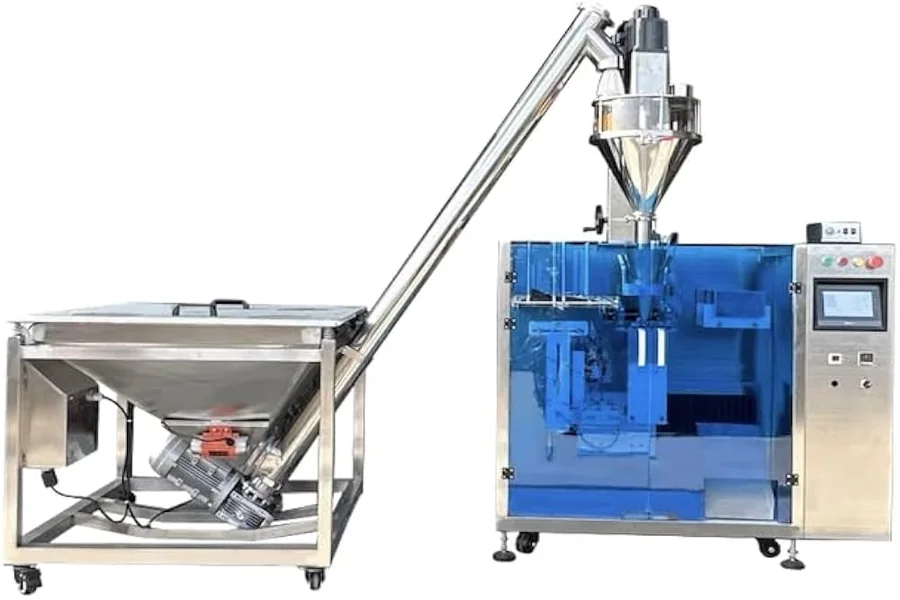
Manufacturers commonly use auger-based filling systems for powders. These systems measure and dispense material through a rotating screw mechanism. The configuration can be adjusted according to the powder’s density, flow characteristics, and required filling quantity.
Accurate dosing is particularly important for products with different levels of compactness. Some powders flow freely, while others may form clumps or become compressed during storage. Agitation systems, suitable hopper designs, and controlled feeding mechanisms can help maintain consistent product flow.
Dust extraction and carefully designed filling nozzles are also useful considerations. The goal is to transfer the required quantity into each pouch while minimizing material loss and keeping the sealing area clean.
Packaging Liquids in Premade Pouches
Liquid packaging introduces a different set of technical requirements. Products such as sauces, juices, oils, detergents, shampoos, and liquid supplements need filling systems capable of controlling flow and preventing leakage.
Unlike powders, liquids can spill easily when dispensing is not properly synchronized with pouch positioning. The filling nozzle must deliver the correct quantity while minimizing splashing, dripping, and product residue around the pouch opening.
Liquid filling machines may use piston fillers, pump-based systems, or other metering technologies. The most suitable option depends on the product’s viscosity and composition. Thin liquids generally require different handling arrangements from thick sauces, creams, and gels.
Temperature can also influence filling performance. Some products become thinner when heated, while others require specific temperature conditions to maintain their quality. Manufacturers should consider whether the filling system needs heating, cooling, or temperature monitoring.
Sealing is another important factor. Liquid residue around the pouch opening can interfere with the sealing process and increase the possibility of leakage. Proper nozzle positioning, controlled filling speed, and effective cleaning procedures help maintain packaging quality.
For liquid products, manufacturers may also need to select pouch materials with appropriate barrier properties. Protection against oxygen, moisture, light, and external contamination depends on the product’s characteristics and storage requirements.
Packaging Granules in Premade Pouches
Granular products include rice, sugar, salt, lentils, seeds, nuts, cereals, fertilizers, and small industrial materials. These products contain visible particles that generally flow more freely than powders but require different feeding and dosing arrangements.
Many granular products can be handled through volumetric or weighing-based filling systems. Multihead weighers are commonly used when accurate portion control is important, particularly for food products with irregular particle shapes or varying sizes.
Gravity-based feeding can work well for free-flowing granules. However, particle size, shape, density, and fragility can influence the filling process. Products such as seeds and fragile food ingredients may require gentle handling to reduce breakage.
Manufacturers must also consider the possibility of product bridging or inconsistent feeding. Although granules often flow more easily than fine powders, irregular particles can occasionally become trapped in feeding channels. Hopper design, vibration systems, and appropriate discharge openings can help maintain steady movement.
The filling system should also account for the required package weight. Accurate weighing helps reduce product giveaway and supports consistent package quantities. For larger particles, the pouch opening and filling nozzle should be wide enough to prevent blockages.
How Machine Configuration Changes
The most significant difference between powder, liquid, and granular packaging is the filling technology. Each product requires a dispensing mechanism suited to its physical properties.
A premade pouch filling machine can be configured with different filling systems depending on the intended application. Powder packaging may require an auger filler, liquid packaging may use pumps or piston fillers, and granular packaging may rely on weighing systems or volumetric dosing.
Other machine components can also require adjustments. Hopper design, filling nozzles, pouch support, product contact surfaces, and sealing arrangements all influence overall performance.
Production speed should be considered alongside filling accuracy. Increasing speed without matching the product’s flow behavior can lead to inaccurate portions, spills, dust formation, or sealing defects. A balanced configuration is generally more valuable than focusing exclusively on maximum output.
Choosing Suitable Pouch Materials
Pouch material selection is another important consideration. Different products have different protection requirements, and packaging materials should be selected according to the product’s sensitivity and expected storage conditions.
Powder products may require moisture protection to prevent clumping and quality deterioration. Liquid products need reliable leak resistance and suitable sealing properties. Granular products may require packaging that offers sufficient strength against handling and transportation stress.
Manufacturers can choose from different laminated films and barrier structures depending on their application. Pouch formats may include stand-up pouches, flat pouches, zipper pouches, and spouted designs. The appropriate format depends on product characteristics, consumer convenience, and distribution requirements.
Hygiene, Maintenance, and Quality Control
Cleaning and maintenance requirements can differ significantly between product categories. Powder systems may need regular dust removal, while liquid filling equipment often requires thorough cleaning to remove sticky residues. Granular systems should be inspected for accumulated particles and feeding obstructions.
Food and pharmaceutical manufacturers should pay particular attention to hygiene standards and product-contact materials. Cleaning procedures should match the product and the manufacturer’s safety requirements.
Quality control should include checks for filling accuracy, seal strength, pouch appearance, and leakage or contamination. Regular inspections can help identify problems before they affect a large production batch.
Conclusion
Premade pouch packaging offers manufacturers a flexible way to package powders, liquids, and granules, but each product category requires a different approach. Powders need effective dust control and accurate auger dosing, liquids require controlled flow and reliable leak prevention, while granules depend on suitable feeding and weighing systems.
Choosing the right filling technology, pouch material, and machine configuration can improve packaging consistency and reduce operational problems. By understanding the physical characteristics of their products, manufacturers can develop a packaging process that supports quality, efficiency, and dependable production performance.