
Cricket and Culture: A Reason Why India Breathes the Sport While America Hardly Takes Notice
Walk down the street in Mumbai, Delhi, or Chennai, and it won’t be long before coming across a group of kids playing cricket. Cricket in India is not a pastime — it’s a pulse. It lives in schoolyards, echoes through living rooms when international matches are on television, and arouses the kind of passion that makes it feel less like a sport than spiritual.
In America, though, cricket doesn’t even register a blip. For all of its popularity around the world, the sport is essentially unknown to American audiences. Baseball, basketball, football, and ice hockey are what reign supreme. So why the difference? Why would one nation embrace cricket-like religion and the other like a stranger?
It’s not simply an issue of sporting taste — it’s a tale of colonization, media, identity, and opportunity.
A Game of Empires: How History Shaped Cricket’s Spread
In order to begin to explain cricket’s primacy in India and its virtual non-existence within the United States, it is necessary to begin with imperialism’s legacy. The British Empire was largely responsible for diffusing cricket to its colonies — India, Australia, the West Indies, South Africa, et cetera. There, cricket was brought as a means of transmitting British discipline and virtues. It became an instrument of national self-expression rather than an imperial imposition.
In India, cricket wasn’t just a sport — it was a statement of resistance and identity. Playing and succeeding at cricket under British rule was one means by which Indians were resisting British dominance on Indian terms. After independence, cricket was a bond uniting a vast, multitudinous population. Kapil Dev and Sachin Tendulkar weren’t simply players — they were cultural icons.
At the same time, the US abandoned British dominance much earlier and went out of its way to rid itself of British traditions. American football and baseball were nourished, in harmony with the nation’s pioneer and self-sufficient ethos. Cricket, complete with tea breaks and complicated rules, brought back memories of an era in which the US had no desire to relive.
Specifically, this is also reflected in present-day digital culture. With the emergence of match statistics sites, fantasy leagues, and online cricket betting, new regimes of interaction and economic life have been unleashed around the game in India and South Asia. American aficionados, conversely, channel their passion into fantasy baseball or basketball with minimal spillover in the way of cricket-specific content or wagering.
Media, Money, and the Magnifying Glass
In America, where action rules and time is money, cricket’s lengthy game durations and unhurried approach can be glacial. Baseball, though in many ways the same, has the luxury of cultural acceptance and a century-long history at home.
And it does not hurt that US broadcasters have had little interest in airing cricket. Most of the cricket is televised on specialist streaming sites or sports channels. Without frequent exposure, it’s difficult to create fan interest, much less fandom.
But change is coming. As South Asians are increasing in San Francisco, New York, and Houston, the controversy surrounding cricket is leaking into newer markets. Platforms such as Melbet BD have begun to plan content for vintage as well as new fans. And that indicates American indifference towards cricket is not universal.
The Infrastructure and Accessibility Role
One of the reasons cricket thrives in India is that it is easy. All you require is a bat, a ball, and an open space. From rural village villages to town cities, from the busy alleys to the costliest schoolyards, cricket was played anywhere.
Cricket has poor infrastructure in the US. There are few pitches, little school-level coverage, and little community knowledge. Public spaces, school budgets, and youth schemes are dominated by ball sports like football and basketball.
Alongside this, India has also made a significant investment in grass-roots cricket. From under-16 leagues to state-supported academies, there is a system to continually channel talent into the game. It is not a sport; it is a career. Parents urge children to have dreams of cricket because there is an infrastructure in place to assist it.
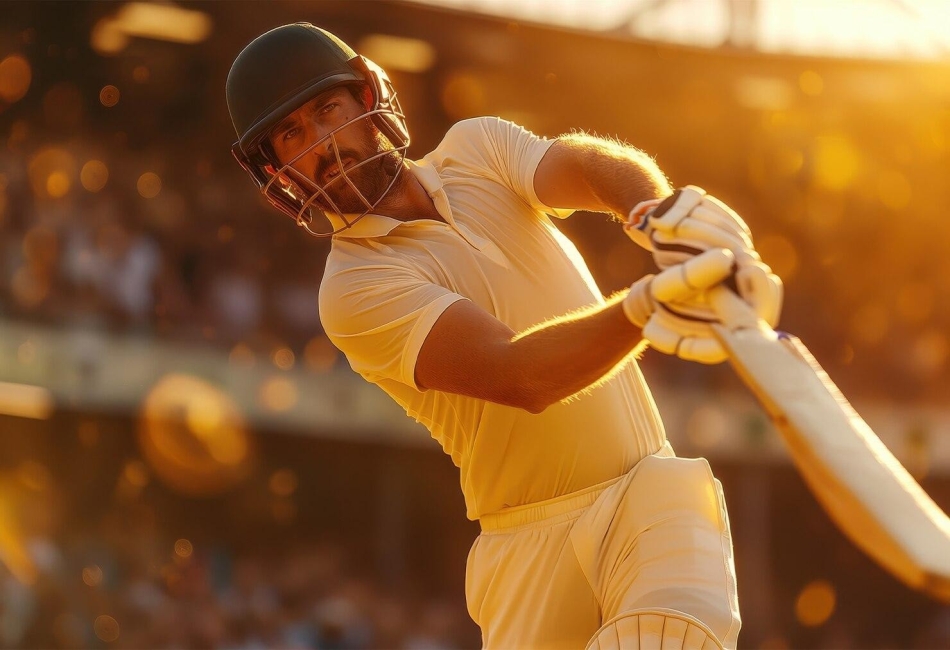
That level of systematization first starts to occur now in the US, much due to immigrant-initiated ventures and the popularity of T20 tournaments. Major League Cricket (MLC) appearance in 2023 was a step in the right direction but still has a long way to go in the battle against the stranglehold of NFL, NBA, and MLB.
A Tale of Two Sporting Cultures
To put the gap between the two nations into perspective, dissecting major points that characterize their sporting mentality is useful:
| Category | India | United States |
| Historical Influence | British colonial legacy | Post-colonial rejection of British traditions |
| Main Sports | Cricket, field hockey, kabaddi | American football, baseball, basketball |
| Media Support | Wall-to-wall cricket coverage | Minimal cricket exposure |
| Youth Engagement | Cricket in schools and streets | Cricket rarely included in school programs |
| Star Power | Cricketers are celebrities and national icons | Cricketers mostly unknown to the general public |
This graph illustrates the gap isn’t created by one factor — it’s the result of an accumulation of cultural, historical, and commercial forces building up over generations.
Cricket Isn’t Just a Game — It’s Context
Cricket was a reflection in India — of pride, hope, solidarity, and now, international might. It never was in America. But sporting trends change, and with them, cultures. And so seeds are sown with the MLC leagues and increasing push from immigrants.
For the time being, India goes on celebrating cricket in unspoken fervor. Stadiums reverberate with choruses. Homes grind to a stop for every four. Roadways burst into joy or despair. It’s not a sport — it’s part of life itself.
And though the US remains in the catch-up mode, the rest of the world knows: cricket-wise, India doesn’t play – it believes.


