Can Condo Dwellers Furnish Small Spaces in Modern Style Without Feeling Cramped?
Condo living demands careful planning, especially when one room serves as dining, work, relaxation, and entertaining space. Modern furniture suits these homes because clean lines reduce visual clutter and give each piece a clear purpose. The right arrangement depends on accurate measurements, open walking paths, storage needs, and natural light. With the right proportions, a compact condo feels comfortable and polished, not crowded. Several practical decisions make that balance easier to achieve.
Start With The Room’s Measurements
Small condos need furniture that respects the available floor area, walking paths, and sightlines. A slim sofa, compact dining table, and narrow console prevent heavy visual blocks. Residents can compare proportions, finishes, and delivery when shopping for modern furniture options, and plan room layouts when they shop for modern furniture in Fort Lauderdale, then match furniture dimensions to each wall. A suitable selection starts with measurements, not shopping trends.
Measure the room’s length and width, then record door swings, windows, outlets, vents, and built-in elements. Leave enough clearance for doors and primary walkways. A scaled floor plan, even one drawn on paper, reveals oversized furniture before delivery creates an expensive problem.
Choose Furniture With Visual Lightness
Furniture does not need to be tiny to suit a condo. It needs appropriate proportions and a shape that leaves room around it. Sofas with raised legs expose more flooring, making the seating area feel less dense.
Glass, stone, or slim wood coffee tables also preserve sightlines. Rounded edges improve movement through narrow routes, while open-base consoles provide storage without creating a solid visual wall. A low-profile media unit keeps attention near eye level and reduces the impression of a crowded room.
Color affects perceived space as well. A restrained palette of warm white, soft gray, natural wood, or muted blue keeps large pieces visually calm. One darker chair or piece of artwork adds definition without making every surface compete for attention.
Give Each Piece A Clear Job
Multifunctional furniture earns its floor area in a condo. A storage ottoman handles seating, foot support, and blanket storage. A sofa bed accommodates overnight guests without requiring a dedicated guest room. A compact dining table can also support remote work when the room needs flexibility.
Storage should follow the room’s actual habits. Cabinets hide chargers, paperwork, and entertainment equipment, while wall-mounted shelving keeps smaller items off the floor. Closed storage usually looks calmer than multiple open baskets or scattered boxes.
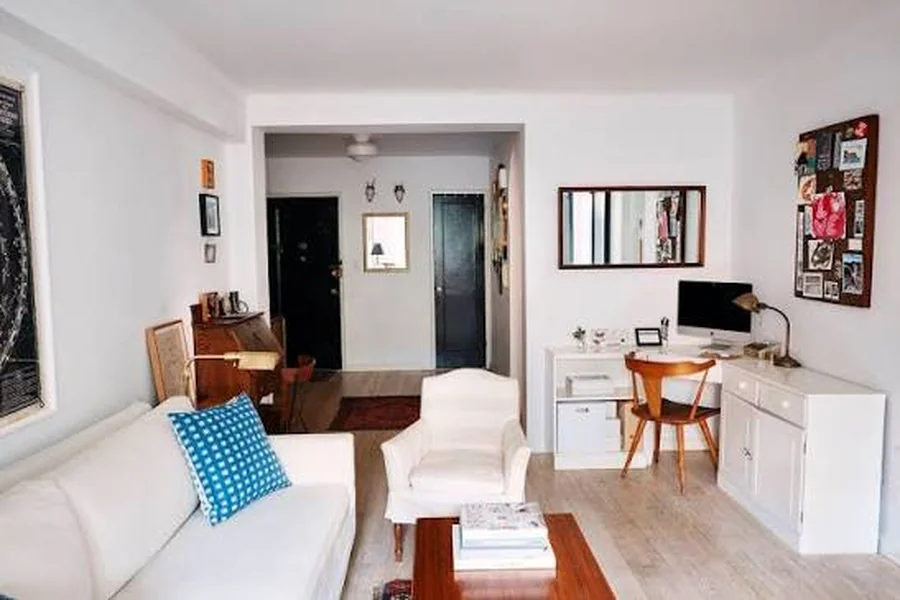
A console behind a sofa can separate living and dining areas without blocking light. In a studio-style condo, a narrow bookcase can divide zones while keeping the room visually connected. Furniture placement should clarify how each area works instead of filling every empty section.
Protect Walking Paths And Sightlines
A comfortable layout needs clear routes between the entry, kitchen, bathroom, balcony, and seating area. Place the largest piece first, then arrange smaller furniture around it. This method prevents chairs, tables, and lamps from narrowing the primary path.
Keep furniture away from windows when natural light matters. Low pieces preserve the view and let daylight penetrate deeper into the room. Mirrors placed across from a window can spread light, but they should reflect an attractive surface rather than a cluttered corner.
Area rugs also define zones without adding walls. In a living room, the rug should connect the sofa and chairs while leaving the surrounding floor visible. A small rug floating beneath a coffee table often makes the arrangement feel disconnected.
Use Modern Details With Restraint
Modern style depends on proportion, repetition, and clean surfaces. Choose one dominant material, such as light wood or matte metal, then repeat it through smaller details. Matching every finish can make a condo feel staged, so a contrasting texture adds depth without creating clutter.
Lighting requires careful placement. A slim floor lamp uses less surface area than a side-table lamp, while wall-mounted fixtures free up valuable tabletops. Layered lighting from ceiling fixtures, task lamps, and accent lights gives the room flexibility throughout the day.
Decor should suit the room’s scale. One large artwork often looks calmer than several small frames crowded together. A few substantial accessories create focus, while excess objects reduce usable space and add visual noise.
Conclusion
A modern condo feels spacious when every item respects the room’s measurements and daily movement. Residents should measure first, select furniture with open profiles, assign each piece a clear function, and preserve the best sightlines. Then use storage, rugs, lighting, and decor to refine the arrangement without filling unused gaps. Before purchasing, mark each item’s footprint with painter’s tape and walk through the room. That simple test shows whether the planned layout supports comfort or creates an obstacle.