
Building Social Skills for Preschoolers: A Simple Guide
Social skills become essential for preschoolers during their learning about relationships outside the family. The early years introduce the use of communication, cooperation, and empathy. Early teaching enables preschoolers to manage their emotions, create friendships, and be successful in groups.
This article outlines the importance of social skills for preschoolers, how to encourage them, and some practical ways in which parents and teachers can promote the social development of preschool children.
Why Social Skills Are Important for Preschoolers
Social skills for Preschoolers form the significant basis for a child’s emotional and cognitive development. Therefore, these skills must be honed from the initial years for their overall development.
1. Emotional Development
Social skills among preschoolers govern emotional control, which helps communicate efficiently and healthily express feelings, reducing frustration that may create tantrums.
2. Building Connections
They make friendships starting from preschool. The social skills enable them to stick to each other and develop friendships. These early associations will thus help the child to belong somewhere, improving their self-esteem and confidence.
3. Success in School and Beyond
Children with a more developed social skills usually show better academic results. They listen, participate in group work, and share everything. Such abilities are required later at school and in life, where communicating and working in a team becomes crucial.
Vital Social Skills the Preschooler Should Have
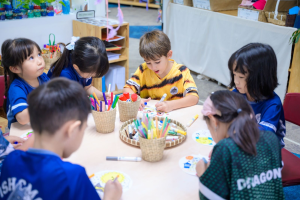
Preschoolers initiate their development of the perception of different social interactions. Some of the significant social skills to teach to the preschooler include:
- Sharing and Taking Turns
Sharing is no simple skill for a preschooler. Often, small children will not share their toys, yet it is essential to forming healthy relationships through sharing and taking turns.
- Listening and Following Directions
Listening is a significant skill that allows children to join and follow a conversation. Teaching preschoolers how to listen and follow directions will add to their social etiquette and may help them in further education.
- Empathy and compassion.
Empathy, or understanding and sharing others’ feelings, is one of the key, much-needed, essential life skills intended for preschoolers. Gaining empathy and compassion provides children with solid relationships.
- Conflict Management
Conflicts arise regularly in social life, even among preschool children. Peaceful conflict resolution is an essential social skill that must be learned as early as possible. Permit the child to describe his or her feelings without being aggressive.
To better understand how to develop social skills in students, refer to our guide on developing social skills in students.
How to Teach Social Skills to Preschoolers
Social skills are easily imparted to a young child but call for an intent. The following are some of the ways a person could teach these lifesaving skills to preschool children:
Encourage Playing and Teamwork
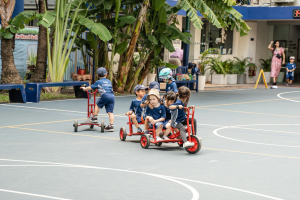
The play remains one of the major avenues through which pre-school children learn social behaviors. Structured and free play both allow a child to interact, negotiate, and cooperate.
Games of teamwork, like building blocks “house” or some board games, allow teaching, sharing, taking turns, and working together. On the other hand, unstructured games, like sandbox games or playground games, are instrumental in developing imagination and social skills.
Play promotion nurtures natural curiosity. For other tips on building curiosity and social skills, see our guide on how to develop curiosity in kids.
Be Nice
They learn from what they see among adults. Parents and teachers can work at teaching social skills through their actions, which serve as examples. Empathy, active listening, and respect in communication are demonstrated daily.
If he is angry, he should be taught to acknowledge this calmly. “I can see you are distressed because your favorite toy is torn. Let’s get it repaired.” This will help him recognize his emotions and teach him not to act on them but to have a solution.
Use Role-Playing
Role-playing is one of the best ways to give preschoolers practice with social interactions. Create some simple scenarios that act out everyday social situations: sharing a toy greeting a friend.
For example, role-play another child, and your preschooler gets to practice nicely asking for a turn with a toy. Children can practice social interactions in their safe place, developing their social confidence when facing such a situation.
Develop Emotional Literacy
Along with social interaction, teaching recognition and expressing emotions are essential for preschool children. Understanding their feelings allows children to handle their emotions and empathize with others.
Use an emotion chart or tell a story to bring out the feeling in preschoolers. Also, read books that are related to feelings by pointing and asking questions like, “How do you think the character feels?” to connect the feelings with some events they may have gone through.
Tips for Parents and Educators to Improve Social Skills in Preschoolers
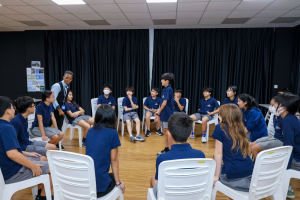
Supporting social development in the home and classroom is fun. The following are suggestions to enhance a preschooler’s social skills most effectively.
- Develop a Schedule
Routine is a source of security for children. Routines help to establish the pattern of social interaction or family mealtimes; for example, children learn to share and talk.
- Positive Reinforcement
Praise your child for sharing and being kind, using specific praise: “I like it when you share your toy.” This reinforces positive behavior and builds confidence in the child.
- Reading books about social skills.
Books are the true teachers of social behavior. Stories of friendship, unselfishness, and solutions of dilemmas give them models of good conduct to which they can relate.
- Reduce screen time
Technology provides some educational benefits; this must be balanced with real-life exposure. Encourage preschoolers to do more face-to-face activities such as playing with friends, having a family game night, or doing group activities.
Conclusion
Helping develop social skills for preschoolers is crucial for their later years emotionally and in terms of success. Encourage playing, model good behavior, and teach empathy to establish healthy relationships and effective communication.
For more professional tips and advice on early childhood education, check out ISHCMC. Learn more about how to support your child as they develop in a nurturing environment that fosters creativity and growth.
FAQs
- What age should I start teaching my child social skills?
Start teaching them from infancy, but preschool is crucial since they deal more with their peers.
- What if my child struggles with social interactions?
Be positive in social situations, use role-playing, and provide your child with easy-to-understand guidance. If problems persist, consult a child development specialist.
- How can I handle aggressive behavior during playtime?
When he’s aggressive, intervene calmly and help him put words to his feelings. Model alternatives to aggression, such as taking turns and sharing, and reinforce positive conflict resolution.