
Baby Bird: Understanding, Identifying, and Helping Young Birds
So, of course, you’re going to feel bound up in the fate of a teeny, fragile, helpless baby bird you find. Chirping from a nest or awkwardly hopping around on the ground, the sight of a baby bird can spark curiosity and a desire to help. But not every baby bird needs to be rescued, and knowing the different stages of their development is critical for getting them the right help. In this guide, we’ll delve deep into what makes a baby bird special, how to recognize one, what to do if you find one, and how baby birds grow up to become the confident adult birds we all love.

What Is a Baby Bird?
A nestling, baby bird, or chick is a young bird not yet fledged. They go through many phases of growth, each with its own physical characteristics and needs. These stages are:
- Hatchling – Newly hatched, often naked, with eyes closed.
- Nestling – A few days old, relatively naked, still depends on parents and nest for support.
- Fledgling – Older, feathered, learning to fly, can spend time on the ground.
Knowing the stage of a baby bird provides clues to whether it is in need of assistance or is instead simply passing through a natural stage of its life cycle.
What to Feed a Baby Bird
Feeding a baby bird will depend on its species as well as its age. In general, baby birds eat a high-protein diet similar to what their wild parents would offer them—think insects, worms, or regurgitated food. If you are temporarily caring for a baby bird until you can get it to a wildlife rehabilitator, it’s O.K. to feed it softened dog kibble, hard-boiled eggs mashed into a paste, or mealworms. Do not provide milk, bread, or birdseed, as these can be dangerous and even fatal to young chicks.
Baby Bird Fell Out of Nest
If a baby bird fell out of the nest, your immediate reaction is likely to be to rescue it—but you should first evaluate the situation. If the bird is a nestling that doesn’t have fully grown feathers, it probably needs to be returned to its nest immediately. If you can find the nest close by, then you should put the bird back onto it carefully. If you are unable to locate or reach the nest, you can fashion a makeshift nest, such as a small basket lined with soft tissues, and attach it to a tree where it can be secured near where the baby bird was found. Just always stay away to make sure the parents come home.

Baby Kiwi Bird
The baby kiwi bird is one of the most amazing chicks in the bird world because of the unique features found on their being. These take place in kiwis, which are also native to New Zealand, where baby kiwis—made from very large eggs—are precocial, that is, rather mature and self-sufficient from birth. Unusually for young birds, which must be fed by their parents, kiwi parents leave their young offspring to fend for themselves from just a day or so after hatching. Their powerful legs and well-developed wings make them capable of foraging on the forest floor when only days old, something a large number of other bird species cannot do.
How to Feed a Baby Bird
Knowing how to feed a baby bird is incredibly important if you’re providing emergency care until a professional can step in. Baby birds need to be fed what may seem like an excessive number of times a day, every 15 to 30 minutes during daylight hours. Do not force-feed the bird. Use a syringe or tweezers to carefully make contact between the food and your bird’s mouth to imitate the way parent birds would feed their young. Be sure the bird is sitting in an upright position, with its head slightly elevated to avoid choking. Bring the food to room temperature and never offer food unless a wildlife rehabilitator instructs you to do so.
How to Tell What Age a Baby Bird Is
Baby birds are not all identical, and their appearance changes overnight. Here’s how to identify the typical stages:
- Hatchlings: Completely or mostly naked, eyes closed or just opening, pink skin, very fragile, cannot regulate body temperature.
- Nestlings: Eyes open, some pin feathers or fluff, still unable to fly or perch, completely dependent upon parents for food.
- Fledglings: Fully feathered or mostly so, able to hop or fly short distances, often found on the ground, tended and fed by nearby parents.
It’s a common misconception for people to think fledglings are abandoned birds, but they are likely receiving care from their parents still.
Read Also: Blue Jay Spiritual Meaning
Baby Bird: What to Do If You Find One
Step 1: Assess the Situation
Ask yourself:
- Is the bird hurt (bleeding, cannot move, has feathers missing where there shouldn’t be a bare spot)?
- Is it in imminent peril (in a road, post-predation)?
- Is it a nestling or a fledgling?
Step 2: Reunite If Possible
If it is a nestling, see if you can find the nest and gently put the bird back. The myth that birds won’t accept babies that have been touched by humans is a myth—most birds have a poor sense of smell.
If it is a fledgling, leave it be unless it is in harm’s way. Keep pets indoors, and stay back if you are watching. Fledglings need practice on the ground to learn flying.
Step 3: Get in Touch with a Wildlife Rehabber
If the bird seems to be injured or abandoned, call a local wildlife rescue or rehabilitation center. Don’t try to care for a wild baby bird yourself—it’s illegal in most places, and it needs specialized care.
Read Also: Blue Jay Meaning
Diet and Feeding
The diet of baby birds comprises highly nutritious, gruel-like daily rations fed by the adult birds. Parent birds can have various feeding tactics based on the species. Others bring their chicks bugs, worms, or regurgitated, nutrient-soup food.
If you are advised by a licensed rehabilitator to temporarily feed a baby bird, never feed milk or bread. These can be fatal. Standard emergency foods (that should only be used under guidance) include:
- Moistened cat or dog kibble
- Hard-boiled eggs
- Mealworms (available at pet stores)
During the day, you should be feeding baby birds every 15–30 minutes (depending on species and age) from dawn to dusk.
Life Cycle of a Baby Bird
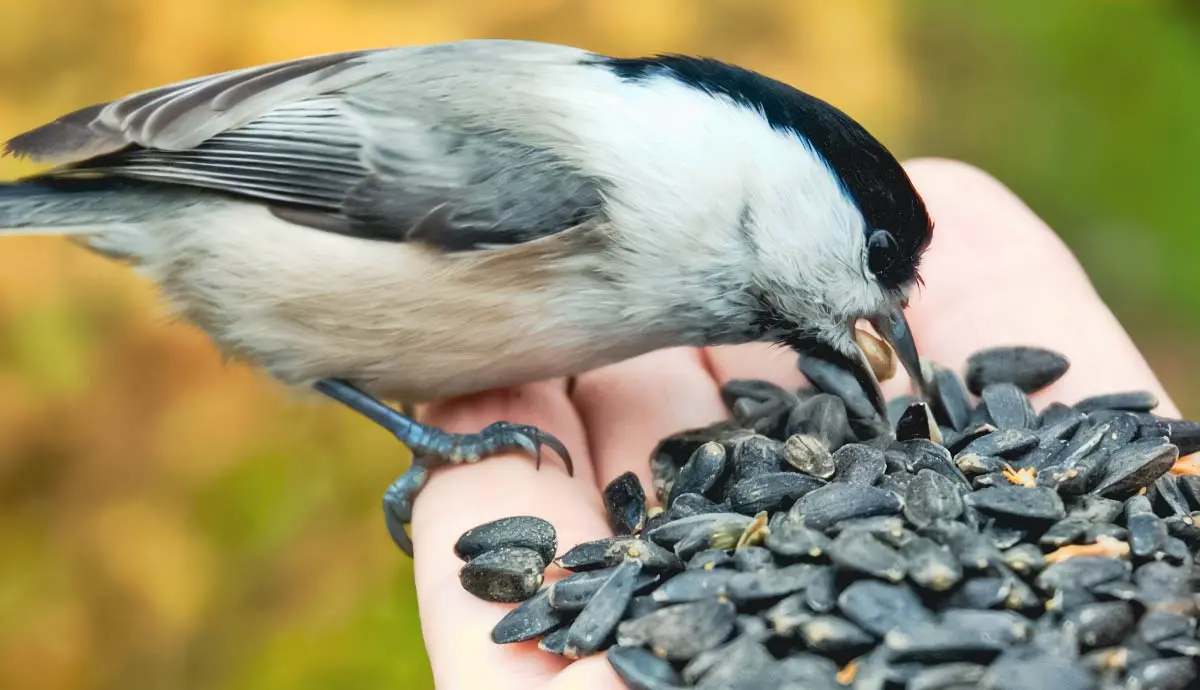
- Day 1–7: Hatchling Period
Feathers start pushing out from the skin. Eyes open around day 3–5. Require frequent meals.
- Day 8–14: Nestling Stage
Feathers fill in, chicks become more active, start to preen, and stretch wings.
- Day 15–25+: Fledgling Phase
Begin learning to fly, practice hopping and flapping, and start to eat a bit of food themselves. Post-fledging birds are normally fed and guided by parents for a number of weeks.
Read Also: Animals That Start With X
Baby Bird Types: How to Identify Baby Birds
Identifying the species of a baby bird can give an idea of how to help or what might be wrong with it.
- American Robin: Light blue eggs, naked at birth, speckled feathers. Found in low nests or shrubs.
- House Sparrow: Pale pink skin, grows gray feathers. Nest in urban areas, very vocal.
- Northern Cardinal: Orange beaks, brown feathers before red, ground-hopping fledglings.
- Blue Jay: Black-skinned hatchlings with wide gapes remain in the nest longer, fiercely guarded by parents.
Use a field guide or app (like Merlin Bird ID) for help with accurate identification.
Establish a Safe Environment for Young Birds
Even if you’re not actually rescuing a baby bird, you can assist by making your yard more bird-friendly:
- Forego pesticides: Many baby birds depend on insects.
- Put up nest boxes: Help cavity nesters such as bluebirds or chickadees.
- Provide water: Shallow birdbaths allow birds to drink and bathe.
- Keep fledglings safe: Keep cats indoors when fledglings are out of the nest in spring and summer.
Read Also: Great Tits
Emotionally Attached to the Babies
When watching a baby bird develop, it is not unusual to form a strong attachment. Their helplessness, conviction, and metamorphosis into an airborne creature of their own kind is both touching and inspiring. But by nature, they must develop, and we should never prioritize our emotional compulsion to meddle over their progression.
Do not attempt to raise wild birds on your own unless you have been trained and are licensed to do so. Human intervention is often stressful, may result in malnutrition, or incorrect growth in baby birds.
FAQs About Baby Birds
Q: Is it possible to have a baby bird as a pet?
A: No. Wild birds can’t be kept legally in most countries if you do not have the necessary permits.
Q: I heard that if you touch a baby bird, its parents will abandon it.
A: No. Most birds have a poor sense of smell and won’t reject their young because of human scent.
Q: What should I do if my cat brings home a baby bird?
A: Check for injuries. If unharmed, place it in a safe spot near where it was found. Call a rehabber if it’s injured.
Q: How long are baby birds in the nest?
A: Usually 10–21 days, depending on species.
Q: Can baby birds survive on the ground?
A: Yes, if they are fledglings. They often learn to fly while on the ground.
Q: What happens if a baby bird falls from its nest?
A: Nestlings should be placed back in the nest. Fledglings should be monitored, not removed, unless in danger.
Q: What to feed a baby bird?
A: Softened dog/cat kibble, mashed hard-boiled egg, or mealworms. Avoid milk, bread, or birdseed.
Q: How to feed a baby bird?
A: Use a syringe or tweezers to gently place food in the open beak. Keep the bird upright and the food at room temperature.
Q: How can I raise a baby bird?
A: Provide warmth and safe shelter. Feed only approved foods. Contact a rehabber immediately.
Q: What do you call a baby bird?
A: Hatchling (newborn), nestling (featherless, in nest), fledgling (feathered, learning to fly).
Q: What should I do if I find a baby bird?
A: Identify its stage. Return nestlings to the nest. Leave fledglings alone unless in danger. Call a rehabber if unsure.
Final Thoughts on Baby Birds
Baby birds are one of those “circle-of-life” elements that keep the natural world turning—tiny, fragile creatures that mature into the confident songbirds, raptors, and doves that we spy overhead. Although your impulse might be to rescue every baby bird you encounter, sometimes the best help is in letting nature do its thing. Watching and admiring these birds and supporting their habitats, while knowing when to intervene responsibly, is the best way to be a friend to birds.
Whether you’re a birdwatcher, a curious neighbor, or just someone fascinated by those early morning peeps outside your window, knowing how a baby bird goes from hatchling to fledgling only deepens our connection to wildlife and makes us appreciate the delicate balance in the world.