
Survival in the Sands: A Comprehensive Guide to Desert Animals
Introduction
Deserts are some of the harshest environments on Earth, with extreme temperatures, limited water, and scarce vegetation. Yet, despite these challenges, a variety of animals have adapted to thrive in these arid landscapes. From the swift and elusive fennec fox to the resilient camel, desert animals have evolved unique physiological and behavioral traits to survive.
This article explores the fascinating world of desert animals, their survival strategies, adaptations, and the critical role they play in maintaining ecological balance in some of the world’s driest regions.
What Makes Deserts Challenging for Animals?
Deserts are defined by low precipitation levels, extreme temperature variations, and minimal vegetation. These conditions create a demanding environment where only the most adaptable creatures can survive. The primary challenges for desert animals include:
- Limited Water Supply: Many desert animals obtain water from their food or have developed ways to store and conserve it efficiently.
- Extreme Temperatures: Some deserts can reach scorching daytime highs of over 50°C (122°F) and drop to near freezing temperatures at night.
- Scarce Food Sources: The lack of vegetation and limited prey options mean desert animals must either be opportunistic eaters or highly efficient hunters.
- Camouflage and Protection from Predators: Many desert creatures blend into their surroundings to avoid predation.
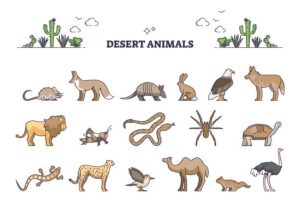
Common Desert Animals and Their Adaptations
1. Camels – The Ships of the Desert
- Scientific Name: Camelus
- Location: Middle Eastern and African deserts (Dromedary camel) and Central Asia (Bactrian camel)
- Adaptations:
- Camels store fat (not water) in their humps, which provides energy when food is scarce.
- Their thick eyelashes and nostrils help keep out sand during dust storms.
- They can drink up to 40 gallons (150 liters) of water in one go, allowing them to go days without drinking.
2. Fennec Fox – The Desert’s Smallest Fox
- Scientific Name: Vulpes zerda
- Location: Sahara Desert
- Adaptations:
- Large ears help dissipate heat and improve hearing to detect underground prey.
- Thick fur protects against the cold desert nights.
- Burrowing behavior helps them escape the heat of the day.
3. Sidewinder Snake – The Slithering Survivor
- Scientific Name: Crotalus cerastes
- Location: North American deserts
- Adaptations:
- Moves in a unique sidewinding motion to reduce contact with the hot sand.
- Can detect heat signatures of prey using infrared-sensitive pits near its eyes.
- Survives on a diet of small rodents and lizards.
4. Kangaroo Rat – The Master of Water Conservation
- Scientific Name: Dipodomys
- Location: North American deserts
- Adaptations:
- Does not drink water; instead, it derives moisture from seeds.
- Efficient kidneys extract water from waste, minimizing dehydration.
- Nocturnal behavior helps it avoid extreme daytime temperatures.
5. Gila Monster – The Venomous Lizard
- Scientific Name: Heloderma suspectum
- Location: Southwestern U.S. and Mexico
- Adaptations:
- Stores fat in its tail for energy during food shortages.
- Moves slowly to conserve energy.
- One of the few venomous lizards, using venom to subdue prey.
6. Addax Antelope – The White Antelope of the Desert
- Scientific Name: Addax nasomaculatus
- Location: Sahara Desert
- Adaptations:
- Light-colored coat reflects sunlight, keeping it cool.
- Can go months without drinking water, surviving on moisture from plants.
- Hooves adapted for walking on sand without sinking.
7. Desert Tortoise – The Slow but Resilient Reptile
- Scientific Name: Gopherus agassizii
- Location: North American deserts
- Adaptations:
- Spends 90% of its life underground in burrows to escape the heat.
- Stores water in its bladder, which it can reabsorb when needed.
- Can live up to 80 years, making it one of the longest-living desert reptiles.
Survival Strategies of Desert Animals
Surviving in a desert requires specialized adaptations. Here are some of the key strategies desert animals use to thrive in these harsh conditions:
1. Nocturnal Behavior
Many desert animals, such as the kangaroo rat and fennec fox, are nocturnal, meaning they are active at night when temperatures are cooler. This helps them avoid extreme heat and conserve water.
2. Water Conservation Techniques
- Camels store fat in their humps to use for energy when food is scarce.
- Desert tortoises store water in their bladders.
- Kangaroo rats extract water from their food and have extremely efficient kidneys.
3. Burrowing and Underground Shelters
Animals like the fennec fox, desert tortoise, and jerboas dig burrows to escape extreme heat and predators. These burrows provide insulation and help retain moisture.
4. Camouflage and Defensive Mechanisms
- Sidewinder snakes blend in with sandy terrain.
- Horned lizards use their textured skin to resemble rocks.
- Gila monsters rely on venom for protection against predators.
The Role of Desert Animals in the Ecosystem
Desert animals play vital roles in maintaining ecological balance. They contribute to:
- Pollination and Seed Dispersal: Some desert rodents and birds help spread seeds, aiding in plant growth.
- Pest Control: Carnivorous desert animals, like foxes and owls, help regulate populations of rodents and insects.
- Soil Aeration: Burrowing animals like tortoises and rodents improve soil quality by turning over the earth.
However, human activity, climate change, and habitat destruction threaten many desert species. Conservation efforts are crucial to protect these animals from extinction.
Conclusion
Despite the harsh conditions of desert environments, animals have evolved incredible adaptations to survive. Whether through nocturnal activity, water conservation, or burrowing, these creatures showcase nature’s ability to thrive in adversity.
As climate change and human expansion continue to impact deserts, preserving these species is more important than ever. Understanding how desert animals survive can help us appreciate the delicate balance of life in these extreme habitats.
FAQ: Survival in the Sands – A Comprehensive Guide to Desert Animals
1. What are desert animals?
Desert animals are species that have adapted to survive in hot, dry environments with extreme temperature fluctuations and limited water sources.
2. How do desert animals survive without water?
Many desert animals obtain moisture from their food, have efficient kidneys to conserve water, or store water in their bodies (e.g., camels and desert tortoises).
3. Why do some desert animals come out only at night?
Nocturnal behavior helps animals avoid extreme heat, reduce water loss, and increase hunting efficiency when temperatures are cooler.
4. What is the most well-known desert animal?
The camel is one of the most famous desert animals, known for its ability to store fat in its hump and survive long periods without water.
5. How do desert animals keep cool?
Many use adaptations such as large ears for heat dissipation (fennec fox), light-colored fur to reflect sunlight (addax antelope), and burrowing to escape heat (desert tortoise).
6. What do desert animals eat?
Desert animals have diverse diets, ranging from herbivores eating drought-resistant plants to carnivores hunting small rodents, birds, and reptiles.
7. Which reptiles thrive in the desert?
The sidewinder snake, Gila monster, and desert tortoise are examples of reptiles well-adapted to desert life through specialized movement, venom, and water storage.
8. How do desert animals avoid predators?
Many animals rely on camouflage, burrowing, speed, or venom to evade or deter predators.
9. What role do desert animals play in the ecosystem?
Desert animals help control pest populations, pollinate plants, and aerate soil, contributing to the balance of the desert ecosystem.
10. Are desert animals endangered?
Some desert animals, such as the addax antelope, are critically endangered due to habitat loss, climate change, and hunting. Conservation efforts are essential to protect them.