
Tree Safety and Removal Planning in Lewisburg and Marshall County, Tennessee
Key Takeaways
- Storms, saturated ground, broken limbs, structural defects, and declining trees can create urgent hazards in Marshall County.
- A sudden lean, trunk crack, lifted roots, hanging limb, or major cavity warrants a professional evaluation.
- Top Notch provides tree removal, trimming, pruning, stump grinding, land clearing, crane-assisted work, and emergency response.
- Damaged trees near utility lines should never be handled by a property owner.
- A site-specific estimate is the best way to determine the appropriate equipment, scope, cleanup needs, and cost.
In Lewisburg and throughout Marshall County, a mature tree can be one of a property’s best features until a storm, hidden decay, root damage, or neglected growth turns it into a concern. Top Notch Property Management helps local homeowners, landlords, farm owners, and commercial property owners evaluate tree hazards and choose a practical path forward, whether that means trimming, monitoring, removal, stump grinding, or clearing.
The goal is not to remove every old or large tree. Healthy trees provide shade, privacy, and character across properties in Middle Tennessee. The priority is identifying trees or limbs that could threaten a roof, driveway, fence, barn, vehicle area, tenant access point, or other place where people regularly gather.
Why Tree Risk Matters in Lewisburg and Marshall County
Marshall County properties often combine open yards, wooded edges, farm lanes, fence lines, rental homes, and mature shade trees. That variety makes each tree decision site-specific. A tree that appears sound from the road may have deadwood high in the canopy, decay near the base, a weak union between major stems, or roots disturbed by erosion, construction, or repeated soil saturation. Lewisburg sits within a landscape shaped by the Duck River watershed, where rolling terrain, creek bottoms, and pockets of clay soil can change how a tree anchors itself. Clay-heavy ground tends to retain water long after a wet spell, which can weaken root hold during the months when spring and summer storms are most frequent. Trees growing on slopes or near drainage ditches may also gradually lose soil, exposing roots that once worked quietly beneath the surface. Owners of older homes near the town’s established neighborhoods often inherit large shade trees planted decades ago, when the surrounding lot, driveway, and utility layout looked very different from what they do today.
Severe weather adds urgency. High winds can expose weaknesses that have been developing for years, while heavy rain can soften the ground around a compromised root system. Winter ice can overload limbs, and summer heat can add stress to trees already affected by disease, pests, drought, or earlier storm damage. Middle Tennessee’s humid summers can also hide decline until a tree begins to drop limbs during a routine afternoon thunderstorm, which is why a seasonal check of tree health is often as valuable as a check after a major weather event. Planning can make a meaningful difference when a tree is stable enough to address before it becomes an emergency. Tree removal timing – Marshall County can be especially useful for owners deciding when to schedule non-emergency work, although a tree that is split, severely leaning, or threatening a structure should be evaluated promptly in any season.
The Tennessee Department of Agriculture advises property owners to assess storm damage before making removal decisions, since trees with minor damage may recover. In contrast, major trunk or root damage may necessitate removal. Its guidance also emphasizes professional help when damaged trees are near buildings or power lines. Carefully assessing storm-damaged trees helps preserve those that can recover while prioritizing genuine safety hazards.
When Should You Request a Tree Assessment?
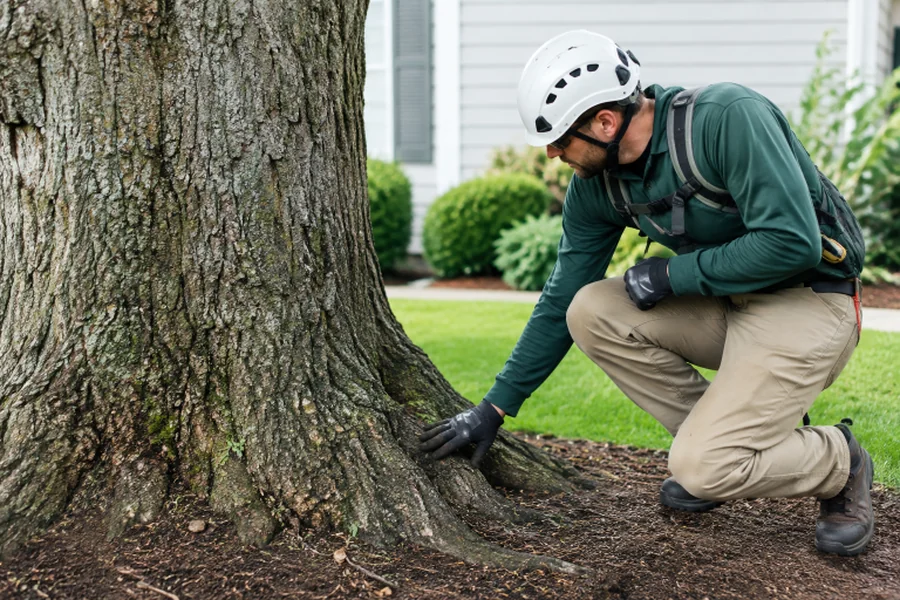
Request an assessment when a tree is close enough to affect a home, outbuilding, roadway, parking area, playground, or frequently used path and shows signs of decline or structural weakness. Warning signs do not automatically mean a tree must come down, but they should not be ignored.
Common Warning Signs
- A new or worsening lean, especially after heavy rain or wind.
- Large dead branches, broken tops, or limbs hanging above a target area.
- Cracks in the trunk or where large stems join together.
- Hollows, cavities, fungal growth, or visibly decayed wood near the base.
- Exposed roots, lifted soil, or movement around the root plate.
- Branches rubbing against a roof, growing into a driveway, or interfering with access.
- Storm damage that cannot be safely inspected from the ground.
Do not climb a damaged tree, cut limbs that are under tension, or use a chainsaw near overhead electrical lines. Keep children, pets, visitors, and vehicles away from the area until the hazard has been reviewed.
Tree Services for Lewisburg Homes, Farms, and Businesses
Tree Removal and Crane-Assisted Removal
Removal may be appropriate for dead, storm-damaged, unwanted, or structurally compromised trees. The safest approach depends on the tree’s height, condition, available access, slope, nearby structures, and utility concerns. For large trees or tight spaces near buildings, crane-assisted removal can allow crews to lift sections in a controlled manner rather than dropping material across the property.
Tree Trimming and Pruning
Strategic pruning can remove deadwood, improve clearance over roofs and driveways, reduce weight on selected limbs, and address crowded or rubbing branches. Proper pruning is different from topping. Topping creates large wounds and can lead to weakly attached regrowth, so it is not a standard solution for making a tree safer.
Emergency Tree Service, Stump Grinding, and Land Clearing
For trees on structures, blocked driveways, or urgent access routes, emergency response can focus first on immediate safety and access. Stump grinding can reduce mowing obstacles and trip hazards after the stump is removed. Land clearing supports rural property improvements, fence-line maintenance, construction preparation, agricultural access, and the reclamation of overgrown lots. Across Marshall County, the needs of a working farm differ from those of a rental property in town. A farm owner may need a cleared lane for hay equipment, a fence line opened after years of volunteer growth, or a dead hardwood removed before it falls across a pasture gate. A landlord may need a fast assessment of a limb over a tenant’s parking spot before the next lease begins. Commercial property owners may need a tree near a sign, loading area, or customer entrance reviewed on a tighter schedule. Each situation benefits from the same basic approach: identify the target, understand the access route, and decide whether the tree needs trimming, monitoring, or full removal.
What to Do After a Marshall County Storm
- Look from a safe distance.Watch for downed wires, broken trunks, hanging limbs, and blocked exits.
- Stay clear of utility hazards.Contact the utility provider if a tree is touching a line or may have brought one down.
- Document visible damage.Take photos only when it is safe to do so, particularly if insurance documentation may be needed.
- Limit access.Keep people and pets away from trees that could shift, fall, or shed branches.
- Arrange a professional evaluation.A crew can determine whether cleanup, pruning, monitoring, or removal is the appropriate next step.
Landlords and farm owners should also keep a simple record of which trees were affected, where debris landed, and which areas were closed off after the storm. This information helps guide repairs, supports tenant communication, and gives a crew a clearer starting point when the property is reviewed.
Protecting Lawns, Driveways, and Structures
Tree work involves heavy material and specialized equipment, so planning matters as much as cutting. Top Notch states that it uses equipment, including grapple saws, mini-loaders, grapple trucks, knuckle booms, chippers, and yard mats, when site conditions call for them. Equipment routes, drop zones, access limitations, and cleanup expectations should be discussed before work begins. For routine projects, the company offers free estimates and evaluates the tree, access route, surrounding targets, ground conditions, and requested debris handling before providing a scope of work. Published price ranges are only planning information. The actual cost can vary with tree size, hazard level, access, disposal requirements, and the need for specialized equipment.
A Local Resource for Tree Concerns in Lewisburg
From a single dead limb over a driveway to a multi-acre clearing project, property owners benefit from acting before a manageable concern becomes a storm-time emergency. A professional evaluation can help distinguish between a tree that needs monitoring, a limb that needs pruning, and a hazard that requires removal. Because Lewisburg and the surrounding Marshall County communities include a mix of town lots, country homes, working farms, and rental properties, there is rarely a one-size-fits-all answer. Taking time to look at the tree, the soil, the weather exposure, and the people who use the space each day helps owners make decisions that protect both their property and
Location: Top Notch Property Management, LLC | 1551 Rock Crusher Rd, Lewisburg, TN 37091 | (931) 981-9192
Conclusion
Protecting trees and property in Lewisburg and Marshall County starts with recognizing potential hazards and responding before conditions worsen. Top Notch Property Management offers a range of services, from pruning and stump grinding to crane-assisted removal, land clearing, and emergency tree response. However, the right solution depends on each tree’s condition, location, and the potential risks it poses to nearby structures and people. Regular inspections, safe storm preparation, and professional assessments can help property owners preserve healthy trees while addressing genuine hazards. Always prioritize safety around unstable trees and power lines, and request a written, site-specific estimate before approving work.


