

How Accounting Can Boost Your Marketing Budget’s Efficiency
What if every dollar spent on marketing could work harder? Most marketers focus on finding the latest trends to boost reach, but they might overlook an even more powerful tool: accounting. Combining accounting and marketing leads to smarter spending, higher returns, and better results from the same budget. Here’s how accounting can improve your marketing efficiency and help you reach your goals more strategically.
Accounting’s Role in Marketing
Accounting does more than track expenses. It helps the marketing team know how the budget is allocated and gives data-driven insights that maximize returns. With detailed accounting, marketers can answer questions about campaign costs, ROI, and resource allocation. It’s not just a game of dollars and cents, but a sure thing to get a return on investment.
Houston is known for its energy sector but is also gaining recognition in various other industries, including marketing. The rise of accounting in marketing highlights the growing need for financial insights to optimize budgets and strategies. Companies are increasingly turning to bookkeeping services in Houston to access skilled professionals who can help streamline financial processes and provide clarity on marketing expenditures. By combining expert bookkeeping support with innovative marketing strategies, businesses can achieve better financial control, allocate resources efficiently, and maximize their marketing outcomes.
1. Efficient Budget Allocation Using Accounting Insights
Naturally, when tracking marketing expenses, it is tempting to allocate funds to what seems like a good idea. But without strategic allocation, overspending can creep in, especially in areas that haven’t yet proved their worth. Accounting shows which channels give you the most bang for your buck and which require a budgetary adjustment.
According to a study by McKinsey & Company, companies that actively and regularly reevaluate their resource allocation can double their company’s value. By monitoring expenses and comparing them against campaign outcomes, accounting data makes it easier to shift funds to high-performing channels. This ensures that every dollar drives value.
2. Using Financial Statements to Make Better Marketing Decisions
Financial statements, such as profit and loss reports, help marketers understand a campaign’s financial impact on the business as a whole. If a specific campaign increases sales, that’s a positive sign. However, if the expenses exceed the revenue it brings in, then it is time to re-evaluate.
In 2023, Coca-Cola spent approximately $4 billion on marketing and advertising efforts globally. By analyzing their financial statements, Coca-Cola can track the return on investment (ROI) of their marketing campaigns. This helps them identify which campaigns are most effective and allocate resources accordingly. Financial analysis helps Coca-Cola decide on product diversification. They have introduced various products like Diet Coke, Coke Zero, and regional variants to cater to different consumer preferences. Coca-Cola remains a dominant player in the industry, consistently holding a significant share of the market.
3. Calculating ROI for Smarter Campaign Management
A well-allocated budget does not only measure the costs but also examines returns. Keeping track of ROI on campaigns is important to know what works and what doesn’t. Through ROI calculations, accounting shows whether a campaign is profitable or just an expense.
For instance, a digital campaign has excellent engagement but is 25% over budget. The accounting function would then throw up that red flag, and you would review your results against your costs. A good marketing team could then move budgets from less profitable campaigns to the more profitable ones, hence saving budget in the process.
4. Tax Deductions for Marketing Activities
Tax deductions can lower marketing costs, but they must be tracked and reported correctly. Accounting plays a key role in finding tax-deductible expenses, like advertising, event sponsorships, and promotional items. It helps marketers capture those deductions, making the budget go further.
A study shows that accurate financial records are crucial for businesses. They help find tax deductions and optimize marketing budgets. By tracking all income and expenses, companies can save money and reinvest it into future campaigns.
In the U.S., tax laws allow businesses to claim deductions for many marketing expenses, but accurate records are needed. Marketers can work with accounting teams to track eligible expenses year-round, ensuring no deduction is missed.
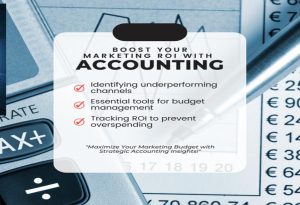
5. Improving Campaign Cost Efficiency with Data-Driven Adjustments
Data-driven budgeting removes the guesswork in marketing. A study commissioned by Google found that best-in-class digital marketers benefit from 1.4 times greater cost benefits through data-driven marketing transformations. This highlights the significant impact of using data to make informed decisions, leading to more efficient and effective marketing strategies.
Accounting enables campaign-level analysis, identifying where resources are spent and the returns they generate. Real-time adjustments can then be made to scale up successful campaigns and either scale back or shut off unsuccessful ones.
Most companies currently use budgeting software that incorporates accounting with marketing analytics. This helps monitor expenses and see trends and allows the reallocation of the proper amount of funds to the right places for maximum yield. For instance, where email marketing returns more than social media, accounting insights allow for the budget allocated for email to be increased to better the overall budget efficiency.
6. Long-Term Budget Planning with Accounting Help
Marketing involves long-term planning and accounting data can help in the prediction of the needs of a budget. Accounting teams from accounting outsourcing companies can analyze past campaigns, noting trends in spending and performance, to help marketing teams make informed projections for the future. Planning with real-time data ensures marketers do not incur costs unnecessarily, thus making future budgets reflect practical goals.
Long-term planning would include the setting of goals and building a roadmap for their achievement within the allocated budget. Accounting ensures that the marketing budget is well aligned with the objectives of the company and that it does not overshoot in any particular quarter. With such collaboration, marketing efforts are both well-funded and sustainable.
7. Avoiding Common Marketing Budget Pitfalls
Many companies face common pitfalls in managing marketing budgets, such as overspending on underperforming channels, inadequate ROI analysis, and missed tax deductions.
For example, without accounting data, it’s easy to overspend on influencer campaigns that don’t lead to significant engagement. By analyzing ROI through accounting, marketers can make data-backed decisions that minimize risks and improve marketing budget efficiency.
Additionally, setting realistic budget limits based on accounting forecasts prevents overspending, especially during peak seasons when costs tend to rise. Budget discipline supported by accounting ensures that every dollar serves its purpose.
Conclusion
While it may not be the first thing marketers consider, accounting is key to maximizing marketing budget. It starts with setting budgets, tracking expenses, and identifying tax deductions, and continues with analyzing return on investment. Accounting helps structure and clarify marketing efforts.
By combining marketing creativity with accounting’s precision, companies can maximize their budget, boost financial results, and lay the groundwork for smarter growth. Accounting as a Service is no longer just a support function; it’s a strategic partner that ensures every marketing dollar counts in today’s competitive market.
Accounting in marketing goes beyond tracking expenses. It helps make every dollar work toward a company’s growth by providing a strategic approach to budgeting and accountability.
FAQs
How can accounting help identify underperforming marketing channels?
Accounting insights monitor costs and return on investment across channels, revealing which campaigns are yielding the highest returns and allowing marketers to reallocate funds from underperforming channels to high-impact channels.
Which accounting tools are best for improving marketing budget management?
Tools like QuickBooks, Xero, and other specialized budget management for marketing software tools for tracking, analyzing ROI, and making budget forecasts. These tools ensure one can have visibility in real-time, and funds can be effectively allocated.
How does accounting help in tracking ROI to prevent overspending in marketing?
Accounting prevents resource drain on low-ROI campaigns by measuring returns versus costs. This keeps budgets streamlined and in alignment with overall business goals.