

A Fascinating Look at a Group of Ravens: Nature’s Enigmatic Birds
Ravens, members of the corvid family, are some of the most intelligent and intriguing birds in the world. With their striking black plumage, sharp beaks, and mysterious aura, ravens have captured the imagination of cultures for centuries. But these birds are not solitary creatures; they often form groups that display fascinating behaviors and social structures. A group of ravens is commonly called an “unkindness” or a “conspiracy,” terms that add to their mystique. This article delves into the behavior, intelligence, cultural significance, and ecological role of ravens when they come together in groups.
Understanding the Social Behavior of Ravens
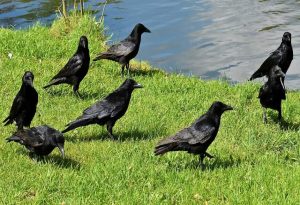
Ravens, particularly the common raven (Corvus corax), are known for their complex social dynamics. While these birds are often seen alone or in pairs, they frequently congregate in groups, especially in certain situations such as feeding or roosting.
- Why Ravens Form Groups
- Food Availability: Ravens are opportunistic feeders, and when food is abundant, such as at a large carcass or a garbage dump, they gather in numbers to take advantage of the resource.
- Safety in Numbers: Grouping provides protection from predators. Although ravens are top-tier scavengers, larger birds of prey like eagles or owls can threaten them, making collective vigilance beneficial.
- Learning Opportunities: Younger ravens, in particular, benefit from being in groups where they can observe and learn behaviors such as finding food or interacting with other species.
- Interactions Within Groups Ravens exhibit intricate social behaviors. They use vocalizations, body language, and even play to communicate with one another. In groups, they may:
- Engage in playful interactions like tumbling mid-flight or sliding on snow.
- Cooperate to distract predators or competitors, ensuring access to food.
- Display aggression or dominance to establish hierarchy within the group.
The Intelligence of Ravens in Groups
Ravens are among the smartest birds, rivaling primates in problem-solving and social intelligence. Their cognitive abilities shine when they interact in groups.
- Problem-Solving Abilities Ravens have been observed working together to solve puzzles or access food. For example:
- They may use tools, such as sticks or rocks, to obtain food.
- In groups, ravens sometimes take on distinct roles, with one distracting a rival while another steals food.
- Communication Skills Ravens have an extensive range of vocalizations and sounds, which they use to communicate effectively. In groups, these calls can serve to:
- Warn others of danger.
- Signal the presence of food.
- Coordinate group movements.
- Memory and Deception Ravens have excellent memories and can recall where food is hidden. In groups, this intelligence leads to deceptive behavior; a raven may pretend to hide food in one spot while secretly storing it elsewhere to outwit potential thieves.
Cultural Significance of Ravens in Groups
Throughout history, ravens have been associated with mystery, wisdom, and sometimes foreboding. Their behavior in groups has inspired myths, legends, and superstitions in various cultures.
- Mythology and Folklore
- Norse Mythology: Ravens Huginn and Muninn were the companions of Odin, the Allfather, representing thought and memory. They flew in pairs, gathering knowledge and delivering it to Odin.
- Native American Cultures: Many Indigenous tribes view ravens as tricksters or symbols of transformation and creation.
- European Folklore: A group of ravens was often seen as an omen, associated with death or bad luck, perhaps due to their scavenging habits and haunting calls.
- Modern Symbolism Ravens remain a symbol of intelligence and mystery in modern literature and media. Their group behavior, often seen as strategic and purposeful, continues to captivate observers.
Ecological Role of Ravens in Groups
Ravens play a vital role in the ecosystem, particularly when they operate in groups.
- Scavengers and Cleaners Ravens are scavengers, and their grouping behavior allows them to efficiently locate and consume carrion. This helps in:
- Preventing the spread of disease by quickly disposing of decaying matter.
- Supporting nutrient cycling in ecosystems.
- Seed Dispersal While primarily scavengers, ravens also eat fruits and berries. By carrying seeds to different locations, they contribute to plant propagation and biodiversity.
- Impact on Other Species
- Competition: Ravens compete with other scavengers like vultures, foxes, and coyotes for food.
- Predation: In groups, ravens sometimes harass larger predators or birds of prey, showcasing their boldness and teamwork.
Unique Behaviors Observed in Groups
The behavior of ravens in groups can sometimes border on the bizarre or theatrical. Notable examples include:
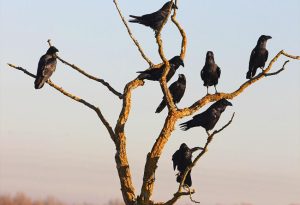
- Roosting Gatherings: During the winter, ravens gather in large numbers at communal roosts. These gatherings, which can number in the hundreds, serve social and survival purposes, such as sharing information about food sources.
- Mobbing Predators: Ravens in groups will collectively mob predators, such as hawks or owls, using their numbers to intimidate and drive them away.
- Playful Displays: Ravens are known for their playful antics, which include aerial acrobatics, tug-of-war games, and even rolling down snowy slopes together.
Challenges Faced by Groups of Ravens
Despite their intelligence and adaptability, ravens face challenges, particularly when they gather in groups:
- Human-Wildlife Conflict: Ravens are sometimes considered pests, especially in agricultural areas, where their grouping behavior can lead to crop damage.
- Habitat Loss: As scavengers, ravens rely on open spaces and forested areas. Urbanization and deforestation can disrupt their natural behaviors.
- Climate Change: Changes in climate affect food availability and migration patterns, potentially impacting raven populations and group dynamics.
Conclusion
A group of ravens, whether called an “unkindness” or a “conspiracy,” is a remarkable phenomenon in the natural world. Their intelligence, social behavior, and adaptability make them a subject of fascination for scientists and bird enthusiasts alike. From their problem-solving abilities to their ecological importance, ravens in groups demonstrate that there is much more to these enigmatic birds than meets the eye. By understanding and appreciating their role in nature, we can better coexist with these intelligent creatures and preserve their habitats for generations to come.


