BLACK BIRDS: With White Stripe On Wing




Introduction
The most calming bird you will ever see is probably a black birds with white stripes on its wings. Despite their striking morphological similarities, the species that meet this criteria have very distinct traits. It’s evident that every bird on this list is dispersed among several continents, with very few of them really
sharing habitats. Many classifications contain birds with colors other than black and white, which is corrosion in my view and not a suitable depiction of the filters. As a result, the list I created takes this color scheme into account, with only a few examples displaying tiny red or yellow notches.
Await amazement as we delve into the lives of black birds with white stripes on its wings. in this fascinating blog post.
1 Lark Bunting
| Attribute | Details |
|---|---|
| Scientific Name | Calamospiza melanocorys |
| Size | 14 to 18 cm (5.5 to 7.1 in) |
| Locality | Central and western North America |
| Status | Least Concern |
| Breeding Season | May and June |
North America’s Great Plains are home to the little songbird species known as the Lark Bunting (Calamospiza melanocorys). Look for its primarily black feather pattern with white wing stripes and highlights at the tail edges to identify it in the wild.
Its orderly form makes it resemble a sparrow, but its distinctive triangular, thick gray beak makes it stand out.
Introduction
- Size: Lark Buntings are small to medium-sized sparrows, measuring around 5.5-6.5 inches in length.
- Body Color: Males are mostly black with white wing patches, while females are brownish-gray with streaks and a pale eyebrow stripe.
- Distinctive Features: The male has a white patch on the back and white edges on the wings, while the female has a pale eyebrow stripe and streaks on the breast and sides.
- Bill: Short and conical, adapted for cracking open seeds.
- Legs and Feet: Strong and adapted for walking and hopping on the ground.
- Habitat
- Grasslands in North America are home to lark buntings, particularly in the prairie territories of the United States and Canada. They move to more temperate regions like Texas and Mexico in the winter. Within their environments, they create open cup-shaped nests in scattered colonies.
2 White-winged Chough
| Attribute | Details |
|---|---|
| Scientific Name | Corcorax melanorhamphos |
| Size | 45 cm (18 in) |
| Locality | Southern and eastern Australia |
| Status | Least Concern |
| Breeding Season | August to December |
Introduction
There are only two extant species in the Corcoracidae family, which is typified by the White-winged Chough (Corcorax melanorhamphos). These birds are well-known for their unusual method of building strong nests during the incubation phase: they use mud. They graze on trash heaps and consume worms and insects.
- Eyes Color :Blood-red eyes
- Symbol: Symbolically-rich black feathers with blue edges on the upper side of the wings
- Appearance: White stripes, visible during flight, subtly etched under the feathers and observed from underneath
- Habitat and Behavior: White-winged Choughs are a bird found in southern and eastern Australia. They live in flocks of four to twenty birds. They like to nest in arid, shrubby areas, and the whole family helps to raise the young. Compared to other bird species, it takes a long time for them to adapt to the harsh Australian environment.
3 Eurasian Magpie
| Attribute | Details |
|---|---|
| Scientific Name | Pica pica |
| Size | 44 to 46 cm (17 to 18 in) |
| Locality | Eurasian continent |
| Status | Least Concern |
| Breeding Season | April to June |
Introduction
Because they are so common throughout the Eurasian continent, Eurasian Magpies are sometimes known as Common Magpies. Some people agree that these birds are most likely the most sophisticated non-human species that has ever lived on Earth.
These birds were historically identified with demons due to a number of beliefs surrounding them.
- Size: Medium-sized bird measuring around 18-19.6 inches (46 – 50 cm) in length.
- Plumage: Black and white plumage with iridescent blue and green tones in the wings and tail.
- Tail: Long, graduated black tail.
- Features: Black bill and legs.
- Both males and females have similar plumage.
- Often seen in pairs or small groups up to 7.
- Habitat: Ranges from western European coast of Portugal to easternmost lands of Asia, up to the end of Russia.
- Prefers temperate areas with scattered trees and grassy landscapes.
- Avoids treeless or densely forested regions.
- Can also be found in urban and suburban environments.
4 Oriental Magpie-robin
| Attribute | Details |
|---|---|
| Scientific Name | Copsychus saularis |
| Size | 19 cm (7.5 in) |
| Locality | Tropical southern Asia, including Nepal, Bangladesh, India, Sri Lanka, Pakistan, Indonesia, Thailand, China, Malaysia, and Singapore |
| Status | Least Concern |
| Breeding Season | February to June |
Introduction
Oriental Magpie-Robins, being classified within the flycatcher family rather than the crow family like Eurasian Magpies, are notably smaller in size. They are commonly found throughout the Indian subcontinent and are designated as the national bird of Bangladesh.
- Appearance: Male and female birds differ in shape and intensity of feather colors.
- Both have black backs with a bright white abdomen.
- Males appear shinier while females are somewhat faded.
- Feature: Long white stripe on the wing is a distinctive feature.
- Habitat: Found throughout the temperate and tropical lands of the Indian subcontinent and surrounding countries.
- Prefers open woodlands and areas with cultivated crops for food.
- Commonly seen in urban and suburban areas.
5 Magpie-lark
| Attribute | Details |
|---|---|
| Scientific Name | Grallina cyanoleuca |
| Size | 25 to 30 cm (9.8 to 11.8 in) |
| Locality | Australia, Timor, southern New Guinea |
| Status | Least Concern |
| Breeding Season | August to January |
Introduction
Singing in duets, Magpie-Larks are one of the few bird species that can do so with exceptionally fluid note changes between pairs. To keep outsiders out of their regions, they actively defend themselves by singing.
- Bird size: Medium, around 8–10 inches (20–25 cm) in length.
- Body color: Head and throat are black, underparts are white, and plumage is black and white.
- distinct hues or patterns that are unique: The wings are patchy with white, while the white underparts feature a noticeable black V-shaped neck patch.
- Bill :is a tall, thin, black man.
- Black, slender, and long legs and feet.
- Male and female: Similar in appearance, with black and white plumage on both; the male has a longer bill and is slightly larger.
- Habitat: Found across Australia except in desert areas.
- Thrives in both rural and urban environments, unafraid of human presence.
- Represents Australian animal diversity and is embraced by locals due to widespread presence.
6 Swamp Boubou
| Attribute | Details |
|---|---|
| Scientific Name | Laniarius bicolor |
| Size | 23 to 25 cm (9 to 9.8 in) |
| Locality | Western and southern Central Africa |
| Status | Least Concern |
| Breeding Season | Any time of the year (except during Spring in the south) |
Introduction
Birds that sing duets in Africa can be found in a variety of environments, not only marshes and swamps. knowledgeable insect hunters, recognized in three races throughout the continent.
- Appearance: White underbelly contrasting with black back.
- Tail: Black extends from bill, cap to tail.
- Stripes: White notches at tail borders and tri-stripes on wings.
- Habitat: Permanent residents of western and southern Central Africa.
- Found in swamplands, savannah thickets, wetland-infused forests, mangroves, and coastal scrub.
- Nests made of twigs shaped like a loose cup, slightly elevated from the ground.

7 Black-and-white Warbler
| Attribute | Details |
|---|---|
| Scientific Name | Mniotilta varia |
| Size | 12 cm (5 in) |
| Locality | Northern and eastern North America |
| Status | Least Concern |
| Breeding Season | April to August |
Introduction
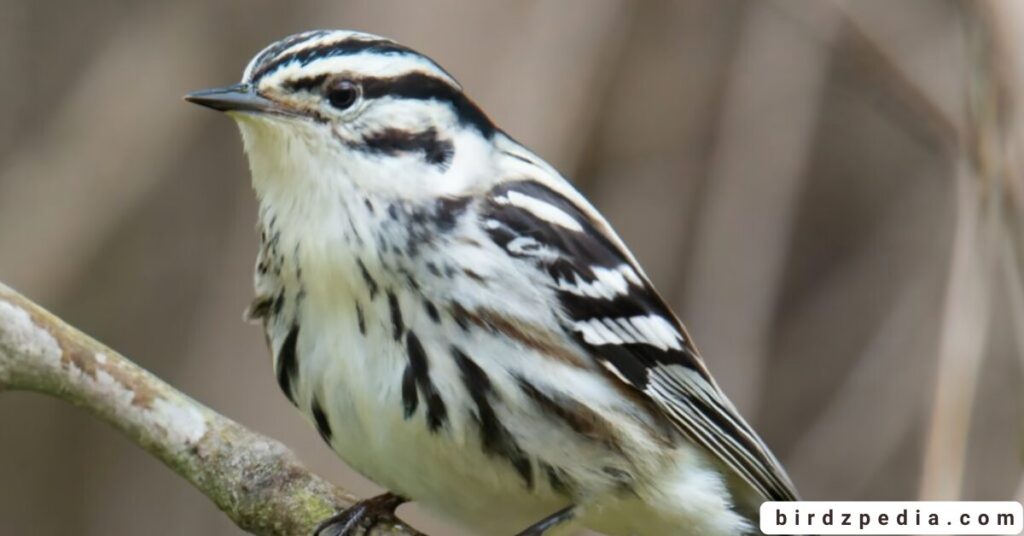
There is only one Black-and-white Warbler in its genus, making it a singular species. Based on how it feeds, its scientific name means “seaweed/moss plucker”. Its population is declining despite being listed as Least Concern due to habitat loss.
- Size: Small, about 4.5 to 5 inches in length.
- Body color: Black and white striped, with a white belly and black wings.
- Unique Distinguishable Colors or Patterns: Bold black and white stripes on the head, back, and sides.
- White stripes on the wings that form a crescent shape.
- Bill: Thin and pointed, slightly curved downwards.
- Legs and Feet: Thin and pale, almost gray in color.
- Habitat: Adaptive to a wide array of habitats, including deciduous forests (dense or not).
- Also found in swampy forests and areas covered with lands.
- Prefers the latter types of habitats for winter migrations.
8 White Winged Black-Tit
| Attribute | Details |
|---|---|
| Scientific Name | Melaniparus leucomelas |
| Size | 15 to 16 cm (5.9 to 6.3 in) |
| Locality | Central Africa |
| Status | Least Concern |
| Breeding Season | January to June |
Introduction
The White-winged Black-tit is colored like a robin or a magpie. There are two subspecies of this passerine that can be found in various parts of Africa. Recent findings have corrected its incorrect classification under the Parus genus.
- Recognition: Colored in dark night black, which some may find menacing.
- Perches like a bat, hanging upside down from tree branches.
- White stripes on wings located at the second half and extensive.
- Habitat: Found in two main regions of Africa:
- East Africa: Ethiopia, Eritrea, Sudan, and South Sudan.
- West Africa: African equator to Angola.

9 Northern Mockingbird
| Attribute | Details |
|---|---|
| Scientific Name | Mimus polyglottos |
| Size | 20.5 to 28 cm (8.1 to 11.0 in) |
| Locality | North America |
| Status | Least Concern |
| Breeding Season | Spring and early summer |
Introduction
Mockingbirds’ remarkable singing skills can lead people to mistake them for catbirds. They are recognized for their regular urban presence and intellect. The popularity of the mockingbird in the United States is demonstrated by the fact that it is the state bird of five states, including Texas.
- Recognition: Gray and white feathers on the lower body.
- Mostly black feathers on the upper body.
- Wing accents with dense colors and fractures of white stripes.
- Sizable white patch between wingfolds, visible at full stretch.
- Habitat: Common across North America, found throughout the continent.
- Prefers densely vegetated open regions.
- Also found in urban gardens, parks, or mowed lawns.
- Western population can inhabit dry desert conditions.
10 Anhinga
| Attribute | Details |
|---|---|
| Scientific Name | Anhinga anhinga |
| Size | 89 cm (35 in) |
| Locality | South America, parts of Central and North America |
| Status | Least Concern |
| Breeding Season | February |
Introduction
Renowned for its ability to catch fish, the Anhinga is frequently linked to black birds with white slashes on their wings. Because of its aquatic habits and similarities to certain bird species, it is frequently referred to as a “water turkey”. Its black and white feathers have given it a demonic reputation in Brazil.
- Recognition: Resembles a snake swimming across water due to its long, black neck protruding.
- Body shaped like a turkey with wings featuring white striped patterns.
- Habitat: Two subspecies occupy separate regions.
- Breeding and migration occur in Pacific coastal regions of the USA, including Florida.
- Central parts of South America provide comfortable habitats for the species.

11 White-browed Wagtail
| Attribute | Details |
|---|---|
| Scientific Name | Motacilla maderaspatensis |
| Size | 21 cm (8.3 in) |
| Locality | India, Bangladesh, and Sri Lanka |
| Status | Least Concern |
| Breeding Season | March to October |
Introduction
When perched, the White-browed Wagtail has a linear look from head to tail, resembling an arrow. Its scientific name, Motacilla maderaspatensis, pays homage to the abundantly found Indian metropolis of Chennai (formerly Madras). This songbird is ubiquitous throughout the region and is kept in captivity in India.
- Recognition: Resembles a younger sibling of the Oriental Magpie-robin.
- Slightly leaner in shape with darker blacks.
- Whites on wing and tail edges are almost identical.
- Distinguished by white eyebrows.
- Habitat: Found primarily in Bangladesh, India, and Sri Lanka.
- Inhabits regions from the Indus Valley in the north to southern India.
- Prefers open habitats near freshwater sources and at high altitudes.
12 White-Winged Scoter
| Attribute | Details |
|---|---|
| Scientific Name | Melanitta deglandi |
| Size | 48 to 60 cm (19 to 24 in) |
| Locality | North America |
| Status | Least Concern |
| Breeding Season | Late summer |
Introduction
The scientific term for the White-winged Scoter is derived from Ancient Greek and means “black duck.” This species is well-known for its ability to dive for food, including mollusks, arthropods, and insects. Their gizzards are capable of crushing shells, which makes digestion easier.
- Recognition: Largest species of Scoter with entirely black feathers.
- White eyelines and wing stripes (speculums) are notable exceptions.
- Male birds have orange beaks, while females have black beaks.
- Habitat: Found predominantly in western Canada and Alaska.
- Also seen in scattered groups across prairie regions and coasts of North America.
- Migrates to warmer areas during winter, away from their natural habitats.

13 White-headed Woodpecker
| Attribute | Details |
|---|---|
| Scientific Name | Leuconotopicus albolarvatus |
| Size | 20 cm (7.9 in) long |
| Locality | Pine forest mountains of western North America |
| Status | Apparently Secure |
| Breeding Season | May to July |
Introduction
There are just two subspecies of the White-headed Woodpecker, a bird that is native to North America. There is nowhere else in the world like it. They don’t move at all; they stay there in the spot that they feel comfy.
- Recognition: White face and white wing stripes.
- Solid black body feathers that shine in the light.
- Unique red patch on the crown for identification.
- Habitat: Found in pine forested mountains from British Columbia to California.
- Uses sharp beak to dig cavities in dead trees or repurpose existing nests during breeding season.
14 Downy Woodpecker
| Attribute | Details |
|---|---|
| Scientific Name | Dryobates pubescens |
| Size | 14 to 18 cm (5.5 to 7.1 in) |
| Locality | North America |
| Status | Least Concern |
| Breeding Season | January to March |
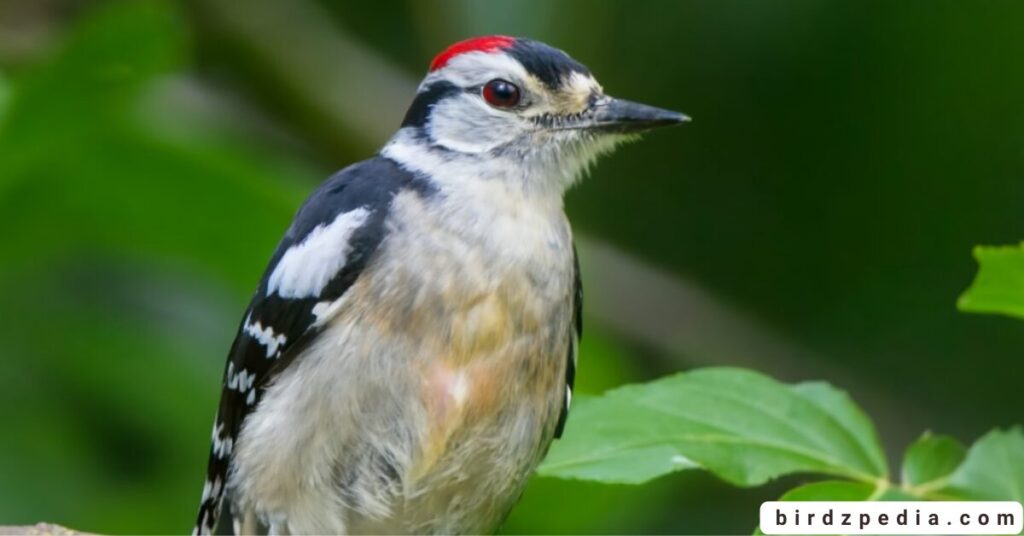
Introduction
If European corn borer is attacking your crops and your fields are near a Downy Woodpecker territory, you’re in luck! For these birds, these insects are highly appealing, especially when combined with some berries and seeds to complete their meal.
- Recognition: Black bird with white stripes on wings, featuring fractured stripes forming isolated white markings.
- Snowy white chest, face, head, and neck patches.
- Male has a red dot on the nape.
- Habitat: Prevalent throughout North America, excluding tundra regions in the north and temperate territories in the south.
- Ideal habitats include forested areas.
- Winter migrations observed in cooler parts of the continent.
15 Bar-winged Flycatcher-shrike
| Attribute | Details |
|---|---|
| Scientific Name | Hemipus picatus |
| Size | 14 to 15 cm (5.5 to 5.9 in) |
| Locality | Forests of tropical southern Asia |
| Status | Least Concern |
| Breeding Season | March to May |
Introduction
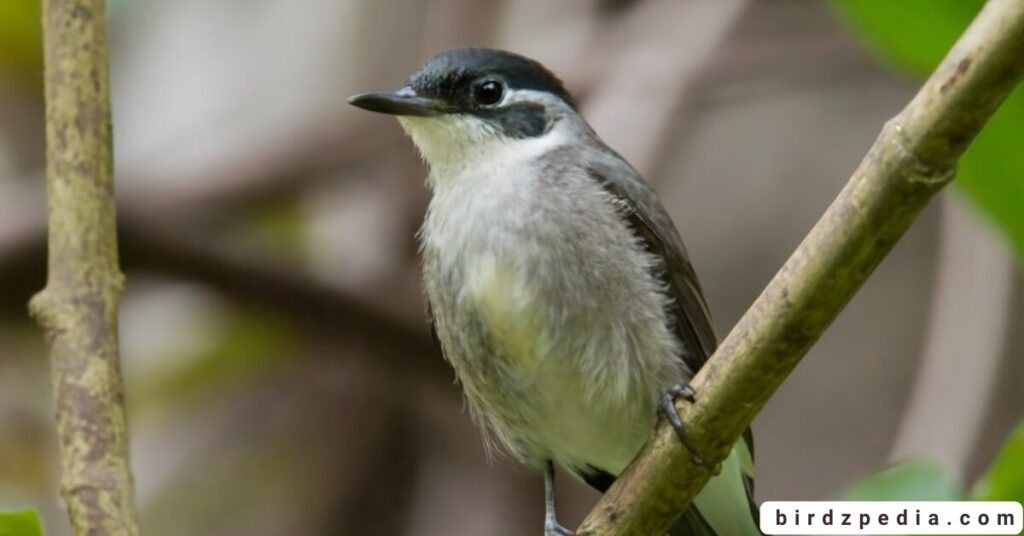
The Bar-winged In southern Asia, the flycatcher-shrike is one of the smallest bird species. These insectivorous birds are known to perch angularly or even upside down in order to efficiently capture their prey. They frequently join foraging flocks with other species.
- Recognition: Oddly shaped bird with a disproportionately large head.
- Black feathers on head and back, with distinct grayed-out abdomen regions.
- One long white stripe on the wings.
- Habitat: Found in large populations across many South Asian countries.
- Resides in tropical forests with dense tree cover.
- Hunts insects and crafts solid, rimmed-cup nests for breeding.
16 White-Winged Widowbird
| Attribute | Details |
|---|---|
| Scientific Name | Euplectes albonotatus |
| Size | 15 to 19 cm (5.9 to 7.5 in) |
| Locality | Africa |
| Status | Least Concern |
| Breeding Season | November to May |
Introduction
The visually striking White-winged Widowbird is a species of bird distinguished by its smooth feather coloration. During the breeding season, their white stripes become more pronounced. There are three subspecies spread throughout several African nations.
- Recognition: Solid black coloration, with males darker than females.
- Yellow edge at the beginning of the wings and a white stripe at the end.
- Wide, white beak adapted for eating ants, insects, and seeds.
- Habitat: Found primarily in countries south of the Sahara Desert in Africa.
- Prefers spacious areas with greenery, including grasslands, savannas, and openings near wetlands.
17 White-winged Triller
| Attribute | Details |
|---|---|
| Scientific Name | Lalage tricolor |
| Size | 16 to 18 cm (6.3 to 7 in) |
| Locality | Australia, New Guinea, and eastern Indonesia |
| Status | Least Concern |
| Breeding Season | Summer |
Introduction
Ornithologists often combine White-winged and White-shouldered Trillers into a single species because to their striking similarity. Some people just accept the IUCN binomial classification, while others adamantly think that these two are different races within the same species.
- Recognition: Sexually dimorphic birds; males are black and white, while females resemble sparrows in shape and color.
- White stripes over black wings are prominent in males, with a chalky white underside.
- Habitat: Found in mainland Australia and spread to New Guinea, Timor, and eastern parts of Indonesia.
- Year-round residents with a tendency for summer migration to cooler areas within their habitat zones.

18 Mountain Wheatear
| Attribute | Details |
|---|---|
| Scientific Name | Myrmecocichla monticola |
| Size | 18 to 20 cm (7 to 7.9 in) |
| Locality | Southwestern Africa |
| Status | Least Concern |
| Breeding Season | Spring and summer |
Introduction
A species of passerine that whistles, the Mountain Wheatear is frequently found in mountainous areas and on rocky terrain. Though its name implies that it eats wheat, its main sources of food are insects and berries.
- Recognition: The westerly race has a sharp white patch on the wings.
- Deep black coloration with a white cap and abdomen.
- The nominate species is mostly gray and lacks white stripes.
- Habitat: Found in southwestern parts of Africa, including Namibia, Botswana, South Africa, and Angola.
- Prefers rocky mountains and hardened surfaces for nesting, often on the ground against rocks.
19 White-shouldered Fire-eye
| Attribute | Details |
|---|---|
| Scientific Name | Pyriglena leucoptera |
| Size | 16 to 18 cm (6.3 to 7 in) |
| Locality | Brazil and Paraguay |
| Status | Least Concern |
| Breeding Season | September to December |
Introduction
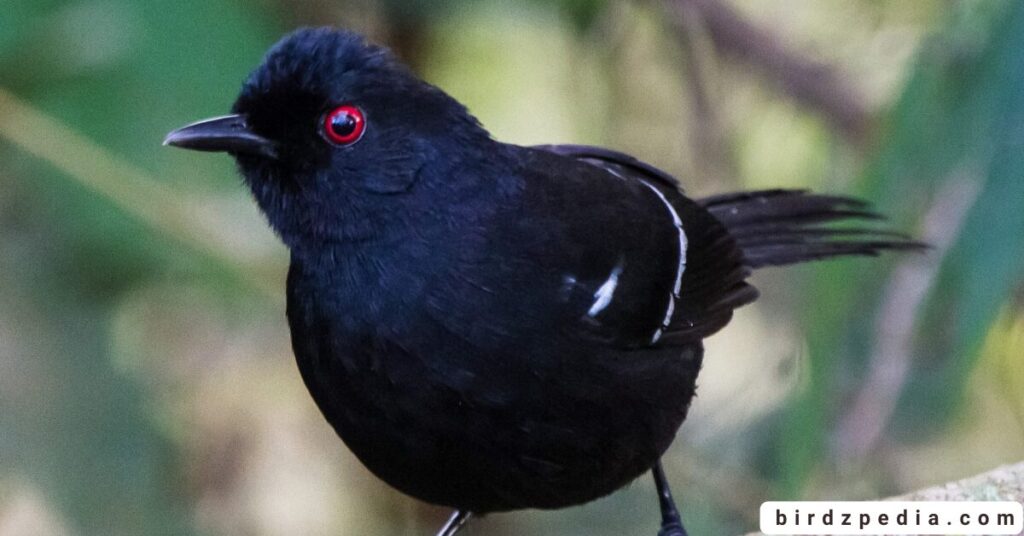
Little is known about White-shouldered Fire-eyes because of its hard-to-reach habitats and lack of study opportunities. This species spends much of its time in regions that are hidden from most observers and bird experts.
- Recognition: Bloodshot red eyes on a black bird.
- Two white stripes on the wings, somewhat concealed by plumage but visible when fully spread.
- Habitat: Found in eastern Paraguay and southern Brazil.
- Largest populations in the Atlantic Forest region.
- Also inhabits tropical or subtropical lowlands with water bodies or swamplands.
20 Black Guillemot
| Attribute | Details |
|---|---|
| Scientific Name | Cepphus grylle |
| Size | 30 to 32 cm (12 to 12.5 in) |
| Locality | Northern Atlantic coasts and eastern North American coasts |
| Status | Least Concern |
| Breeding Season | Late February to early May |
Introduction
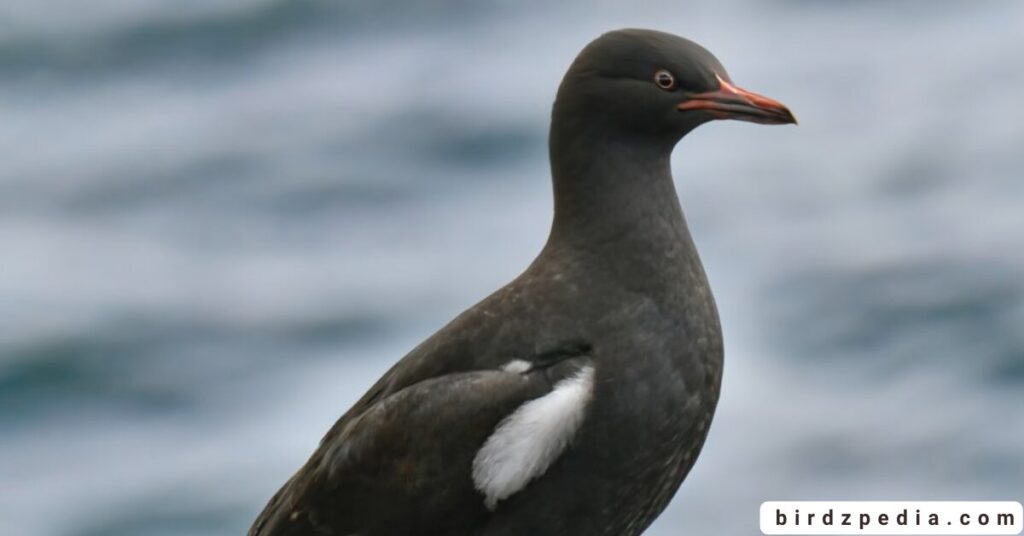
The five subspecies of Black Guillemots are found all over the world, however they are concentrated on the shores of North America and the northern Atlantic. For food, they usually plunge far into the water to collect fish, insects, and arthropods.
- Recognition: Seabird with black plumage.
- Black beak with crimson inner portions, matching feet.
- Large white stripe on each wing.
- Habitat Occupies low and high arctic regions of the North Atlantic Ocean.
- Found in boreal and arctic oceans.
- Nests on rocky shores, utilizing cliffs and boulders for breeding.
21 Tricolored Blackbird
| Attribute | Description |
|---|---|
| Scientific Name | Agelaius tricolor |
| Locality | California, United States |
| Habitat | Wetland areas, grasslands, freshwater marshes, flooded fields, irrigated pastures |
| Preferred Food | Insects, seeds, grains, rice crops |
Introduction
Male Agelaius tricolor Blackbirds (Tricolored Blackbirds) create vast colonies during the breeding season, showing off their red shoulder patches to entice females. The females then construct nests in crowded colonies and lay three to five clutches of eggs. Due to habitat degradation, pesticide use, and other
reasons, the Tricolored Blackbird’s population has decreased by more than 80% over the previous century, making it vulnerable to extinction. To save and restore this species and its habitat, conservation efforts are presently being made, with a strong emphasis on management and conservation programs.
- Size: Medium-sized bird, approximately 8-9 inches in length and with a wingspan of 14-16 inches.
- Body Color: Mostly black body.
- Bright red patch on the shoulder.
- White patch on the wing.
- Wing Stripe: Both males and females have a white stripe on their wings.
- The male’s stripe is longer and more prominent.
- Features: Short and sturdy bill.
- Dark-colored legs and feet.
- Identification: Recognizable by its red shoulder patch and white wing patch, distinguishing it from other blackbirds.

22 Yellow-headed Blackbird
| Characteristic | Description |
|---|---|
| Scientific Name | Xanthocephalus xanthocephalus |
| Native Region | North America |
| Habitat | Parklands, mountain meadows, arid regions, marshy areas, grasslands |
| Range | Western half of North America, from Canada to Central America |
| Preferred Habitat Features | Cattails, bulrushes for food, nesting sites, and cover |
| Diet | Insects, seeds, grains; also known to feed on rice crops |
Introduction
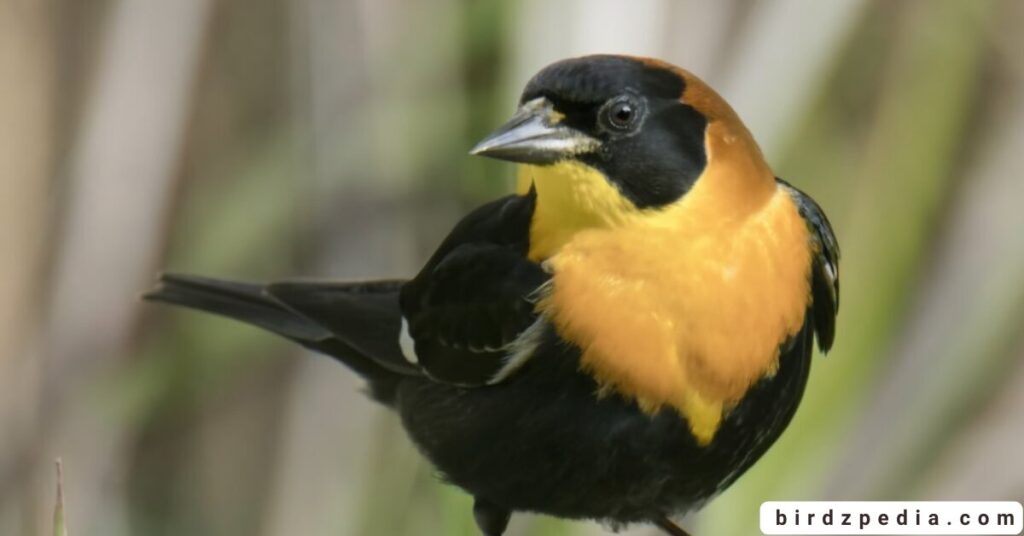
Males mark their territories in wetlands and marshes during the breeding season, attracting females with their brilliant yellow heads. In nests near the water’s surface, females deposit eggs in batches of four to six.
The yellow-headed blackbird is an essential bird species for wetland conservation and management because it is an indicator of a healthy wetland ecosystem. Birdwatchers and lovers of the natural world appreciate this species for its unique vocalizations and plumage.
- Physical Characteristics: Medium-sized bird, approximately 9-10 inches in length with a wingspan of 14-16 inches. Mostly black body color with a bright yellow head and breast.
- Male has a white patch on wings, visible during flight; female shows less prominent yellow coloring.
- Conical bill, thick and pointed.
- Dark-colored legs and feet.
- Feature: Bright yellow head, aiding in easy identification among blackbirds or finches.
23 Hairy Woodpecker
| Characteristic | Description |
|---|---|
| Scientific Name | Dryobates villosus |
| Common Name | Hairy Woodpecker |
| Distribution | Throughout much of North America |
| Habitat | Mature deciduous and mixed forests, parks, orchards, suburban areas with suitable trees |
| Residence | Primarily resident birds (stay in one place year-round) |
| Diet | Mainly insects; also includes fruits, nuts, and seeds |
Introduction
Additionally, they will excavate nest chambers in dead or decaying trees, searching for insects hidden within using their long, chisel-like bill. Despite their abundance, Hairy Woodpeckers are fascinating to observe due to their unique black and white plumage and adeptness at performing acrobatic tree-climbing.
- Size: The Hairy Woodpecker is a medium-sized woodpecker, with a length of nine to ten inches.
- Body Color: With a full black back and wings and white undersides, the body is primarily black and white.
- Unique Distinguishable Colors or Patterns of Other Body Parts:
- The head is black with a distinctive white patch on the neck.
- Red front crown.
- The white outer tail feathers have black bars.
- Bill: The woodpecker’s long, straight, black bill resembles a chisel, allowing it to drill into wood to hunt food and make nest cavities.
- Legs and Feet: Strong and designed for clinging to vertical objects, such as trees, are the legs and feet.
- White Stripe on Wings: The white stripe on the wings of Hairy Woodpeckers, both male and female, is noticeable when they are in flight.
24 Black-billed Magpie
| Characteristic | Description |
|---|---|
| Scientific Name | Pica hudsonia |
| Common Name | Black-billed Magpie |
| Distribution | Throughout much of western North America |
| Habitat | Open grasslands, riparian woodlands, suburban parks, gardens |
| Plumage | Striking black and white plumage |
Introduction
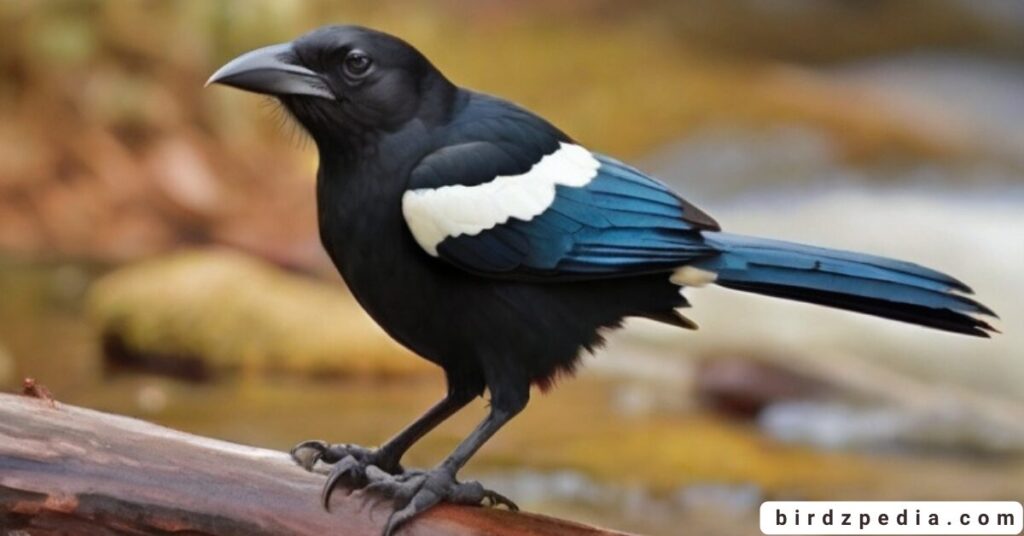
Being omnivores, these birds consume a variety of foods, such as seeds, carrion, small animals, and insects. The black-billed In addition, magpies are renowned for their gregarious and intellectual activity; in the winter, they frequently build huge communal roosts.
Physical Characteristics
- Size: Medium-sized birds, with a length of about 18 to 24 inches, including the long tail.
- Body Color: primarily black and white, with a white belly and shoulders and a black head, wings, and tail.
- Unique Distinguishable Colors or Patterns of Other Body Parts:
- Distinctive white markings on wings visible in flight.
- Long black tail.
- Bill: Black, designed to be used for carrion, tiny animals, and insect probing and plucking.
- Legs and Feet: Robust and dark, designed for strolling and perching on the ground.
- White Stripe on Wings: The wings of Black-billed Magpies, both male and female, are marked with white.
25 Yellow-bellied Sapsucker
| Characteristic | Description |
|---|---|
| Scientific Name | Sphyrapicus varius |
| Common Name | Yellow-bellied Sapsucker |
| Distribution | North America |
| Habitat | Deciduous forests, especially those with birch and maple trees |
| Feeding Behavior | Known for drilling rows of holes in trees and feeding on sap; also feeds on insects, fruits, and nuts |
Introduction
The bird’s territory includes both Canada and the United States; it breeds in the north and migrates south for the winter. The male and female Yellow-bellied Sapsuckers have the same plumage and white wing stripes.
Witnessed in the wild, this bird is a remarkable species with stunning black and white plumage and unique drilling activity.
- Size: Small to medium-sized woodpecker, about 7 to 9 inches in length.
- Body Color: Mostly black and white, with a yellowish white belly and white wing patc
- Unique Distinguishable Colors or Patterns of Other Body Parts: Black head with a red forehead.
- White stripes on the face.
- White underparts with black spots on the breast and flanks.
- White stripes on the wings of both males and females.
- Bill: Straight, sturdy, and chisel-like.
- Legs and Feet: Grayish or bluish-gray in color.

26 Black Phoebe
| Characteristic | Description |
|---|---|
| Scientific Name | Sayornis nigricans |
| Common Name | Black Phoebe |
| Distribution | Western North America, from British Columbia to South America |
| Habitat | Near bodies of water such as streams, ponds, marshes |
| Behavior | Highly territorial; defends breeding and feeding areas vigorously |
| Diet | Mainly insects; catches them in mid-air or by perching and darting out to grab them |
Introduction
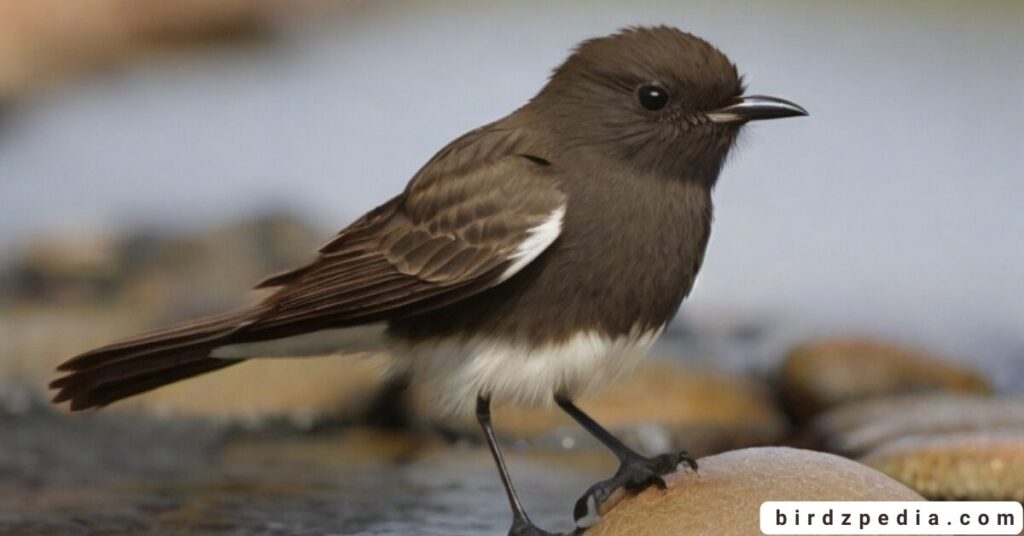
Black Phoebes’ remarkable black and white coloring and gregarious behavior make them fascinating to observe in their natural habitats. Activities such as water consumption that diverts water from natural drainage systems and the continual degradation of riparian habitat pose a severe threat to their long-term survival.
- Size: About 6-7 inches in length, with a wingspan of around 10-11 inches.
- Body Color: Solid blackish-gray above and white below.
- Unique Distinguishable Features: Black bill and legs.
- White patch on the belly.
- Bill: Short and stout, ideal for catching insects.
- Legs and Feet: Short and strong, with sharp claws for perching and hunting.
- Male and Female: Similar in appearance, with no discernible differences.
- Both have a white patch on the belly.
27 Common Nighthawk
| Characteristic | Description |
|---|---|
| Scientific Name | Chordeiles minor |
| Common Name | Common Nighthawk |
| Distribution | Throughout much of North and South America |
| Activity | Crepuscular (most active at dawn and dusk) |
| Habitat | Open areas including fields, forests, and urban areas |
| Hunting Technique | Skilled hunters; catch insects on the wing using wide mouths and agile flight |
Introduction
Furthermore, Common Nighthawks are well recognized for their unique nest-building techniques, which entail laying the eggs directly on the ground or on level surfaces such as gravel rooftops or rocky outcrops. Common Nighthawks are amazing to watch in the wild due to their unique markings and peculiar habits.
- Size: About 9-10 inches in length, with a wingspan of around 22-24 inches.
- Body Color: Mottled brown and gray.
- Distinctive white throat patch.
- Bold black and white bars on the wing.
- Unique Distinguishable Features: Large eyes.
- Short, wide bill.
- Bill: Short and wide, with a slightly curved tip.
- Legs and Feet: Short and weak.
- Small claws for perching.
- Male and Female: Similar in appearance, with no discernible differences.
- Both have bold black and white bars on the wings and a white throat patch.

28 Dot-winged Antwren
| Characteristic | Description |
|---|---|
| Scientific Name | Microrhopias quixensis |
| Common Name | Dot-winged Antwren |
| Native Region | Amazon Basin in South America and several Central American countries |
| Habitat | Tropical forests, woodlands, secondary growth |
| Plumage | Males: Grayish-brown feathers, black wings and tail, white spots on wings |
| Females: Reddish-brown underparts, white patch on throat | |
| Diet | Insectivores; feed on small insects and spiders |
| Feeding Behavior | Flit through underbrush, gleaning insects from leaves and twigs |
Introduction
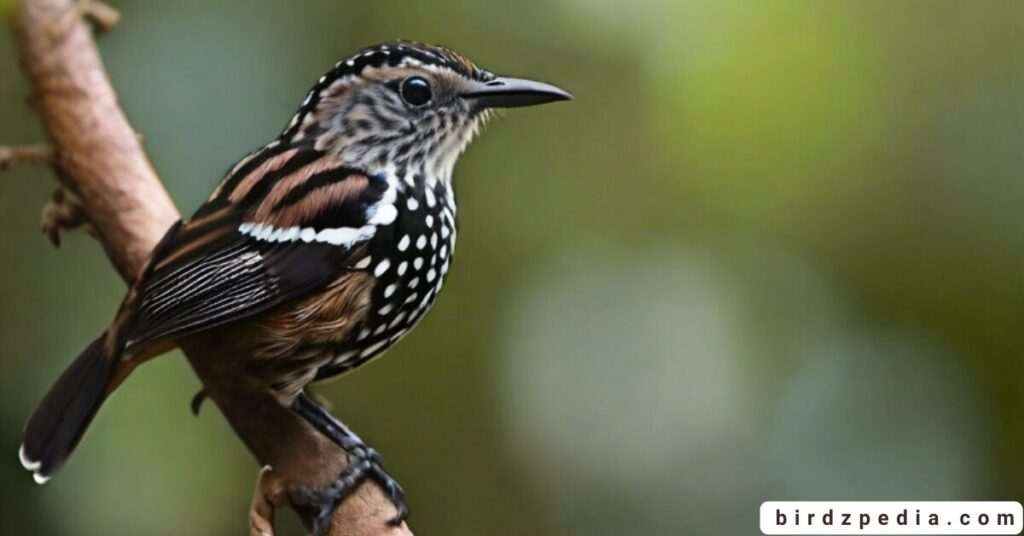
These birds are notable for their high-pitched calls, which are often heard in the forest’s understory. Dot-winged antwrens are an important part of the Amazonian biodiversity and their presence indicates a healthy, diverse ecology.
- Size: Small-sized bird, approximately 3.5-4 inches (9-10 cm) in length.
- Body Color: Grayish-brown plumage with black wings and tail.
- Males have distinctive white spots on their wings.
- Females have reddish-brown underparts.
- Unique Distinguishable Colors : Male dot-winged antwren: White spots on wings.
- Both males and females: White patch on throat.
- Bill: Short and pointed.
- Black upper mandible and pale lower mandible.
- Legs and Feet: Short and black.
- Male and Female: Male: White spots on wings.
- Female: Reddish-brown underparts.
29 White-winged Becard
| Characteristic | Description |
|---|---|
| Scientific Name | Pachyramphus polychopterus |
| Common Name | White-winged Becard |
| Size | Small to medium-sized bird |
| Distribution | Parts of Central and South America |
| Habitat | Forested habitats, including deciduous and evergreen forests |
| Diet | Insects and fruits |
| Foraging Behavior | Forages in foliage of trees and bushes |
| Wing Stripe | White stripe on wings, visible in both males and females |
| Plumage Color | Blackish-gray with contrasting white wing stripe |
Introduction
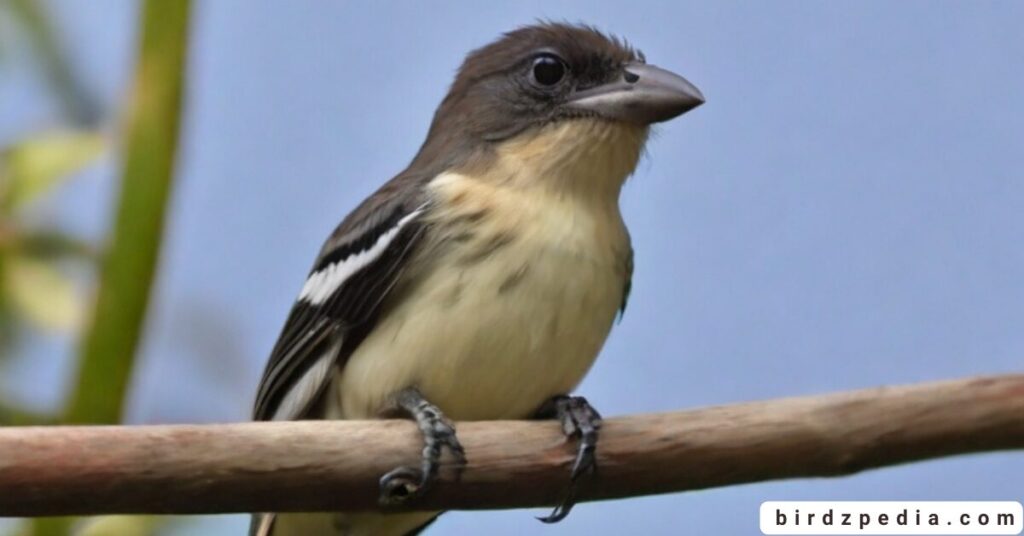
Another useful feature to look for when trying to identify this species is the short, strong, blackish bill. Due to its unique appearance and widespread distribution over Central and South America, the White-winged Becard is not as well-known as some other songbird species, but it is still an interesting bird to watch and study.
- Dimensions: 6 inches (15 cm) in length, small to medium-sized songbird with whitish underparts and blackish-gray upperparts.
- distinctive patterns or colors that stand out: Male and female wings have a white stripe that contrasts with the remainder of the wings’ blackish-gray hue.
- Bill: Short, stocky, and somewhat dark-skinned
- Legs and feet: rather black in hue
30 Arnot’s Chat
| Characteristic | Description |
|---|---|
| Scientific Name | Myrmecocichla arnotti |
| Common Name | Arnot’s Chat |
| Distribution | Southern Africa, including Zimbabwe, Mozambique, and South Africa |
| Habitat | Grasslands, savannas, scrublands; adapts to dry, open areas and acacia-studded plains |
| Endemism | Endemic to the subcontinent |
Introduction
These birds use their slender, black beak to search for insects and other invertebrates on the ground. Arnot’s Chats, with their elegant gaits and endearing personalities, are a remarkable sight in the African wilderness.
- Size: The Arnot’s Chat is a little bird, with a length of about 6 inches (15–16 cm).
- Body Color: Both male and females have mostly dark gray or blackish upperparts, and pale gray or whitish underparts.
- Distinctive Colors or Patterns: The dark crown and neck contrast sharply with the white forehead that males have. Both sexes have white wing patches, but the female is more subtle overall, with a white patch on the side of her neck instead of a white forehead.
- Bill: The bill has a black hue and is thin.
- Legs and Feet: Usually, the legs and feet are either black or dark gray in color.

General Summary
| Bird Name | Location | Length | Wingspan | Food |
|---|---|---|---|---|
| Yellow-headed Blackbird | Canada, USA | 9-10 inches | 14-16 inches | Grains and weed seeds, insects during the breeding |
| Tricolored Blackbird | California, Oregon, Central Washington, western Nevada, and northwestern Baja California | 8-9 inches | 14-16 inches | Grasshoppers, grains, and other insects |
| White-headed Woodpecker | Western USA | 8.5-10 inches | NA | Arthropods, fruits, and seeds |
| Hairy Woodpecker | Canada, Eastern USA, Mexico up to Central America | 9-10 inches | 13.0-16.1 inches | NA |
| Lark Bunting | Central and western North America | 5.5-6.5 inches | 9.8-11.0 inches | Seeds, grain, insects, cactus fruits |
| Black-billed Magpie | Southern Alaska, Canada, USA | 18-24 inches | 22.1-24.0 inches | Arthropods, seeds, and carrion |
| Downy Woodpecker | Canada and USA | 5-7 inches | 9.8-11.8 inches | Insects, other arthropods, fruits, seeds |
| Yellow-bellied Sapsucker | NA | 7-9 inches | 13.4-15.8 inches | Sap, fruit, and arthropods |
| Black-and-white Warbler | Northern and eastern North America | 4.5-5 inches | 7.1-8.7 inches | NA |
| Black Phoebe | California through the southwestern USA to Middle and South America | 6-7 inches | 10-11 inches | Wild bees and wasps, other insects and spiders |
| Common Nighthawk | North and South America | 9-10 inches | 22-24 inches | Flying arthropods |
| White-browed Wagtail | India, Bangladesh, and Sri Lanka | 7 inches | 11 inches | Insects, small snails |
| Gabon Boubou/ Swamp Boubou | Cameroon, Angola, Zambia | 9-10 inches | NA | Invertebrates, small fruits, worms |
| Bar-winged Flycatcher-shrike | Forests of tropical southern Asia | 6-7.5 inches | NA | Insects, termites, and other small arthropods |
| White-winged Triller | Australia, New Guinea, and eastern Indonesia | 5-6 inches | NA | NA |
| Magpie-lark | Australia | 8-10 inches | NA | Invertebrates, worms, small frogs, and seeds |
| Dot-winged Antwren | Central America, Brazil, Colombia, Peru | 3.5-4 inches | NA | Insects, spiders |
| White-shouldered Fire-eye | Brazil and Paraguay | 4.3 inches | NA | NA |
| Eurasian Magpie | Eurasian continent | 18-19.6 inches | 22.1-24.0 inches | Arthropods, seeds, and carrion |
| White-winged Becard | Central America to South America | 6 inches | NA | Caterpillars, large insects, spiders, and berries |
| Mountain Wheatear | Southwestern Africa | 6.7-7.8 inches | NA | Mainly arthropods |
| Arnot’s Chat | Namibia, South Africa, West Swaziland, and Lesotho | 6 inches | NA | Mainly insects |
| White-winged Chough | Southern and eastern Australia | 18 inches | NA | Trash heaps, worms, insects |
| Eurasian Magpie | Eurasian continent | 17-18 inches | NA | Arthropods, ants, spiders, occasionally small geckos |
| Oriental Magpie-robin | Tropical southern Asia | 19 cm (7.5 in) | NA | NA |
| Magpie-lark | Australia, Timor, southern New Guinea | 9.8-11.8 inches | NA | Invertebrates, worms, small frogs, and seeds |
| Swamp Boubou | Western and southern Central Africa | 9-9.8 inches | NA | Insects, small fruits, worms |
| Black-and-white Warbler | South and Central America and the southernmost parts of the USA | 5 inches | 7.1-8.7 inches | Canada, Eastern USA, Mexico up to Central America |
| Anhinga | South and Southeast Asia up to Borneo | 35 inches | 47 inches | Small to medium-sized wetland fishes |
| White-browed Wagtail | Predominantly in India and Sri Lanka | 21 cm (8.3 in) | NA | Insects, small snails |
| White-Winged Scoter | North America | 48-60 cm (19-24 in) | NA | Mollusks, arthropods, insects |
| White-headed Woodpecker | Pine forest mountains of western North America | 20 cm (7.9 in) | NA | Arthropods, fruits, and seeds |
| Downy Woodpecker | North America | 14-18 cm (5.5-7.1 in) | NA | Insects, berries, and seeds |
| Bar-winged Flycatcher-shrike | Forests of tropical southern Asia | 14-15 cm (5.5-5.9 in) | NA | Insects, spiders, fruits, seeds, nectar |
| White-shouldered Fire-eye | Brazil and Paraguay | 16-18 cm (6.3-7 in) | NA | NA |
| Black Guillemot | Northern Atlantic coasts and eastern North American coasts | 30-32 cm (12-12.5 in) | NA | Fish, insects, and arthropods |
FAQs
- 1. What bird species have black plumage with white stripes on their wings?
- Birds such as the Pied Wagtail (Motacilla alba), White-winged Widowbird (Euplectes albonotatus), and certain plumages of the Eurasian Magpie (Pica pica) are known to frequently have black coloration with white stripes on their wings.
- 2. How can I identify a bird with black plumage and white wing stripes?
- Seek out birds whose wings are primarily black with noticeable white spots or stripes. Take note of the white markings’ dimensions, form, and placement.
- 3. Where do these birds typically live?
- Although the exact habitat varies per species, depending on the species, birds with these patterns can be found in a variety of settings, including grasslands, marshes, woods, and urban areas.
- 4. What do black birds with white wing stripes eat?
- While each species has a different diet, these birds often eat insects, seeds, grains, and occasionally small vertebrates like fish or frogs.
- 5. Are these birds migratory?
- While some species may migrate, others may live permanently in their natural habitats. Migration patterns can differ significantly among species and regions.
- 6. Do these birds exhibit interesting behaviors?
- Indeed, a lot of these birds are well-known for their unusual habits, like intricate courtship rituals, collective feeding, or species-specific calls.
- 7. How can I attract or observe these birds in my area?
- Provide proper habitat elements, like bird feeders with the right seed mixes, water sources, and shelter, to draw these birds. Study up on the particular preferences of the species you want to see as well.
- 8. Can these birds be kept as pets?
- It’s crucial to review local laws and ordinances before bringing wild birds home as pets. Wild birds are generally protected and shouldn’t be kept as pets.