
Understanding Goose Mouth: Anatomy, Functions, and Unique Features
Geese are fascinating birds known for their social behavior, migratory habits, and distinctive honking sounds. One of their most intriguing and unique features is their mouth. The structure of a goose’s mouth, commonly referred to as “goose mouth,” plays a crucial role in their feeding habits, communication, and defense mechanisms. This article delves into the anatomy, functions, and characteristics of the goose mouth, highlighting what makes it so distinctive among birds.
Anatomy of a Goose’s Mouth
The mouth of a goose is more complex than it appears at first glance. It comprises several specialized structures that work together to support the bird’s survival.

Beak
The goose’s beak, or bill, is the most prominent external feature of its mouth. Made of keratin, the beak is hard and durable, designed to withstand daily use. Geese have flat, wide bills that are ideal for their feeding habits, which involve grazing on grass and foraging in aquatic environments.
The beak has two parts:
- Upper mandible: The top part of the beak.
- Lower mandible: The bottom part of the beak.
Tomia (Serrated Edges)
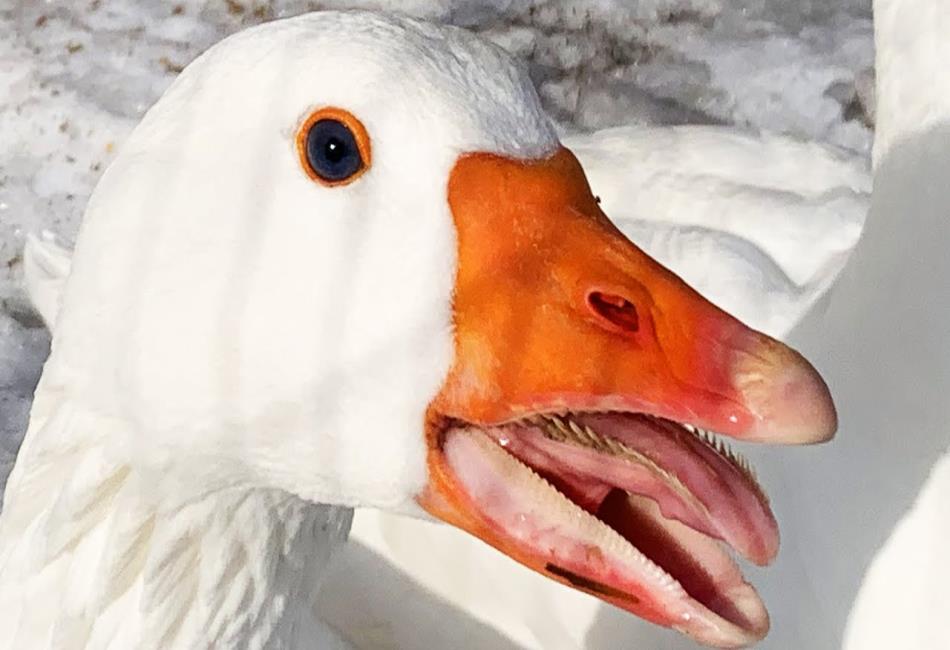
One of the most unique features of a goose’s mouth is the tomia, which are serrated, comb-like edges along the beak. While they may resemble teeth, these structures are not true teeth but are made of keratin, similar to the beak itself. The tomia are essential for gripping and tearing food, making it easier for geese to consume a variety of plants and small aquatic creatures.
Tongue
The goose tongue is another fascinating component. It is long, fleshy, and also features serrations similar to the tomia on the beak. These serrations help manipulate and process food before swallowing. The tongue’s mobility and shape allow geese to efficiently filter and consume food from water or land.
Palate
The roof of the goose’s mouth, or palate, is grooved to aid in food movement. Combined with the tongue, it ensures that food is directed toward the esophagus for swallowing.
Functions of the Goose Mouth
The anatomy of the goose mouth is closely linked to its functionality. Each component has evolved to support the bird’s diet, behavior, and defense.
Feeding
Geese are primarily herbivores, feeding on grasses, grains, and aquatic vegetation. Their serrated beak edges and tongue make it easy to grasp and tear plant matter. In aquatic environments, geese use their mouths to filter small plants and invertebrates from the water. The grooves in their tongue and palate act as a natural sieve, allowing water to escape while retaining food.
Communication
The goose mouth plays a role in vocalizations. Geese are highly social birds that communicate through honks, hisses, and other sounds produced by air passing through their vocal cords. While the sounds originate in the syrinx (a bird’s vocal organ), the shape and movement of the mouth can influence the tone and volume of these calls.
Defense
Geese are known for their aggressive defense behaviors, particularly when protecting their nests or young. The serrated edges of their beaks and their powerful bites can inflict pain on predators or threats. When combined with loud hissing and honking, their mouth becomes an effective tool for warding off potential dangers.
Unique Features of the Goose Mouth
Serrated “Teeth”
The tomia, often mistaken for teeth, are among the most distinctive features of a goose’s mouth. These serrations give the bird a menacing appearance when its mouth is open, which can be intimidating to predators or humans.
Adaptability
The structure of the goose mouth allows it to adapt to various feeding conditions. Whether grazing on land or filtering food from water, the goose mouth is versatile enough to handle different environments.
Preening and Grooming
Geese also use their beaks for preening, maintaining the health and cleanliness of their feathers. The precision with which they can manipulate their beaks highlights the importance of this anatomical feature beyond feeding and defense.
Common Misconceptions About the Goose Mouth
- Goose Teeth: While the serrated edges of a goose’s beak look like teeth, geese do not have true teeth. Birds, in general, lack teeth and rely on other adaptations like gizzards to process food.
- Dangerous Bites: While geese can bite, their bites are rarely dangerous to humans. However, the serrated edges of their beaks can cause discomfort or minor injuries if a person is bitten during a confrontation.
- Only for Eating: Many people assume the mouth of a goose is solely for eating. In reality, it is a multifunctional tool used in communication, grooming, and defense.

Goose Mouth and Human Interaction
Geese have long been associated with humans, whether as domesticated animals or wildlife. Understanding their mouth structure can be helpful in fostering better relationships with these birds.
- Feeding Geese: When feeding geese, it’s important to provide appropriate food like grains or leafy greens. Their serrated beaks are designed for plant matter, and feeding them processed foods like bread can harm their health.
- Avoiding Bites: To avoid a defensive bite, it’s best to maintain a respectful distance from geese, especially during nesting season when they are more protective.
Conclusion
The goose mouth is a fascinating example of nature’s adaptability and efficiency. From its serrated tomia to its multitasking tongue, each feature serves a purpose that contributes to the bird’s survival. Whether geese are grazing, communicating, or defending themselves, their mouths play a central role in their daily lives.
Understanding the anatomy and functions of the goose mouth not only deepens our appreciation for these birds but also enhances our ability to interact with them responsibly. As symbols of migration and teamwork, geese continue to inspire curiosity and admiration, with their unique mouths standing out as one of their most remarkable traits.


