Bounce House Rental Business: Costs and Growth Strategies
Starting a bounce house rental business in the United States involves more than purchasing a few inflatables and finding customers. Equipment costs, transportation, insurance, maintenance, and local regulations all affect how the business operates and whether it can remain profitable.
Bounce houses are commonly rented for birthday parties, school events, church gatherings, and community celebrations. While these events create opportunities for rental companies, success depends on choosing the right equipment, setting realistic prices, and managing day-to-day expenses.
For entrepreneurs planning to enter the market, understanding the initial investment and ongoing operating costs is essential. Established rental companies also need to evaluate equipment utilization, customer demand, and expansion opportunities before investing in additional inventory.
This article examines the key costs and practical growth strategies involved in running a commercial bounce house rental business in the US.
1. Understanding Startup Costs Before Buying Equipment
Startup costs depend on the number of inflatables purchased, transportation arrangements, storage facilities, insurance, and local business requirements.
An operator beginning with two standard bounce houses will have a different budget from a company launching with multiple combination units and an obstacle course.
Besides commercial inflatables, common startup expenses include:
- Electric blowers and appropriate anchoring equipment
- Transportation vehicles or trailers
- Storage and equipment-handling supplies
- Business registration, permits, and insurance
- Cleaning materials and repair supplies
- Website development and booking software
- Advertising and initial operating expenses
Before ordering, buyers should request detailed quotations showing the equipment, accessories, shipping charges, and applicable taxes.
A reserve for unexpected expenses is equally important. Weather cancellations, repairs, and slower booking periods can create cash flow problems, particularly during the first year.
How Much Does It Cost to Start a Bounce House Rental Business?
There is no universal startup figure for US rental businesses.
An owner using an existing vehicle and storage space may require less capital than someone purchasing a dedicated trailer, several large inflatables, and warehouse space.
The most useful approach is to calculate costs using actual supplier quotations, local insurance premiums, and transportation expenses rather than relying on generic online estimates.
2. Choosing Commercial Inflatables That Match Customer Demand
Equipment selection influences transportation, setup time, maintenance, and the types of events a company can serve.
Residential inflatables are generally intended for occasional private use, while commercial equipment is built for repeated professional operation.
Commercial inflatables commonly feature reinforced PVC, industrial stitching, internal structural supports, and reinforcement at high-stress points. Many use PVC around 0.55 mm thick, although specifications vary by design and manufacturer.
Construction quality matters because rental equipment is repeatedly inflated, deflated, cleaned, transported, and stored.
However, durability alone does not determine whether a product is a good investment.
Compact bounce houses and combination units may suit backyard birthday parties, while schools and community events may require obstacle courses or interactive games.
Suppliers such as EastJump offer commercial bounce houses, inflatable slides, combination units, and obstacle courses for different event applications.
Before buying, operators should compare dimensions, packed weight, blower requirements, maintenance needs, and installation space.
A large attraction may look impressive in a catalog but prove difficult to transport or install at typical residential properties.
The most suitable equipment is what meets customer demand while remaining practical to operate and maintain.
3. Calculating the Real Cost of Each Rental
Rental revenue is not the same as profit. Every booking involves costs such as fuel, labor, cleaning, equipment wear, and sometimes additional staffing.
Consider this hypothetical $250 booking:
| Item | Amount |
| Customer rental fee | $250 |
| Transportation and labor | −$65 |
| Cleaning and maintenance allowance | −$15 |
| Contribution after listed direct costs | $170 |
The remaining $170 is not net profit. Insurance, storage, marketing, equipment depreciation, administration, taxes, and other overhead must still be considered.
These figures are illustrative, not typical US rental prices or industry profit margins.
A useful calculation is:
Rental revenue − direct booking costs = contribution per booking
Tracking this figure helps operators determine whether each equipment category contributes enough to justify its purchase and maintenance expenses.
A larger inflatable may command a higher rental fee but still deliver a lower contribution if it requires extra employees, a larger vehicle, and more setup time.
Understanding these costs provides a better foundation for pricing than simply matching the cheapest competitor.
4. Pricing Around Seasonality and Local Demand
Demand varies considerably across the United States.
In colder regions, outdoor bookings may concentrate in warmer months. Businesses in warmer climates may operate longer seasons, although rain, high winds, and extreme heat can still disrupt events.
School calendars, holidays, and community activities also influence booking patterns.
Rental companies should establish pricing that reflects both customer demand and the cost of delivering their services.
A residential package might include a standard rental period, delivery, setup, and collection within a defined service area.
Schools and corporate customers may require customized quotations based on event duration, staffing, and equipment selection.
Delivery distance is particularly important. Serving a customer 40 miles away can be substantially more expensive than serving someone nearby, especially when a separate collection trip is required.
Clear service areas and distance-based fees help protect margins.
Package bookings can also create opportunities. A school might rent an obstacle course alongside an interactive game, but any discount should account for the additional transportation and labor involved.
Effective pricing should provide customers with clear expectations while ensuring each booking makes a reasonable financial contribution.
5. Insurance, Safety, and Local Regulations
Commercial inflatable rental businesses must understand the requirements applicable to their operating locations.
Regulations vary by state and sometimes by local jurisdiction. Depending on the location and type of equipment, operators may need permits, registration, inspections, or specific insurance coverage.
ASTM F2374 addresses safety-related requirements for inflatable amusement devices within its scope, including design, manufacture, operation, and maintenance.
However, publication of an ASTM standard does not mean every state automatically adopts the same edition or applies identical requirements.
Manufacturer documentation, including operating instructions and technical specifications, is useful but does not automatically replace approvals or inspections required by authorities.
Business owners should also consult insurance professionals familiar with inflatable rental operations.
Appropriate coverage may depend on the equipment, event locations, customer types, and contractual obligations.
Daily safety practices remain essential. These include suitable anchoring, weather monitoring, electrical precautions, equipment inspections, and supervision.
For outdoor events, operators must follow manufacturer instructions and applicable safety requirements, especially when weather conditions could affect stability.
Written setup procedures and staff training can help create consistency across different installation teams.
Safety should be treated as an ongoing operating responsibility, not a one-time task completed when equipment is purchased.
6. Turning Local Searches Into Confirmed Bookings
Reliable equipment cannot generate bookings if customers cannot find the business.
A clear, mobile-friendly website should allow visitors to view available inflatables, compare dimensions, understand pricing, and check delivery coverage.
Each equipment listing should include accurate photographs, space requirements, and rental information.
An up-to-date Google Business Profile can improve local visibility. Operators should maintain accurate contact details, service areas, and business information while encouraging genuine customer reviews.
However, attracting visitors is only the first step.
Customers should be able to find answers to common questions without repeatedly contacting the company:
- Is the inflatable available on the requested date?
- Will it fit the yard or venue?
- Is delivery included?
- What happens if weather conditions are unsuitable?
- How are setup and collection arranged?
An online availability calendar or straightforward inquiry form can reduce unnecessary communication.
Businesses serving multiple cities can also create useful service-area pages explaining genuine delivery coverage and distance-based charges. These pages should offer local information rather than repeating identical text with different city names.
Relationships with schools, churches, event planners, and community organizations may generate recurring bookings.
In the long term, punctual delivery, clean equipment, and professional communication are just as important as advertising.
7. Improving Equipment Utilization Before Expanding Inventory
Purchasing more inflatables does not automatically increase revenue.
Before expanding, operators should assess how frequently existing equipment is rented and how much each unit contributes after direct expenses.
Equipment utilization measures how often a product is booked during periods when it is available.
An inflatable receiving consistent reservations may provide more financial value than a costly attraction rented only occasionally.
Reviewing booking records can help answer important questions: Which products receive the most inquiries? Which generate the strongest contribution? Are customers frequently requesting unavailable equipment?
For companies focused on backyard birthday parties, offering different sizes and themes of commercial bounce houses may provide more booking flexibility than purchasing one oversized attraction.
Businesses receiving frequent requests from schools or corporate customers may instead benefit from obstacle courses or interactive inflatable games.
Digital booking records and maintenance histories can make these patterns easier to identify.
New purchases should be based on demonstrated demand, not assumptions about which products might become popular.
8. Growing Without Taking Unnecessary Financial Risks
Expansion introduces new opportunities but also creates additional expenses.
A company increasing its inventory from five inflatables to fifteen may require more warehouse space, vehicles, employees, and maintenance capacity.
Owners should review cash flow, equipment utilization, staffing, and customer inquiries before making significant investments.
Gradual expansion allows businesses to evaluate each purchase before committing more capital.
New equipment categories also introduce different operating requirements.
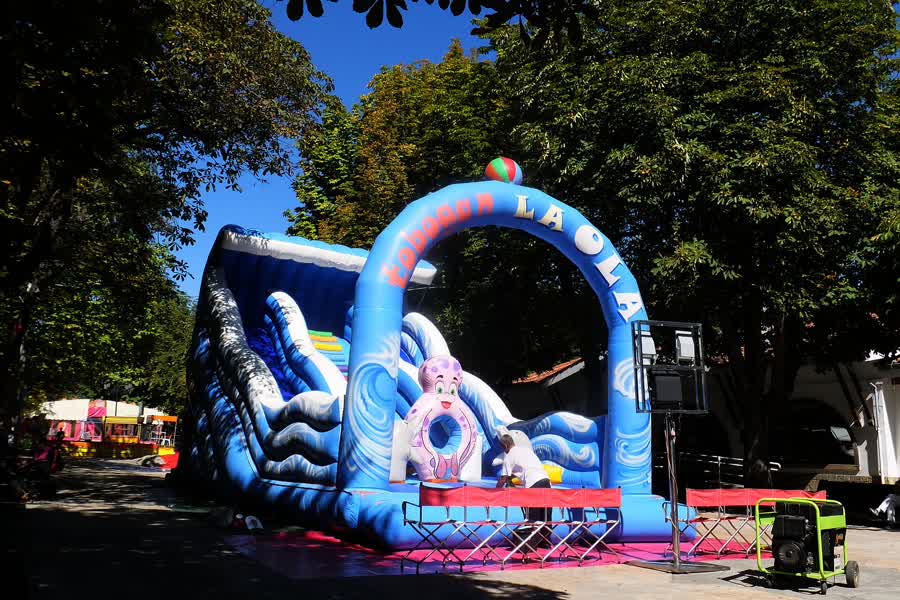
Water slides may attract summer bookings but require suitable water supplies, drainage arrangements, and additional cleaning. For a local example, see water slide rentals in Tulsa.
Large obstacle courses may appeal to schools and corporate events while requiring greater transportation capacity and installation time.
Insurance coverage and local regulatory obligations should be reviewed when expanding into different types of attractions.
A practical growth strategy uses actual booking data and financial records to identify opportunities that the business can support.
Conclusion
A bounce house rental business can serve customers ranging from families organizing birthday parties to schools and companies planning larger events.
However, long-term success depends on more than owning attractive inflatables.
Equipment selection, pricing, transportation, insurance, safety procedures, and customer service all influence business performance.
New operators should prioritize understanding their costs and building a manageable inventory. Established companies can improve performance by tracking equipment utilization, simplifying bookings, and expanding into products supported by customer demand.
The strongest growth strategy is not necessarily to purchase more equipment. It is to make each investment based on reliable information, practical operating capacity, and the needs of the customers the business intends to serve.