

The Scissor: A Tool of Versatility and Precision
The humble scissor is one of the most essential and versatile tools in human history, transcending cultural and geographical boundaries. From ancient origins to its modern, specialized designs, scissors play a pivotal role in various fields, including crafts, textiles, medicine, and everyday household tasks. This article explores the history, anatomy, types, and diverse applications of scissors, shedding light on their enduring importance.
A Brief History of Scissors
The origins of scissors date back thousands of years. The earliest known scissors, crafted around 1500 BCE, were spring scissors made from a single piece of bronze. These ancient tools consisted of two blades connected by a C-shaped spring that held the blades apart until squeezed together. Such designs were widely used in ancient Egypt, Mesopotamia, and Rome.
The modern pivoted scissor, resembling today’s design, emerged around the first century CE in the Roman Empire. This innovation involved two blades connected by a central pivot, allowing for greater control and precision. As metallurgy advanced, scissors became more refined, with sharper blades and ergonomic handles. By the Middle Ages, scissors were crafted with ornate designs, signifying status and craftsmanship.
During the Industrial Revolution, mass production made scissors more accessible. The introduction of stainless steel in the 20th century further revolutionized scissor manufacturing, ensuring durability and resistance to rust.
Anatomy of a Scissor
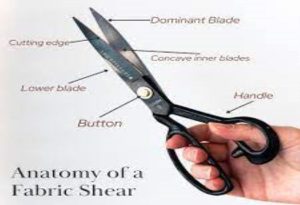
Understanding the anatomy of a scissor reveals why it is such a precise and effective tool. A typical scissor consists of:
- Blades: The cutting edges that come together to slice through materials. Scissor blades are usually made from stainless steel or carbon steel for sharpness and durability.
- Pivot Point: The central screw or rivet that connects the two blades, allowing them to pivot and work together.
- Handles: The loops at the end of the scissor arms, designed for gripping. Handles are often made from plastic or rubber for comfort and grip.
- Serrations (optional): Some scissors feature serrated blades for better grip on slippery or tough materials, such as fabric or plastic.
- Offset or Angled Blades: Certain scissors, like sewing scissors, have angled blades to allow cutting flat against a surface.
Types of Scissors
Over time, scissors have evolved to meet the needs of various industries and applications. Here are some of the most common types:
1. Household Scissors
These are the most common and multipurpose scissors, suitable for cutting paper, string, and lightweight materials. They are found in almost every household and are an essential tool for daily tasks.
2. Craft Scissors
Craft scissors are designed for artistic projects. They often feature decorative blade edges for creating unique cuts or ergonomic handles for extended use. Examples include zigzag scissors for paper crafting and small embroidery scissors for intricate fabric work.
3. Sewing Scissors
Sewing scissors, like dressmaker’s shears, are specialized for cutting fabrics. They are often angled to cut material cleanly while laying flat. Pinking shears, a variation, have sawtoothed blades to create a zigzag pattern, preventing fabric fraying.
4. Kitchen Scissors
Kitchen scissors, or kitchen shears, are designed for cutting meat, herbs, and other food items. They often include additional features like bottle openers or nutcrackers.
5. Medical Scissors
Medical scissors, such as surgical scissors or bandage scissors, are precision instruments used in healthcare. Bandage scissors have a blunt tip to avoid injuring the patient, while surgical scissors are designed for cutting tissues with extreme accuracy.
6. Hairdressing Scissors
Hairdressing scissors are finely tuned for cutting hair. They are extremely sharp and often feature offset handles for ergonomics during prolonged use. Thinning scissors, a variation, have one serrated blade to thin hair evenly.
7. Industrial Scissors
These heavy-duty scissors are built to cut through tough materials like leather, metal, or plastic. They are used in industries like construction, upholstery, and automotive manufacturing.
Applications of Scissors
The adaptability of scissors has made them indispensable across numerous fields:
1. Household Use
Scissors are essential tools in every home, used for opening packages, cutting paper, and performing minor repairs. Their simplicity and reliability make them a go-to tool for daily tasks.
2. Art and Craft
From school projects to professional artistry, scissors are fundamental in crafting. They allow for creativity and precision in cutting paper, fabric, and other materials.
3. Fashion and Textiles
In sewing and tailoring, scissors are vital for cutting fabrics, trimming seams, and creating precise patterns. Dressmakers and tailors rely heavily on high-quality shears for clean and accurate cuts.
4. Healthcare
Medical professionals use scissors for cutting bandages, sutures, and tissues during surgeries. The precision and safety of medical scissors are critical for patient care.
5. Hairdressing
Scissors are the primary tool for stylists and barbers, enabling them to craft and shape hair with precision.
6. Industrial Use
Heavy-duty scissors are used in manufacturing and repair work, cutting materials like rubber, wire, and thin metals.
Innovations in Scissor Design
Scissors continue to evolve with advancements in materials and technology. Innovations include:
- Ergonomic Handles: Designed to reduce hand strain during prolonged use, especially in professional settings.
- Titanium-Coated Blades: For enhanced durability and resistance to corrosion.
- Specialized Serrations: Improved grip on specific materials, such as non-slip serrations for fabric or kitchen shears.
- Left-Handed Scissors: Adjusted blade and handle orientation for left-handed users.
Caring for Your Scissors
Proper maintenance ensures the longevity and performance of your scissors. Here are some tips:
- Clean Regularly: Wipe blades after use to remove residue and prevent rust.
- Sharpen Blades: Use a sharpening stone or professional service to maintain sharpness.
- Tighten the Pivot: Adjust the screw or rivet to ensure the blades align perfectly.
- Store Safely: Keep scissors in a protective case or sheath to avoid damage.
Conclusion
Scissors are a simple yet indispensable tool that has stood the test of time. Their ability to adapt to countless applications, from mundane household tasks to intricate medical procedures, underscores their versatility and significance. As technology and design continue to evolve, scissors will remain a vital part of human ingenuity, proving that even the simplest tools can have the most profound impact. Whether in the hands of a tailor, surgeon, artist, or chef, scissors are a testament to the power of precision and practicality.


