

Raven Symbolism: A Journey Through Myth, Culture, and Mystery
The raven, with its glossy black feathers, sharp beak, and piercing gaze, has long captivated the human imagination. Across cultures and centuries, this enigmatic bird has been imbued with profound symbolism, representing everything from wisdom and transformation to death and mystery. The raven’s symbolic resonance is as multifaceted as the creature itself, bridging the realms of myth, folklore, and personal interpretation.
The Raven in Mythology and Folklore
The raven’s dark plumage and intelligent demeanor have made it a potent figure in mythology and folklore. From the Norse sagas to Native American traditions, the bird’s significance is vast and varied.
1. Norse Mythology In Norse mythology, the raven is closely associated with Odin, the All-Father and god of wisdom, war, and poetry. Odin’s two ravens, Huginn (“thought”) and Muninn (“memory”), were said to fly across the world each day, gathering information and reporting back to their master. These birds symbolize the pursuit of knowledge and the importance of memory and thought in navigating life.
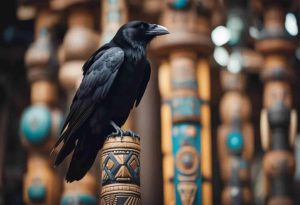
2. Native American Cultures For many Native American tribes, the raven is a revered figure, often regarded as a creator or trickster. Among the Pacific Northwest tribes, such as the Haida and Tlingit, the raven is credited with bringing light to the world. This myth tells of a raven who stole the sun, moon, and stars from a greedy chief, releasing them into the sky to benefit humanity. In this context, the raven symbolizes transformation, cunning, and the duality of light and dark.
3. Celtic and European Traditions In Celtic mythology, ravens are associated with the Morrigan, a goddess of war and fate. The Morrigan often appeared in the form of a raven on the battlefield, foretelling death and destruction. Similarly, in medieval Europe, ravens were seen as omens of death, their presence on battlefields or hanging around execution sites solidifying this association. Yet, despite their grim connotations, ravens were also thought to have protective and prophetic powers.
The Raven as a Symbol of Transformation
One of the most enduring aspects of raven symbolism is its connection to transformation and change. As a scavenger, the raven is often seen as a mediator between life and death, feeding on the remains of the deceased. This role links the bird to the cycles of death and rebirth, making it a symbol of renewal and metamorphosis.
In alchemical traditions, the raven represents the “Nigredo” stage, a phase of decomposition and darkness that precedes enlightenment and transformation. This stage is a necessary step in the process of personal and spiritual growth, symbolizing the breaking down of old forms to make way for the new.
Intelligence and Wisdom
Ravens are among the most intelligent birds, capable of solving complex problems, using tools, and even mimicking human speech. This remarkable intelligence has earned them a reputation as wise and perceptive creatures.
In literature, the raven often serves as a messenger or guide, offering insights or warnings. Edgar Allan Poe’s famous poem, “The Raven,” exemplifies this, as the bird’s haunting refrain, “Nevermore,” forces the narrator to confront his grief and despair. Here, the raven symbolizes an unyielding truth and the inevitability of sorrow.
Mystery and the Supernatural
The raven’s black feathers and nocturnal habits have long associated it with mystery and the supernatural. In many cultures, the bird is believed to have a deep connection to the spiritual realm, acting as a bridge between the physical and the metaphysical.
In ancient Greece, ravens were sacred to Apollo, the god of prophecy. The bird’s ability to traverse great distances and its keen observational skills made it a symbol of foresight and divination. Similarly, in shamanic traditions, ravens are seen as guides to the spirit world, helping shamans navigate the unknown and uncover hidden truths.
Modern Interpretations of Raven Symbolism
In contemporary times, the raven continues to hold symbolic weight, often appearing in art, literature, and popular culture. From George R.R. Martin’s Game of Thrones, where the three-eyed raven represents wisdom and prophecy, to modern tattoos and artworks, the bird’s mystique endures.
For many, the raven symbolizes personal transformation, serving as a reminder to embrace change and look beyond surface appearances. Its role as a harbinger of both darkness and enlightenment encourages introspection and the pursuit of deeper truths.
Raven Symbolism in Dreams
Dreams featuring ravens are often thought to carry significant messages. Depending on the context, a raven in a dream can symbolize:
- Transformation: Suggesting a period of change or growth.
- Wisdom: Indicating the need to trust your intuition or seek knowledge.
- Mystery: Highlighting hidden aspects of your subconscious.
- Warning: Serving as a cautionary sign or alerting you to potential danger.
Interpreting raven dreams often depends on the emotions and circumstances surrounding the dream, making the bird a deeply personal symbol.
The Duality of the Raven
One of the most fascinating aspects of raven symbolism is its duality. The bird embodies both light and dark, life and death, wisdom and trickery. This dual nature makes the raven a powerful symbol of balance, reminding us that opposites often coexist and that growth often arises from struggle.
Conclusion
The raven’s symbolism is as intricate and captivating as the bird itself. From ancient myths to modern interpretations, the raven has been a symbol of transformation, intelligence, mystery, and duality. Whether seen as a harbinger of death or a bringer of light, the raven invites us to explore the depths of our psyche and embrace the complexities of life. In its shadowy form and penetrating gaze, we find a mirror to our own journeys of change, growth, and discovery.


