

Dove vs. Pigeon: Understanding the Differences and Similarities
Doves and pigeons are two birds that have fascinated humans for centuries, appearing in art, literature, and symbolism across cultures. While the terms “dove” and “pigeon” are often used interchangeably, there are some key differences and misconceptions about these birds that deserve exploration. Both are members of the family Columbidae, which includes over 300 species worldwide. Despite their similarities, doves and pigeons vary in appearance, behavior, and cultural significance. This article delves into their distinctions and shared traits to better understand these avian wonders.
Taxonomy and Classification
Scientifically, the terms “dove” and “pigeon” do not denote separate species. They are common names applied to different members of the Columbidae family. Generally, smaller species with slender bodies are called doves, while larger, stockier species are referred to as pigeons. However, this is not a strict rule. For instance, the Rock Dove (Columba livia), commonly known as the feral pigeon, is a prime example of how these terms overlap.
The Columbidae family includes a diverse range of species, from the large Crowned Pigeon of New Guinea to the small Diamond Dove of Australia. Each species has adapted to its unique environment, but all share characteristics like short necks, small heads, and cooing vocalizations.
Physical Differences
Size and Appearance
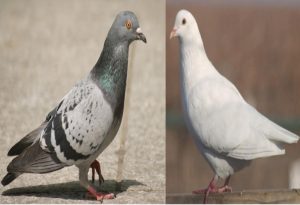
Pigeons tend to be larger and more robust compared to doves. The common city pigeon, for example, has a stout body, a short neck, and a round head. They are typically gray with iridescent green and purple feathers on their necks.
Doves, on the other hand, are smaller and more delicate in appearance. They often have a slender build, longer tails, and a more uniform color palette, ranging from white and gray to soft browns. The Mourning Dove (Zenaida macroura) is a well-known example, characterized by its pale brown body and pointed tail feathers with white tips.
Feathers and Coloration
While pigeons display a wider variety of colors and patterns, including speckles and bands, doves usually have more subtle and uniform hues. White doves, often used in ceremonies and as symbols of peace, are actually domestic varieties of the Rock Dove or Ring-Necked Dove.
Behavior and Habitat
Feeding Habits
Both doves and pigeons primarily feed on seeds, fruits, and grains, but their foraging behaviors differ slightly. Pigeons are opportunistic feeders often seen scavenging for food in urban areas. Their adaptability allows them to thrive in cities, feeding on scraps and crumbs left by humans.
Doves prefer more natural settings, often feeding on the ground in open fields or woodland edges. They are less likely to be found in urban environments compared to pigeons.
Nesting and Reproduction
Doves and pigeons are both monogamous birds, forming strong pair bonds. Their nesting habits, however, vary slightly. Pigeons are known for their resilience, building nests in urban settings like building ledges, bridges, and other man-made structures. They use twigs, leaves, and other available materials to construct their nests.
Doves prefer more secluded areas for nesting, such as trees, shrubs, or ground-level locations in rural or suburban settings. Their nests are often simpler and less robust than those of pigeons.
Flight and Movement
Pigeons are powerful fliers with a distinctive style of takeoff and landing. Their ability to navigate long distances has made them valuable as messenger birds throughout history. Homing pigeons, a variety of the Rock Dove, have been used for centuries to deliver messages, even playing crucial roles in wars.
Doves are also strong fliers but are more agile and swift in their movements. Their flight patterns are often described as graceful, with rapid wingbeats and smooth glides.
Symbolism and Cultural Significance
Pigeons in Culture
Pigeons have a mixed reputation in modern society. In urban areas, they are often dismissed as “pests” due to their abundance and tendency to gather in large numbers. However, their historical significance cannot be overlooked. In many cultures, pigeons symbolize homecoming, love, and sacrifice. Their role as messenger birds highlights their intelligence and loyalty.
Doves in Culture
Doves hold a more universally positive image. Often associated with peace, purity, and love, they have been featured in religious texts, art, and ceremonies. In Christianity, the dove symbolizes the Holy Spirit, while in ancient Greek mythology, it is connected to the goddess Aphrodite, representing love and beauty.
White doves are commonly released during weddings, funerals, and other significant events as symbols of hope and harmony. This practice, while beautiful, often involves domesticated birds that may struggle to survive in the wild.
Conservation and Challenges
Both pigeons and doves face environmental challenges, including habitat loss, predation, and climate change. Urban pigeons, while thriving in cities, often face negative perceptions and are subject to culling in some areas. Conversely, some wild dove species, like the Passenger Pigeon, have faced extinction due to human activities.
Efforts to conserve these birds involve protecting their natural habitats and educating the public about their ecological importance. Pigeons and doves play vital roles in seed dispersal and maintaining ecological balance.
Key Takeaways
- Taxonomy: Both doves and pigeons belong to the Columbidae family, with the terms often used interchangeably.
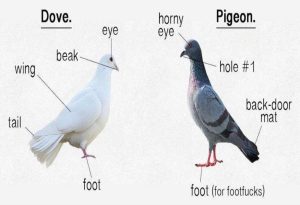
- Physical Traits: Pigeons are generally larger and stockier, while doves are smaller and more delicate.
- Behavior: Pigeons adapt well to urban environments, while doves prefer rural or natural settings.
- Symbolism: Doves symbolize peace and purity, while pigeons have historical associations with loyalty and intelligence.
Understanding the differences and similarities between doves and pigeons not only deepens our appreciation for these birds but also highlights their unique roles in nature and human culture. Whether seen fluttering in city squares or cooing in serene fields, both doves and pigeons remind us of the beauty and complexity of the avian world.