
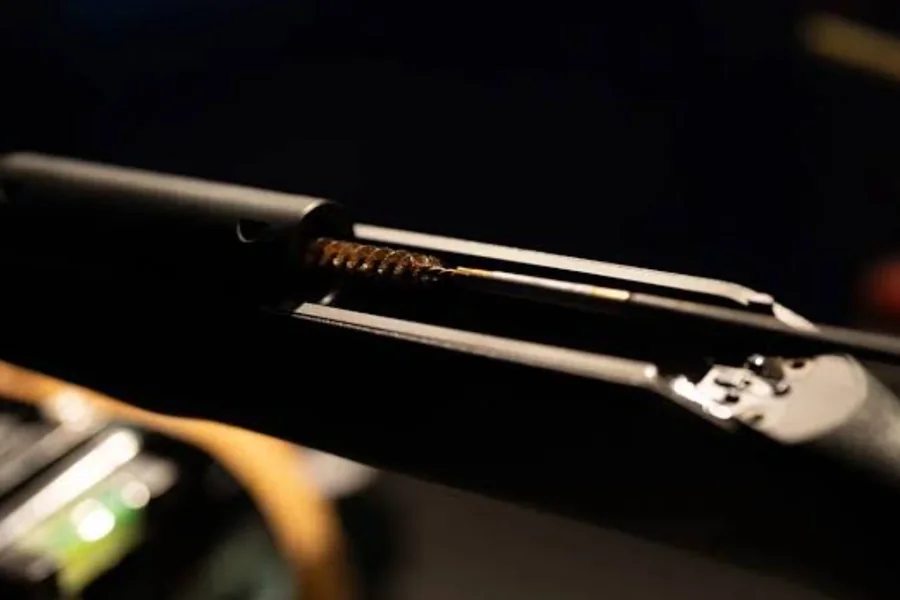
How to Choose Tools for Cleaning a Gun at Home?
Home gun care takes little skill once a suitable set of tools sits on the bench. Mistakes usually stem not from technique but from the purchase itself: a random cleaning rod, an attachment of the wrong size, or a thread that doesn’t match the rest of the parts. That’s why the process starts not at the store, but with a clear idea of what exactly needs maintaining. A brush is just one item in a kit that also includes a rod, tips, patches and chemicals.
Where Does the Shopping List Start
The first step is to list every firearm in the safe along with its bore diameter rather than its cartridge name. Often, three rifles can be grouped under a single .30 size, while a pistol and a revolver share a single .357 size. Which cartridges correspond to each size can be checked in the table at https://www.gunnix.us/catalog/bore-brushes. Shotguns should be listed separately because they use their own 5/16-27 thread and require an adapter to fit an 8-32 rod. If the safe contains many calibers, it’s easier to buy a universal kit and add any missing sizes one at a time.
Which Rod or Cable Is the Right Choice
The rod should be a few inches longer than the barrel, so the bore cleaning brush fully clears the muzzle. Sectional brass rods made of 7.5 inch sections are assembled to the needed length: one section for a pistol, two for a carbine and four for a rifle with a 22 to 24 inch barrel. Rifled barrels call for a rotating T-handle, while a fixed handle works for shotguns. Where a rod can’t go in from the chamber end, a flexible cable does the job.
Why Does Bristle Material Matter More Than Price
Three bristle types are common among bore brushes: bronze, nylon and steel. Bronze is softer than barrel steel yet removes carbon and copper well, which makes it the standard for regular cleaning. Nylon suits light passes and polymer frames, while steel bristles don’t belong in the bore at all, since they scratch the rifling and chrome lining. The core matters too, and brass is safer for the crown than steel. The brush must match the caliber exactly: one that’s too small wobbles, and one that’s too large jams and breaks bristles.
What Else Is Needed to Work With Patches
A brush alone isn’t enough, since fouling has to be both broken loose and collected. For that second job, a handful of extra pieces join the set. It usually includes:
- a jag that presses the patch against the rifling;
- a slotted tip for quick passes with solvent;
- a cotton mop for applying chemicals and drying;
- caliber-matched patches plus a bottle each of solvent and lubricant.
Patches are sized to the bore: a 2 inch square for .30 and 1 to 1.25 inches for .22. Solvent and oil are bought separately, as they usually don’t come with tool kits. Ammonia-based copper removers shouldn’t stay in the barrel long, because they eat into brass. A muzzle guard goes over the crown.
How Are Action Parts Kept Free of Carbon
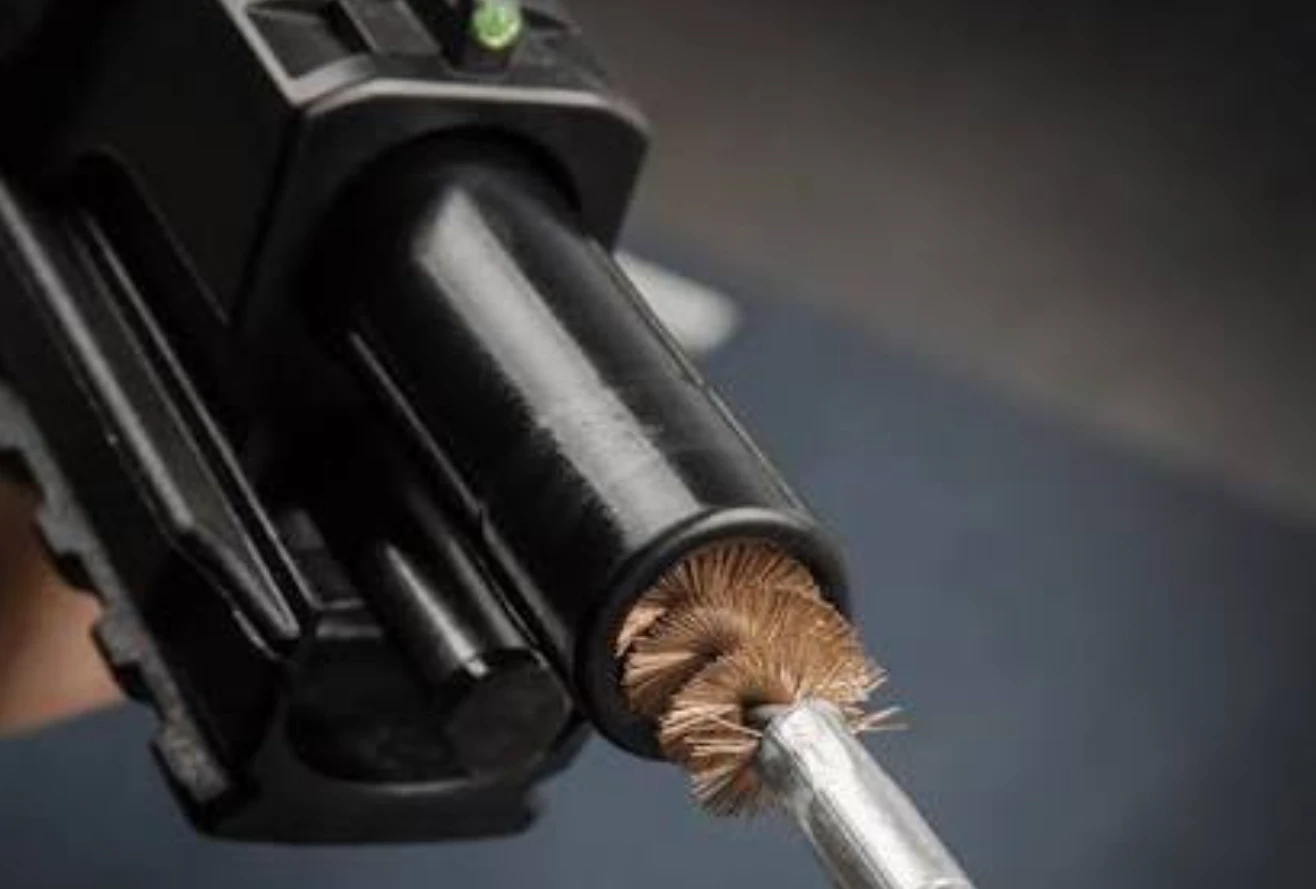
Action parts need a separate gun cleaning brush with a short handle. These come with nylon, bronze or steel bristles: nylon for delicate finishes, bronze for heavy carbon, and steel only for stubborn deposits in hidden spots. AR-15 owners will find a chamber brush useful for the locking lug area.
How Should the Kit Be Stored and When Are Consumables Replaced
A gun brush wears out: the bristles flatten and stop touching the bore walls. It’s replaced before it becomes useless, while rods, jags and adapters last for years. Everything is stored in a case with labeled slots, so sizes don’t get mixed up and bristles don’t get crushed. A kit built around a specific safe pays for itself in the first season, with faster cleaning and longer-lasting accuracy.