
The Ultimate Heat Exchanger Maintenance Checklist
Heat exchangers are essential in numerous applications. They’re found in a wide range of machinery, equipment, and appliances. These components are used in power generation plants, oil refineries, manufacturing facilities, and chemical processing plants. They’re also found in heating and air conditioning systems, refrigerators, and water heaters. At the same time, cars, trucks, ships, and airplanes are equipped with them.
In all of these instances, heat exchangers are designed to transfer heat from one medium to another while preventing the two from coming into contact with each other. Though different type of heat exchangers are available and they work in different ways, their purposes are the same. They can help with indoor climate control, prevent machinery from overheating, facilitate manufacturing and processing, and improve energy efficiency to name a few. Of course, heat exchanger maintenance is the key to ensuring they serve their intended purposes and maximizing their benefits.
Taking a Closer Look at Heat Exchanger Maintenance
Heat exchangers are under constant use and stress. They’re also up against a variety of outside forces. Because of that, they’re prone to wear and tear, problematic buildup, and a range of other issues. Maintenance keeps those problems at bay. It can keep heat exchangers working effectively and efficiently while also helping to keep their accompanying components in good condition. The following points are crucial in routine maintenance for heat exchangers.
Thorough Inspections
Thorough inspections are among the most important aspects of heat exchanger maintenance. During inspections, technicians can find problems early on and resolve them. That prevents further deterioration and potentially expensive repairs. It can also reduce the typical efficiency loss heat exchangers tend to experience, prevent unnecessary downtime, and extend the life of not only the heat exchanger itself but the other components it works with.
Cleaning
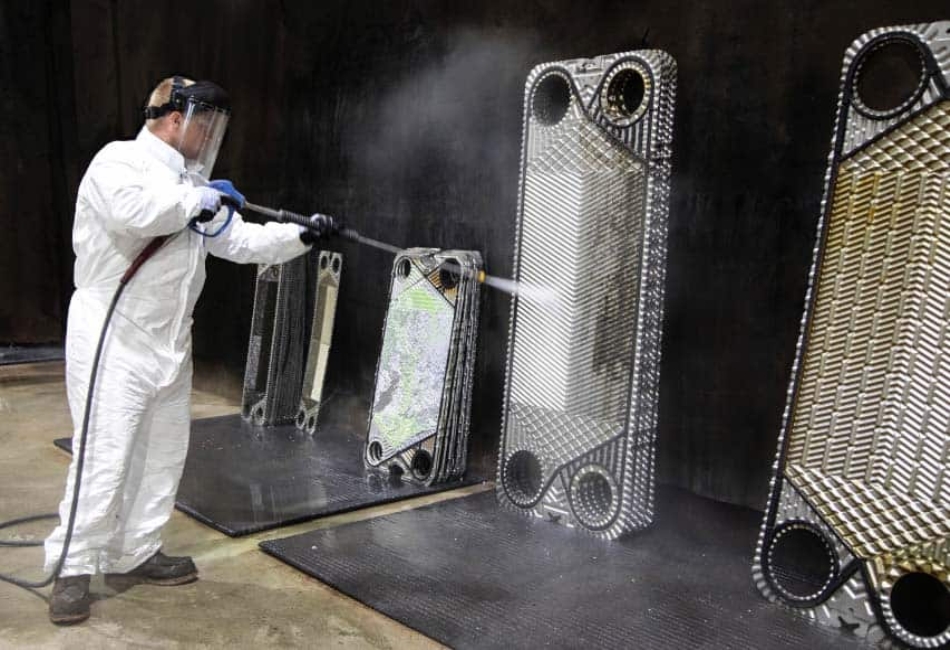
Another important element of routine maintenance is cleaning. During the cleaning process, technicians remove buildup like dirt, debris, minerals, and algae growth. Buildup is inevitable, but routine cleanings can help keep it to a minimum. That, in turn, reduces energy consumption, minimizes wear, reduces the likelihood of overheating, and prevents a number of other problems.
Addressing Wear and Damage
Additionally, technicians address wear and damage during routine heat exchanger maintenance. That may entail replacing worn seals and gaskets, adjusting flow distribution devices, and tightening loose connections. It may also involve repairing or replacing damaged fins, plates, and tubes. If issues like those aren’t addressed, they’ll ultimately cause complete equipment failure. As such, taking care of them is crucial for keeping heat exchangers working properly and safely.
Chemical Treatments
Chemical treatments can be an important part of heat exchanger maintenance as well. That may include applying scale inhibitors to help prevent excessive mineral deposits from building up over time. It may also involve applying oxygen scavengers and other corrosion inhibitors to protect components against the elements and make them last longer. Biocides can be used to prevent the growth of bacteria, algae, and fungi as well.
Keeping Heat Exchangers Working Effectively and Efficiently
Heat exchangers are essential components in a variety of machines and equipment. Keeping them in optimal conditions is crucial for maximizing their efficiency and effectiveness. Routine maintenance is an important part of that process. It reduces wear and tear and addresses minor problems before they have a chance to get out of control. In doing so, it reduces repair costs, downtime, and a range of other potential problems.


